Biography
Jacob
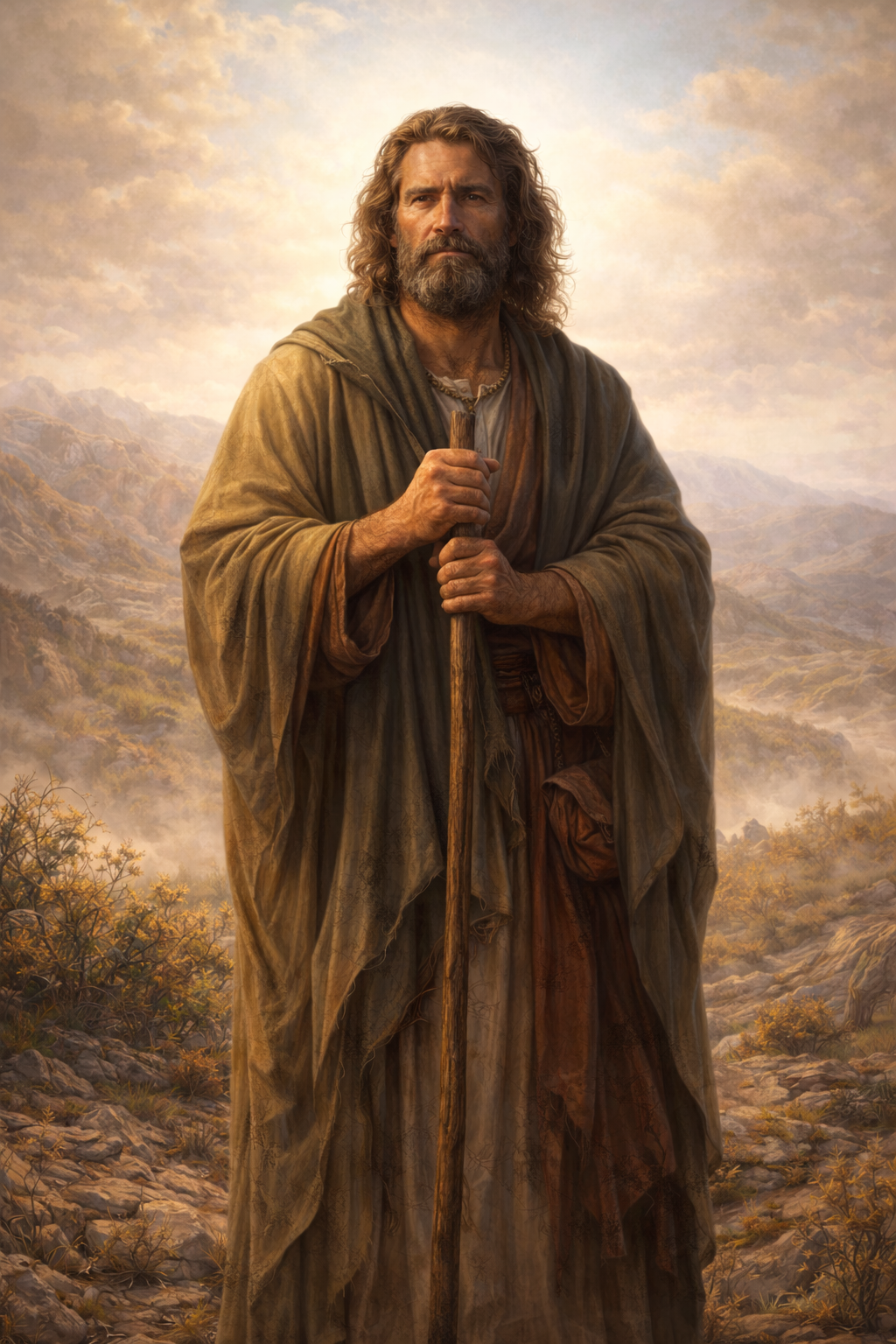
About Jacob
Genesis presents Jacob as the younger twin of Esau, a son of Isaac and Rebekah, and the ancestor whose second name, Israel, becomes the name of a people. The USCCB introduction places his cycle within the ancestral narratives of Genesis, not within modern documentary biography. No contemporary record independently dates Jacob, verifies his age, or reconstructs his travels. The catalog therefore leaves birth and death years unset and treats the episodes that follow as received biblical narrative.
The birth story says the twins struggled before birth and that Jacob emerged holding Esau's heel. As adults, Esau hunted while Jacob remained among the tents. When Esau returned exhausted, Jacob demanded the birthright in exchange for bread and lentil stew. Genesis later describes parental favoritism: Isaac loved Esau, while Rebekah loved Jacob. These details introduce a family shaped by rivalry and unequal loyalties rather than an uncomplicated model of virtue.
When Isaac was old and unable to see, Rebekah devised a plan for Jacob to receive the blessing intended for Esau. Jacob objected that discovery might bring a curse, but he still carried out the deception, wearing Esau's clothing and goatskins and identifying himself as his brother. Isaac gave the blessing; Esau then wept and planned revenge. The narrative neither hides Jacob's fraud nor erases the harm done to Esau. Rebekah sent Jacob toward her family in Haran, and Isaac formally blessed him before his departure.
On the journey, Genesis places Jacob at a stopping place later called Bethel. He dreamed of a stairway joining earth and heaven, with divine messengers ascending and descending, and heard the ancestral promises renewed. Jacob set up the stone on which he had slept and made a conditional vow concerning his safe return. The scene became central to Jewish and Christian reception, but the text does not provide an archaeological site or a date that can be plotted on a modern timeline.
In the eastern country Jacob met Rachel at a well and entered the household of her father, Laban. He agreed to serve seven years for Rachel, but Laban gave Leah to him first and required another period of service for Rachel. Genesis narrates the births of children through Leah, Rachel, Bilhah, and Zilpah amid competition, grief, and unequal affection. The account names twelve sons and Dinah; it should not reduce the women to a genealogical list or pretend that the household's arrangements were free of coercion and conflict.
After years of labor, Jacob secretly departed with his family, servants, and livestock. Laban pursued him, but the two men eventually made a boundary agreement marked by a heap of stones and a meal. Genesis presents both men as capable of manipulation and accusation. Their settlement is a limited act of restraint: it ends pursuit and defines obligations without repairing every injury. The place-names in this episode are ancient narrative labels and do not justify precise coordinates.
Approaching Canaan, Jacob feared Esau and divided his company, sent gifts ahead, and prayed for deliverance. During the night he struggled with a mysterious man until daybreak and refused to release him without a blessing. The stranger renamed him Israel because he had contended with divine and human beings. Jacob named the place Peniel and crossed the river limping. Genesis preserves the opponent's identity with deliberate mystery; later language about an angel or a direct encounter with God is interpretation rather than independently documented history.
The meeting with Esau overturns Jacob's fear: Esau runs to meet him, embraces him, and weeps with him. Jacob urges Esau to accept the gifts sent ahead, while declining Esau's offer to travel together. The brothers separate peacefully, though the text does not claim that their relationship became close or that the earlier theft was fully repaired. The episode supports reconciliation through concrete gestures, not through a generic claim that Jacob was consistently peaceful.
Jacob's later household endured severe losses and violence. Rachel died after Benjamin's birth, and Jacob buried her on the road toward Ephrath. He favored Joseph, whose brothers sold him and presented Jacob with misleading evidence of his death. Years later famine brought the brothers to Egypt, where Joseph revealed himself and invited the family to relocate. Jacob's journey to Egypt is part of the Joseph narrative and cannot be converted into a verified migration route.
Genesis says Jacob met Pharaoh in Egypt and settled with his household in the region of Rameses. Before death he blessed Joseph's sons and then addressed his own sons in a poetic testament. He asked to be buried in the cave of Machpelah, and Genesis 50 narrates a large funeral journey to Canaan. Its lifespan of 147 years remains part of scriptural chronology, not a secure modern date. Hebrews remembers Jacob's blessing as an act of faith, and the Orthodox Church in America commemorates Righteous Jacob on December 13. His enduring significance lies in a morally complex story of deception, labor, struggle, reconciliation, grief, and blessing.
Wondering how to weigh the stories and sources? Learn how to read a saint biography.