Biography
Jehu Jones Jr.
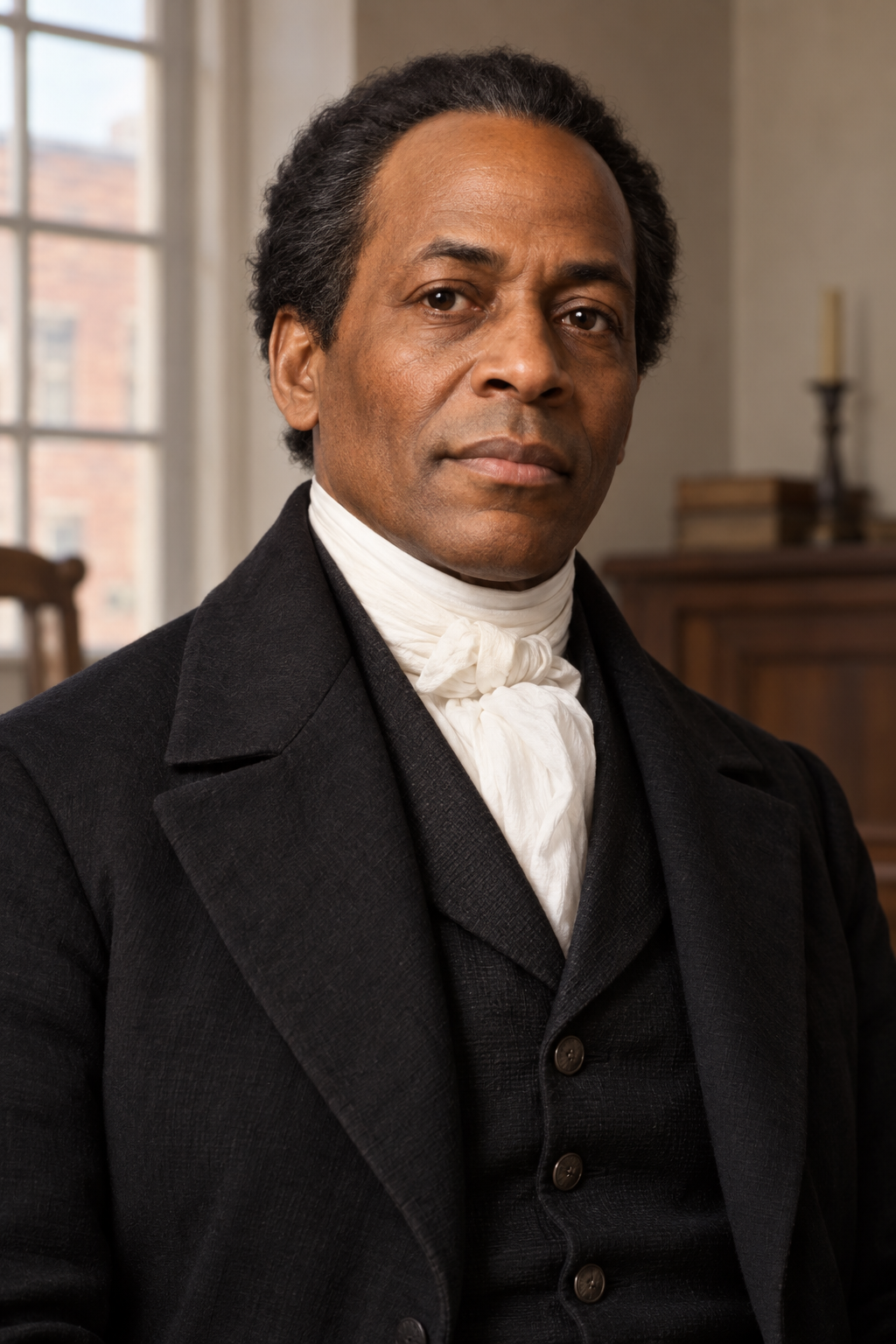
About Jehu Jones Jr.
Jehu Jones Jr. became the first African American Lutheran pastor in the United States. Born in Charleston about 1786, he worked as a tailor before entering ordained ministry. He and his wife Elizabeth moved from Episcopal worship to a Lutheran congregation where Black members occupied segregated pews. Ordained in New York in 1832 for an intended mission to Liberia, he never reached Africa. After his return to Charleston, authorities arrested him under restrictions on free Black people entering the state. He left and eventually settled with his family in Philadelphia.
Jones belonged to Charleston’s Brown Fellowship Society, a mutual aid organization within the city’s free Black community. Historian Robert L. Harris Jr. identifies him as a member and records his appeal to tailoring customers for help taking his family to Liberia. The society offered practical assistance in illness and bereavement. Its rules provided for funerals, support for widows, and the education of children whose deceased fathers had left insufficient funds. Its founders had worshipped at Saint Philip’s Episcopal Church but could not be buried in that church’s burial ground. These arrangements show how Black families organized support that white institutions withheld. Harris cautions against mistaking the prosperity of some members for freedom from racial restrictions. Education, movement, employment and legal standing remained constrained. Jones’s plans for departure belonged to a larger debate among Charleston’s free Black residents about whether emigration could offer opportunities denied at home.
His congregation built Saint Paul’s Lutheran Church, but financial help failed to match the promises made to them.
Jones’s own account survives in a letter of January 1839 seeking help from the American Colonization Society. He explained that he had conveyed the church to white trustees after receiving assurances that its debts would be paid. He also surrendered the organ after another promise of assistance. A planned fundraising fair had been disrupted by the burning of Pennsylvania Hall the previous year; goods prepared for it were sold privately for far less than he had hoped. He described giving up part of his missionary allowance toward the church’s debts, only to find the congregation abandoned by its trustees. The letter asked for immediate assistance or an arrangement under which the congregation could repay a purchaser over several years. It preserves his effort to secure a future for the community even as creditors pressed for payment.
The building was sold at a sheriff’s sale in 1839, but Jones continued ministering. When the New York synod later accused him of misconduct, he published a defense. Historians Karl Johnson and Joseph Romeo reject those accusations in light of contemporary evidence. He died in Centreville, New Jersey, in 1852.
Historian James R. Thomas has compared his experience with that of his brother Edward, who became an Episcopal priest. In a 2024 interview, Thomas emphasized the preparation and support Edward received, contrasting it with the inadequate support given to Jehu. That assessment places the obstacles to his ministry within the institutions that commissioned him, rather than treating the loss of his church as a simple personal failure.
Thomas also identifies John Bachman of Saint John’s in Charleston as Jehu’s teacher. Edward’s path included study at Amherst College and later leadership of a college in Sierra Leone. The comparison does not make the brothers’ careers interchangeable: Edward reached Africa, whereas Jehu’s pastoral work developed in the United States after his intended journey failed.
Later commemorations brought his story into conversation with that of other Black church leaders. At a joint gathering of the African Descent Lutheran Association and the Union of Black Episcopalians, participants visited the Philadelphia historical marker honoring Jones. They also worshipped at Saint Thomas’s Church and remembered Absalom Jones, its first leader. The gathering connected the histories of the two traditions through worship, learning and discussion of racial justice. Its organizers sought stronger relationships between churches and support for leaders of African descent. Remembering Jehu therefore formed part of a shared public history, extending beyond the congregation he had founded.
The New Jersey Synod later named an initiative for him. Its 2021–22 Jehu Jones Mission invited congregations to study racial injustice and raise funds for educational opportunities for emerging leaders of African descent. The program linked remembrance of his unsupported ministry with practical support for future church leaders. Its name preserves a history in which a Black pastor’s determination was met repeatedly with inadequate institutional action.
The initiative proposed a quilt made from squares contributed by participating congregations. Donations were to fund opportunities such as internships, camps and international travel. The appeal invited churches to turn study into material assistance; its published fundraising goal does not establish how much money was ultimately raised.
The ELCA commemorates Jones on November 24 alongside Justus Falckner and William Passavant as pastors in North America. His recognition here belongs to that Lutheran tradition.
Wondering how to weigh the stories and sources? Learn how to read a saint biography.