Biography
Jerome Emiliani
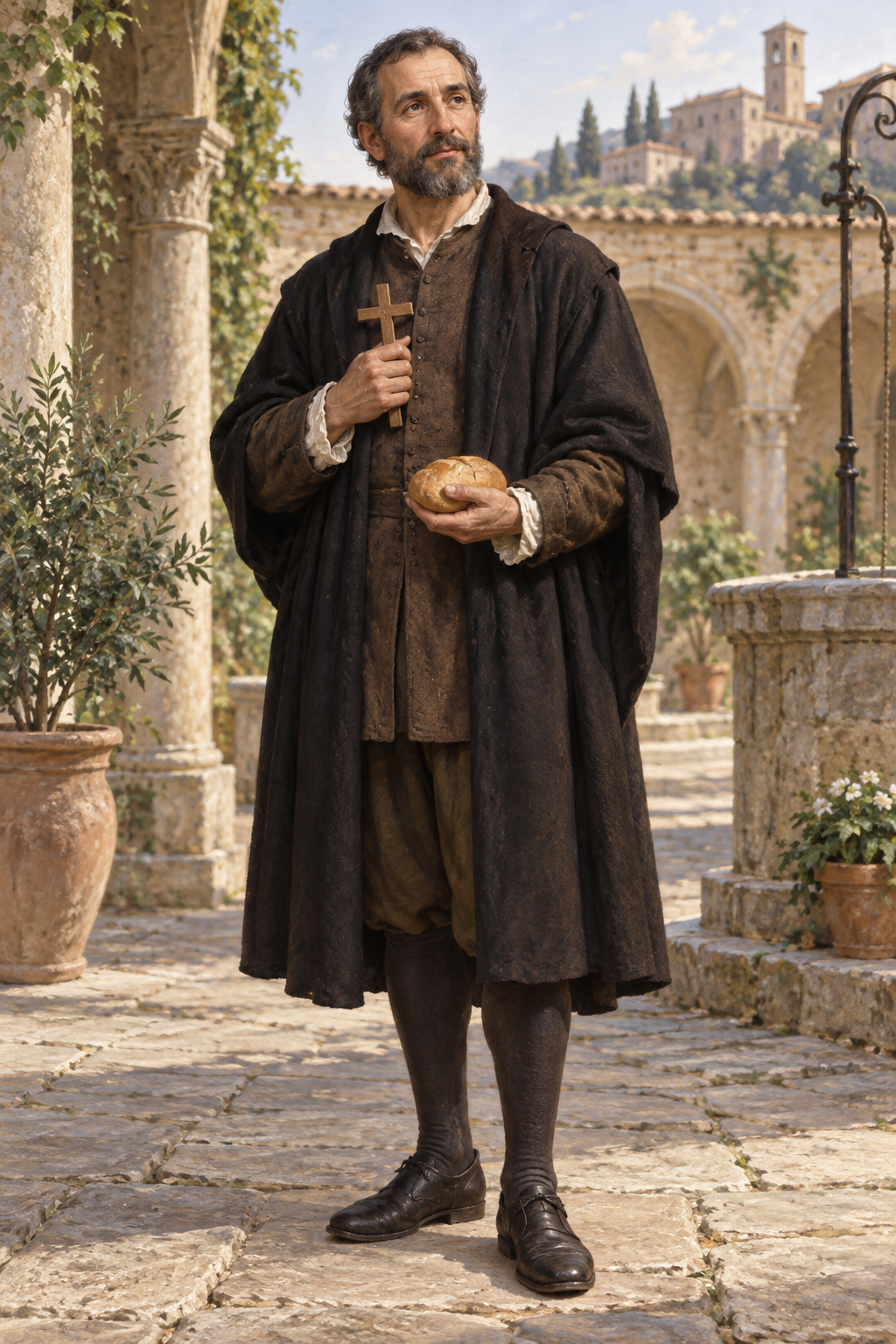
About Jerome Emiliani
Jerome Emiliani is remembered as a Venetian layman whose life turned toward service of the poor, especially orphans and abandoned youth. Benedict XVI’s 2011 message to the Order of Clerics Regular of Somasca identifies the traditional turning point: on the night of 27 September 1511, after a vow to change his life, Jerome was freed from prison through the intercession of Mary. The Pope calls the event prodigious. That language belongs to the Church’s received devotional account and should be preserved as such, rather than being recast as a fully documented modern incident.
Benedict describes Jerome’s life as “refounded” after this event. The phrase conveys a conversion of priorities: his past did not disappear, but it was redirected toward charity. His response was not abstract piety. He became closely associated with practical care for children without family protection, people who were ill, and communities living in poverty. The source sees this work as the beginning of a religious and charitable experience that would shape the Somaschan tradition.
Jerome’s particular concern for vulnerable youth is central to his legacy. The Somaschan tradition remembered him as a founder whose charity took institutional form: children needed not only immediate relief, but homes, education, Christian formation, and adults prepared to accompany them. A Vatican education document summarizes the program associated with the Somaschans as including Christian doctrine, reading, writing, arithmetic, music, and practical skills. This detail prevents a false contrast between faith and education in Jerome’s work.
In 1534, Jerome withdrew to Somasca, where a later papal letter says he aided orphans and poor people, cared for the sick, and taught catechism to rural people. The letter also says that he died after contracting plague while caring for those who were ill, in the night between 7 and 8 February 1537. This is a strong enough source for the broad final chapter of his life, though it does not require dramatizing his illness or final words.
Pius XI named Jerome universal patron of orphans and abandoned youth on 14 March 1928. The patronage gives official recognition to the work by which he was already remembered. It also keeps his intercession connected with a social reality that continues to demand attention: young people can be deprived of safety, education, family support, and the experience of being valued.
Jerome’s biography is therefore a story of conversion made concrete. A received tradition of liberation led into a life organized around neglected people; charity became educational and communal; and the community that bore his legacy continued to serve youth. The sources support this pattern without requiring a complete private chronology. His example is not chiefly that he escaped suffering, but that he allowed a turning point to become a long commitment to the needs of others.
The emphasis on children without family protection is especially important. Orphanhood and abandonment are not merely emotional themes; they expose young people to hunger, exploitation, interrupted education, and isolation. The Somaschan tradition responded by gathering care, education, religious formation, and practical preparation together. This integrated response is one reason Jerome’s legacy remains more than a story of individual generosity.
Education in this setting had practical and spiritual aims. Reading, writing, arithmetic, music, and skills could help young people participate more fully in society, while catechesis offered a framework of faith and belonging. The Vatican education document’s summary should not be projected unchanged onto every historical institution, but it shows how the tradition understood the connection between learning and the dignity of the poor.
Jerome’s later service during plague gives his ministry a final coherence. He did not withdraw from people who were ill when care involved danger. The source records that he contracted the disease while serving them and died in 1537. It does not require readers to romanticize infection or sacrifice. Instead, it presents care as costly and asks communities to take seriously the responsibility of accompanying people in crisis.
The 1928 patronage of orphans and abandoned youth is a later recognition of this service. It makes Jerome an intercessor not only for charitable institutions but for children and young people whose lives lack secure support. The title can also challenge adults and communities: prayer should accompany concrete efforts to protect, educate, and welcome those who are vulnerable.
Jerome’s legacy is therefore communal and practical. A traditional liberation narrative became the beginning of a sustained work of mercy; that work shaped a religious family and an educational approach; and the Church later named him patron for people whose need for protection remains urgent. The source boundaries allow this account to be strong without invented scenes or unsupported claims.
Wondering how to weigh the stories and sources? Learn how to read a saint biography.