Biography
Joel
About Joel
Joel is identified in the first line of the biblical book as the son of Pethuel. That is nearly all the direct personal information the text provides. It names no king, birthplace, tribe, occupation, age, household beyond his father, or circumstances of death. Numerous other people called Joel appear in Scripture, and none should be merged with this prophet without evidence. The catalog's inherited dates of about 835 to 796 BC suggest a complete eighth-century lifespan that the book does not establish. They are removed. Joel's identity rests on the superscription and on the prophetic voice preserved in the work bearing his name.
Dating the book requires inference rather than a dated title. The USCCB introduction observes an organized temple liturgy, a prominent priesthood, no reigning king, language shared with later biblical material, and reliance on an established prophetic tradition. It therefore favors composition after the exile, probably between 450 and 400 BC. Scholars have proposed other periods, and the book may preserve or reshape older material. This probable compositional range is useful context, but it cannot become Joel's birth and death dates. The prophet's personal relationship to every stage of the book's formation remains unknown.
Joel's first speech begins with an agricultural catastrophe. Inadequate winter rain, locust infestation, and summer heat have damaged grain, vines, orchards, pasture, and water. The prophet summons elders and all who live in the land to notice what has happened and tell later generations. He addresses drinkers, farmers, vine growers, and priests because the crisis reaches ordinary food, livelihood, and temple offerings. The imagery sometimes compares locusts to an invading nation, but the notes retain the ecological dimensions of drought and infestation. A responsible account should not turn the poem into a securely dated military campaign.
Joel calls the priests to lament, proclaim a fast, gather the elders and inhabitants, and cry out in the house of God. This is public leadership through shared attention rather than a private prediction. The warning uses the phrase day of the Lord for judgment that threatens Judah itself. The community cannot assume that religious identity makes it immune from consequence. Jerusalem and Judah are implied by the temple-centered assembly and the book's audience, yet no source identifies Joel's home or the precise place from which he spoke. Any map should show only broad settlement or regional associations, not a podium, route, or residence.
The second chapter intensifies the alarm and then turns toward return. Joel urges the people to come back wholeheartedly with fasting and mourning. His memorable instruction to tear hearts rather than garments opposes outward display without inward change. The passage describes God as gracious, merciful, slow to anger, and rich in faithfulness. Joel again calls for a communal assembly that includes elders, children, infants, newly married couples, priests, and ministers. The action is unusually inclusive for a crisis response. It makes repentance a shared reorientation rather than a performance assigned only to leaders or blamed on one vulnerable group.
The poem then announces pity, renewed rain, restored grain, wine, and oil, and relief from shame. The language answers the losses of chapter 1 point by point. Joel's hope is material as well as spiritual: damaged fields and threatened food supplies matter. The text also calls the locust years something God will repay. That promise belongs to prophetic poetry and should not be converted into a guarantee that every disaster will quickly reverse. Within the book, restoration follows communal awakening and becomes a sign that the divine presence remains among the people. Joel's care is expressed by directing attention to common survival and renewed participation.
A further promise widens the community. The divine spirit will be poured out on all flesh; sons and daughters will prophesy, old and young will receive dreams and visions, and male and female servants are explicitly included. Social position, age, and gender do not confine participation in the passage's future. Signs accompany the approaching day of the Lord, while those who call on God's name find refuge in Zion and Jerusalem. These lines are among Joel's most influential, but they remain part of prophetic hope. They do not supply biographical events such as Joel witnessing their fulfillment during his lifetime.
Christian reception gave this promise a central place at Pentecost. Acts portrays Peter explaining the disciples' Spirit-filled speech by citing Joel and saying that the promised outpouring concerns the last days. The USCCB introduction to Joel says Acts uses the passage to announce a new community filled with divine life and power. This is evidence for Joel's later significance, not a meeting between Joel and Peter or a prophecy that can be reduced to only one interpretive tradition. Jewish readers receive Joel within the Book of the Twelve, while Christian communities read the same words through their accounts of the Spirit and church.
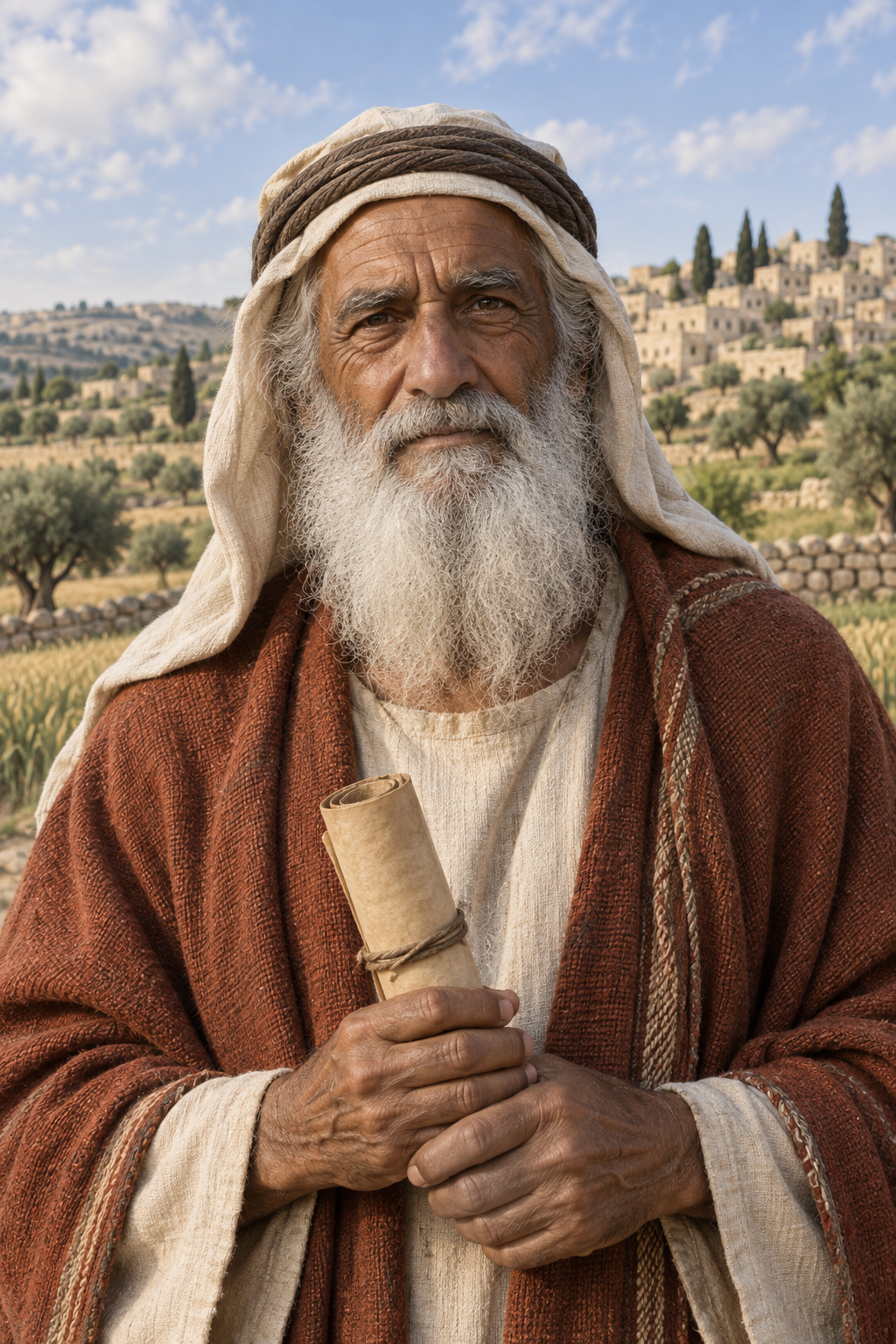
The Orthodox Church in America commemorates the Prophet Joel on October 19. Its short life assigns him to about 800 BC and emphasizes Jerusalem's desolation and the outpouring of the Spirit. The feast is a documented present observance, while the eighth-century date is a received chronology rather than a conclusion established by the book's superscription. No prayer is reproduced here because no exact liturgical text with confirmed translation provenance and reuse rights was selected. The modern catalog artwork is AI-generated devotional imagery. It represents a prophetic figure with traditional visual cues and cannot establish Joel's face, dress, age, or physical surroundings.
Joel remains significant because his book moves from close observation of communal disaster to responsible gathering, inward change, restoration, and an inclusive hope. He asks people to remember ecological loss across generations, calls leaders and residents together, and refuses to separate worship from damaged livelihoods. His language about the spirit crossing boundaries later became foundational in Christian accounts of Pentecost. The evidence does not yield a conventional personal biography, and that absence should remain visible. What survives is a prophetic work attentive to crops, animals, workers, priests, elders, children, and servants—a community wide enough that renewal cannot belong to only a privileged few.
Wondering how to weigh the stories and sources? Learn how to read a saint biography.