Biography
John Fisher
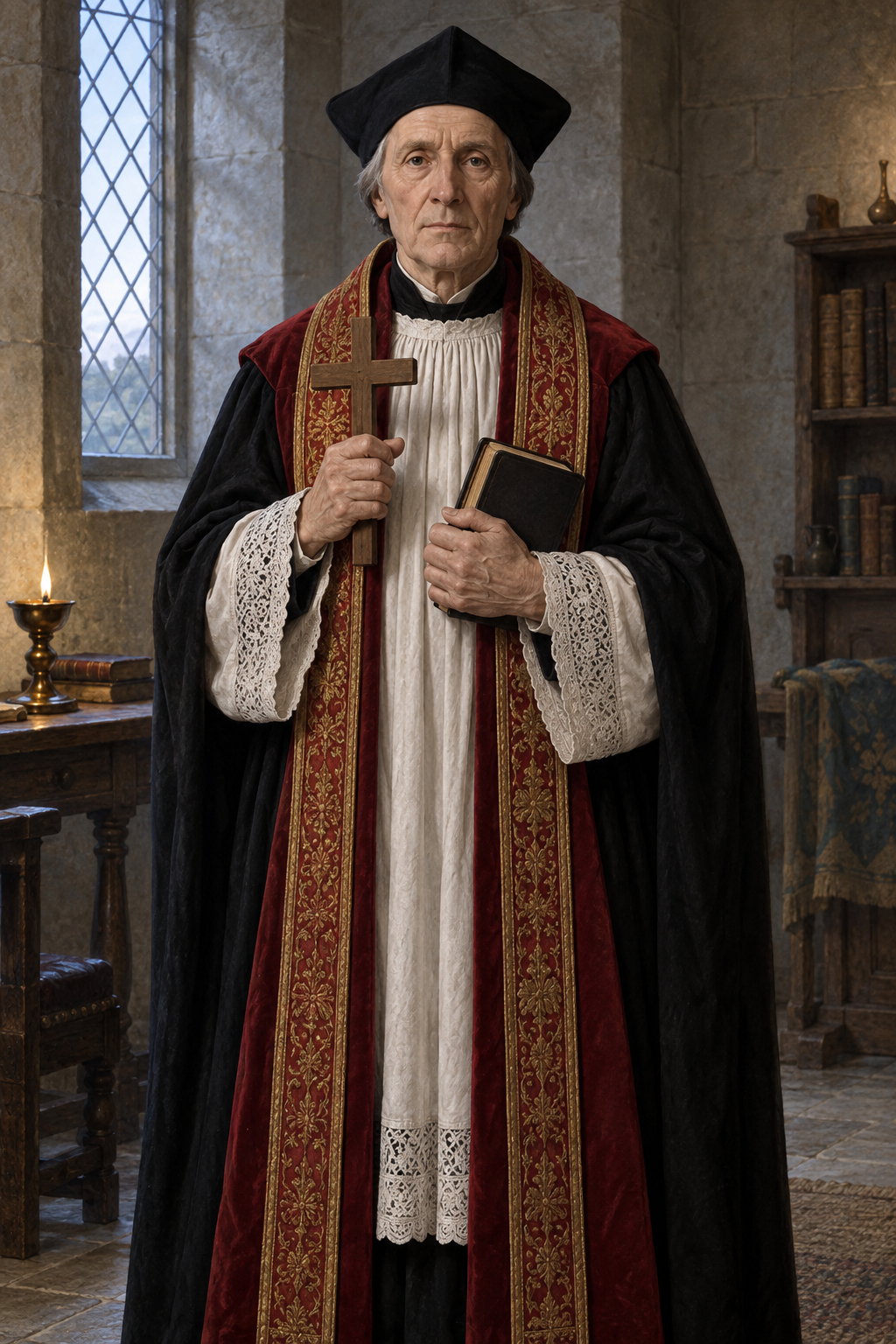
About John Fisher
John Fisher is remembered as a bishop, scholar, and martyr in the English Catholic tradition. A homily given by John Paul II in London recalls his learning at Cambridge and his ministry as Bishop of Rochester. The Pope’s description refuses the separation of study from service: Fisher’s intellectual life belonged to a pastoral vocation that included attention to people who were poor and sick.
Cambridge learning was an important part of Fisher’s formation and influence, but the source does not reduce him to an academic figure. His episcopacy at Rochester placed him among clergy and lay people whose lives were shaped by illness, poverty, worship, and the demands of daily life. This is essential to the Church’s memory of him: the convictions for which he later suffered were lived in a ministry of care, not held as abstract ideas.
Fisher’s final witness arose in a period of grave conflict between royal power and the Catholic Church in England. The basic fact of his martyrdom belongs to his established ecclesial identity, but the exact legal sequence, speeches, and execution details require primary or scholarly documentation beyond the sources in this packet. This entry therefore does not turn later retellings into documentary claims. It says what the Church’s own memory supports: he accepted suffering and death rather than violate the faith and conscience to which he was bound.
John Paul II’s London homily places Fisher among English witnesses whose lives speak beyond their own age. That reception matters because it resists using him as a partisan emblem. Fisher’s legacy concerns conscience disciplined by faith, courage without contempt, and a bishop’s responsibility to people entrusted to his care.
His association with Thomas More is familiar, and both are honored as martyrs of conscience. Yet their lives and legal situations should not be merged. Fisher was a bishop and theologian; More was a lay public servant. This packet keeps Fisher’s account focused on his own pastoral and intellectual vocation rather than treating him as a supporting character in another saint’s story.
For contemporary readers, Fisher’s witness can be understood as a union of truth and charity. The source’s mention of poor and sick people is not incidental. It shows that his faith was enacted in service as well as defended under pressure. A responsible biography needs both dimensions, and it needs the restraint to leave unverified details open.
The available evidence therefore sustains a clear portrait: Fisher was a Cambridge scholar, Bishop of Rochester, pastor attentive to the vulnerable, and martyr whose conscience remained loyal to his faith. Additional archival research is required before the packet can make detailed claims about his trial or death. That limitation keeps a deeply respected witness from being burdened with unsupported certainty.
The union of learning and pastoral care is one of the most durable themes in Fisher’s reception. Study can be treated as a form of privilege or distance from ordinary people; the source instead places his learning alongside a bishop’s obligations to those who were poor and sick. The combination suggests that theological seriousness is tested by whether it strengthens care for people, especially people who have little social protection.
Rochester gives that pastoral responsibility a concrete setting. A bishop’s work includes worship, teaching, clergy, institutions, and the everyday concerns brought by parishioners. The existing source does not provide a detailed episcopal register, so the entry does not invent one. It does permit the conclusion that Fisher’s public witness grew from a ministry already shaped by responsibility for a local Church.
Conscience in Fisher’s case should not be misunderstood as private preference. The Church’s memory presents it as conscience formed by faith, study, and ecclesial responsibility. That does not make every later appeal to conscience identical with his situation. It explains why his martyrdom is received as a witness: he remained bound to what he judged true even when that judgment brought grave consequences.
The decision not to narrate a detailed trial is deliberate. Exact legal proceedings and execution accounts are historically important, but they deserve direct primary or scholarly evidence. Repeating a familiar story without that evidence would weaken the very integrity Fisher is remembered for. The source note therefore holds to the documented outline and records the research still required for a fuller historical account.
Fisher’s association with Thomas More can be meaningful without collapsing their identities. Both are remembered as martyrs, yet they lived different vocations and bore different responsibilities. Keeping Fisher’s pastoral and intellectual life at the center allows readers to meet him as a bishop whose care for the vulnerable and fidelity to faith belonged together.
That integrated witness remains the strongest, most carefully sourced account of his life.
Wondering how to weigh the stories and sources? Learn how to read a saint biography.