Biography
John Kama
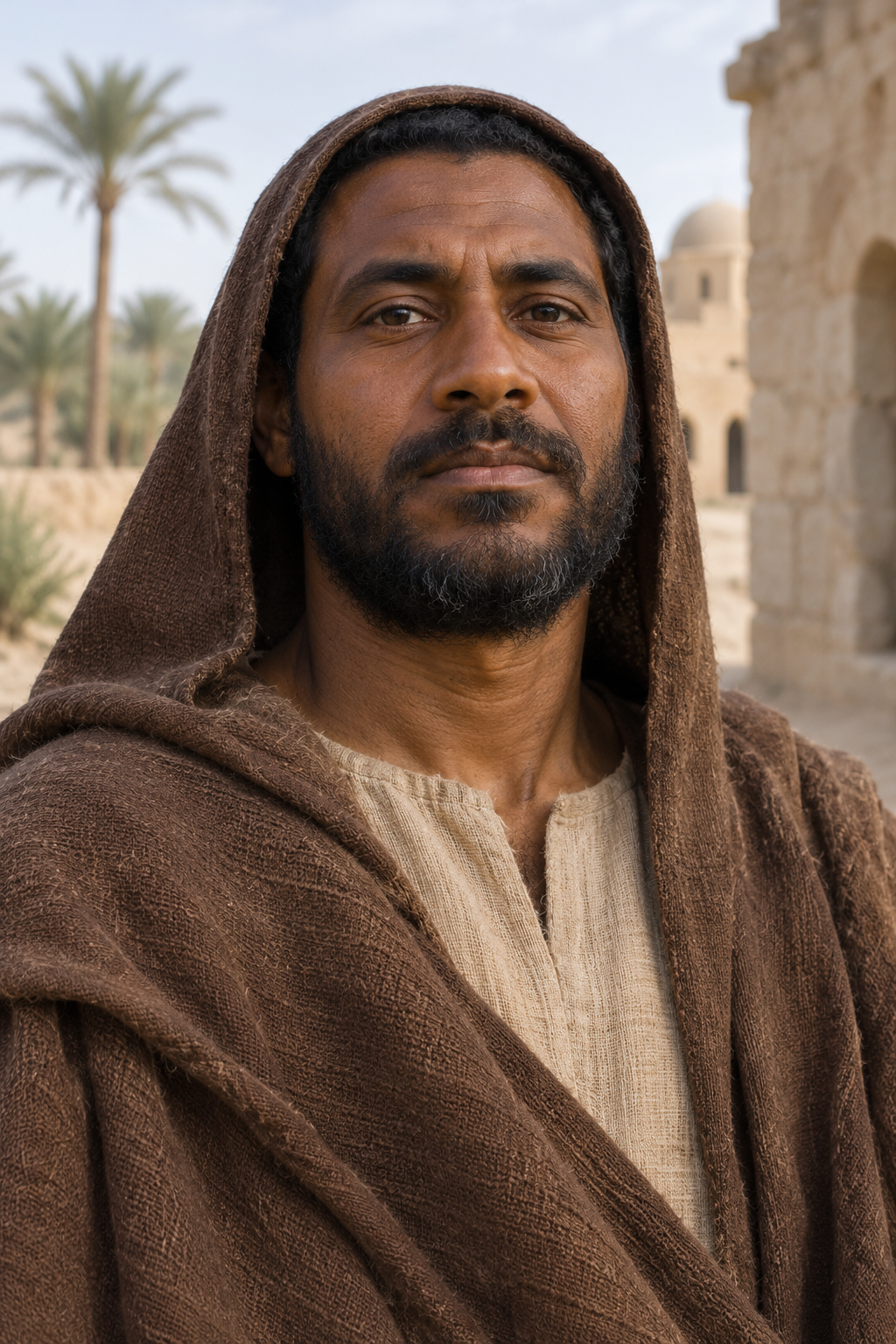
About John Kama
John Kama is remembered as a ninth-century monk whose story connects the Nile Delta with the monasteries of Scetis. The Coptic Encyclopedia gives his birthplace as Jebromonnonson in the Sais district, a village name that has not survived. It may have been near modern Shubra Wasim, but that identification is uncertain. The later Life describes John as pious from youth and says that he persuaded the woman selected as his wife to keep their marriage unconsummated. This account presents his decision as an early commitment to celibacy, though the details belong to hagiographic tradition.
The Life says that an angel guided John to Scetis, where he became a disciple of Apa Teroti. Teroti gave him a dwelling and taught him the rules of the divine office. John later moved to the monastery associated with John Colobos. The narrative then attributes to him the founding of a new monastery. It reports an apparition of Mary, who promised that a church would be built in her name and that the monastery walls would endure; three cross-marked coins were said to remain in the monastery’s diaconia when the Life was composed. These details explain the community’s sacred origins, but are not independently verified events.
John’s Life says his community grew to about three hundred monks. It names several disciples and says John wrote canons and rules for them. A church or meeting place served the community’s nocturnal psalmody, suggesting a monastic house organized around common worship as well as solitary cells. The story says John was later ordained a priest. The precise number of disciples and the institutional details come from the saint’s Life; the Coptic Encyclopedia does not identify independent records confirming them.
The Life associates John with devotion to Athanasius and says that the bishop appeared to him in a vision. It also tells of a journey to Upper Egypt, begun at an angel’s instruction. The Coptic Encyclopedia notes that the journey may have disguised a flight from the raid of 817, but this is a historical conjecture rather than a fact established by the Life. John is said to have left his disciple Shenute in charge during his absence. On his return, an illness and final sermon mark the approach of his death, although no exact death date is supplied.
The surviving account makes John Kama a founder and organizer as well as a solitary monk: he receives disciples, teaches liturgical practice, and leaves the community in trusted hands. Its angelic guidance and visions show how the monastery understood its own beginnings. John’s name remains attached to the institution, but the Coptic Encyclopedia cautions that the spelling “Kama” may be either a proper name or a Coptic adjective meaning “the Black.” His biography is therefore best read as a monastic foundation narrative that preserves community memory while leaving its early chronology uncertain.
Wondering how to weigh the stories and sources? Learn how to read a saint biography.