Biography
John Leonardi
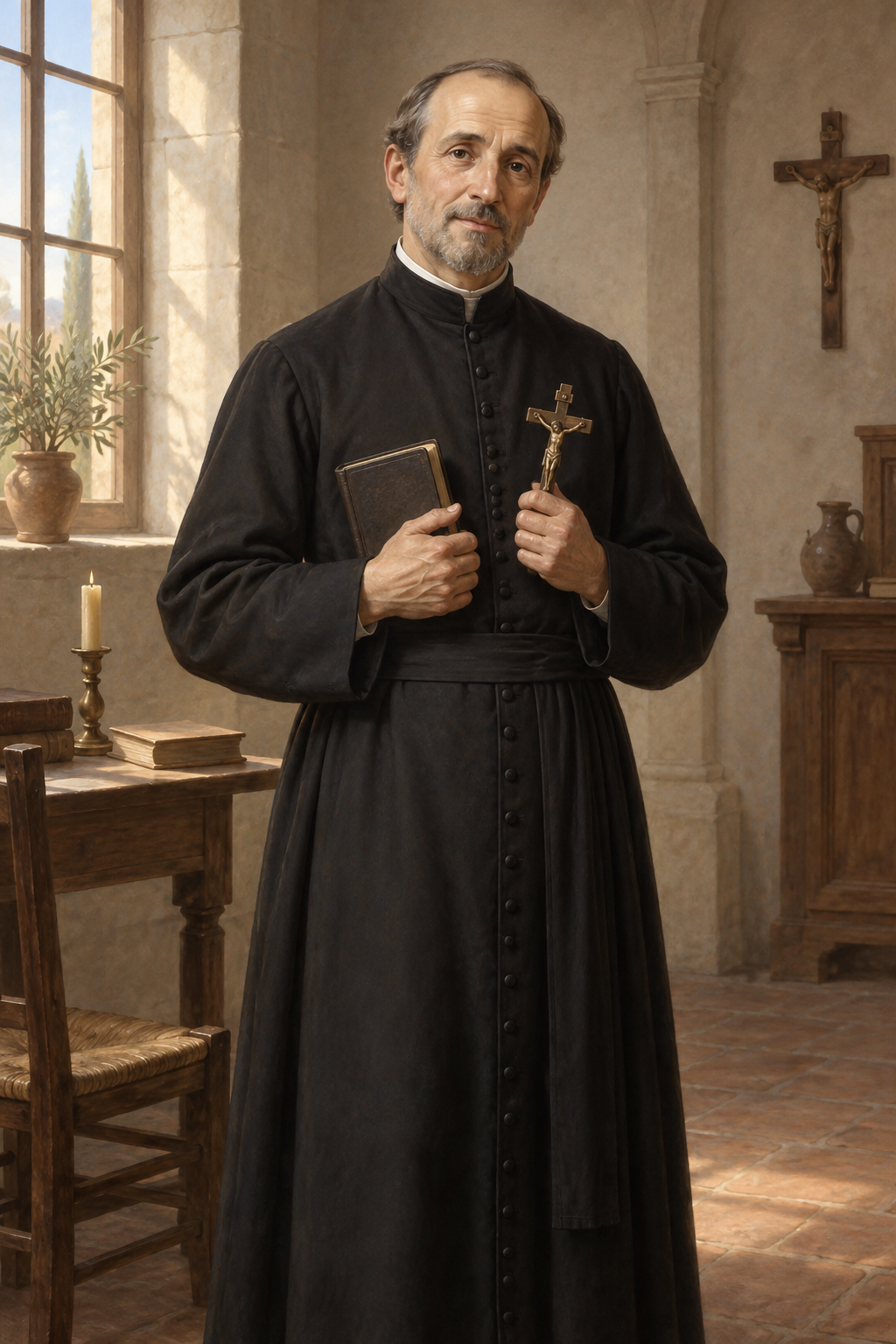
About John Leonardi
John Leonardi was born in 1541 at Diecimo, near Lucca, and became a priest whose ministry was marked by pastoral reform and missionary vision. Benedict XVI’s 2009 audience supplies this basic chronology and presents Leonardi as a figure who sought to renew Christian life through preaching, catechesis, and close attention to the concrete needs of people.
In 1574, Leonardi founded a new religious community. The fact of foundation is important because his reforming work was not only individual. He gathered others into a shared apostolic life so that teaching, pastoral service, and evangelization could continue beyond a single priest’s lifetime. The precise early institutional development belongs to a broader historical record; the source here establishes the foundation without requiring more detail than it supplies.
Benedict describes Leonardi’s emphasis on catechesis and on bringing people back to the heart of the Gospel. This pastoral focus is central to the account. Religious reform in his setting could not be reduced to administration or controversy; it involved helping people know the faith, pray, participate in sacramental life, and receive Christian teaching in an intelligible way.
Leonardi’s horizon extended beyond his own locality. Benedict credits him with a role in the planning of missionary activity, identifying him as a figure of the Church’s wider missionary awakening. This does not make him the sole author of later mission institutions. It supports a more modest but meaningful claim: he helped articulate the need for organized missionary cooperation and saw the Church’s pastoral responsibility as universal.
He died in Rome in 1609 while assisting people sick with influenza. The final detail brings his priorities into focus. A source that emphasizes catechesis, missionary concern, and service during an epidemic presents a pastor for whom doctrine and mercy belonged together. The account should not embellish the epidemic with imagined scenes; it is enough to say that he served those who were ill and died in that context.
Leonardi was later named patron of pharmacists. Benedict associates this patronage with his early knowledge of pharmacy and with his care for the sick. Patronage does not turn a saint into a substitute for medical expertise; it recognizes a spiritual companion for people whose work concerns healing, preparation of remedies, and the ethical care of patients.
The evidence supports an unusually coherent portrait: a priest from Diecimo became a founder, catechist, advocate for mission, and servant of the sick. His work connected local pastoral renewal with the wider Church. The source does not warrant excessive biographical detail, but it gives enough to see why he remains a significant model of practical, outward-looking charity.
Leonardi’s founding work shows why renewal is more than a criticism of existing practice. A community needs people who can teach, pray, organize service, and remain accountable to one another. The 1574 foundation gave a durable shape to these aims. It did not eliminate the difficulties of reform, but it created a setting in which a shared apostolic life could continue beyond one priest’s immediate influence.
Catechesis was central because knowledge of the faith cannot be assumed. Leonardi’s concern for instruction points to people who needed the Gospel explained in ways that could inform worship, moral life, and family life. The source supports this pastoral emphasis without requiring a catalogue of particular lessons or parish conflicts. Its strength is the clarity with which it joins teaching to care for people’s actual spiritual needs.
The missionary dimension of his legacy widens that concern. Organized mission depends on cooperation among churches, attention to local communities, and a willingness to send and support workers. Benedict’s account credits Leonardi with helping develop that horizon. The entry does not claim he designed every later missionary institution. It recognizes a pastor who understood that the Church’s responsibility could not stop at the boundaries of a familiar parish or city.
His service during influenza gives the account a human final chapter. Illness makes ordinary pastoral work urgent: people need practical help, prayer, sacraments, and the assurance that they have not been abandoned. Leonardi’s death while serving the sick joins his missionary and catechetical commitments to embodied charity. The source does not invite dramatic embellishment; it records enough to show that care remained his priority when it became dangerous.
Patronage of pharmacists is received in this context. It links Leonardi’s remembered attention to health with people whose professional responsibilities include remedies, patient care, and ethical judgment. It is not a substitute for clinical knowledge. It is a devotional recognition that health care has moral and spiritual dimensions, and that service to the sick calls for both competence and compassion.
Wondering how to weigh the stories and sources? Learn how to read a saint biography.