Biography
John the Short
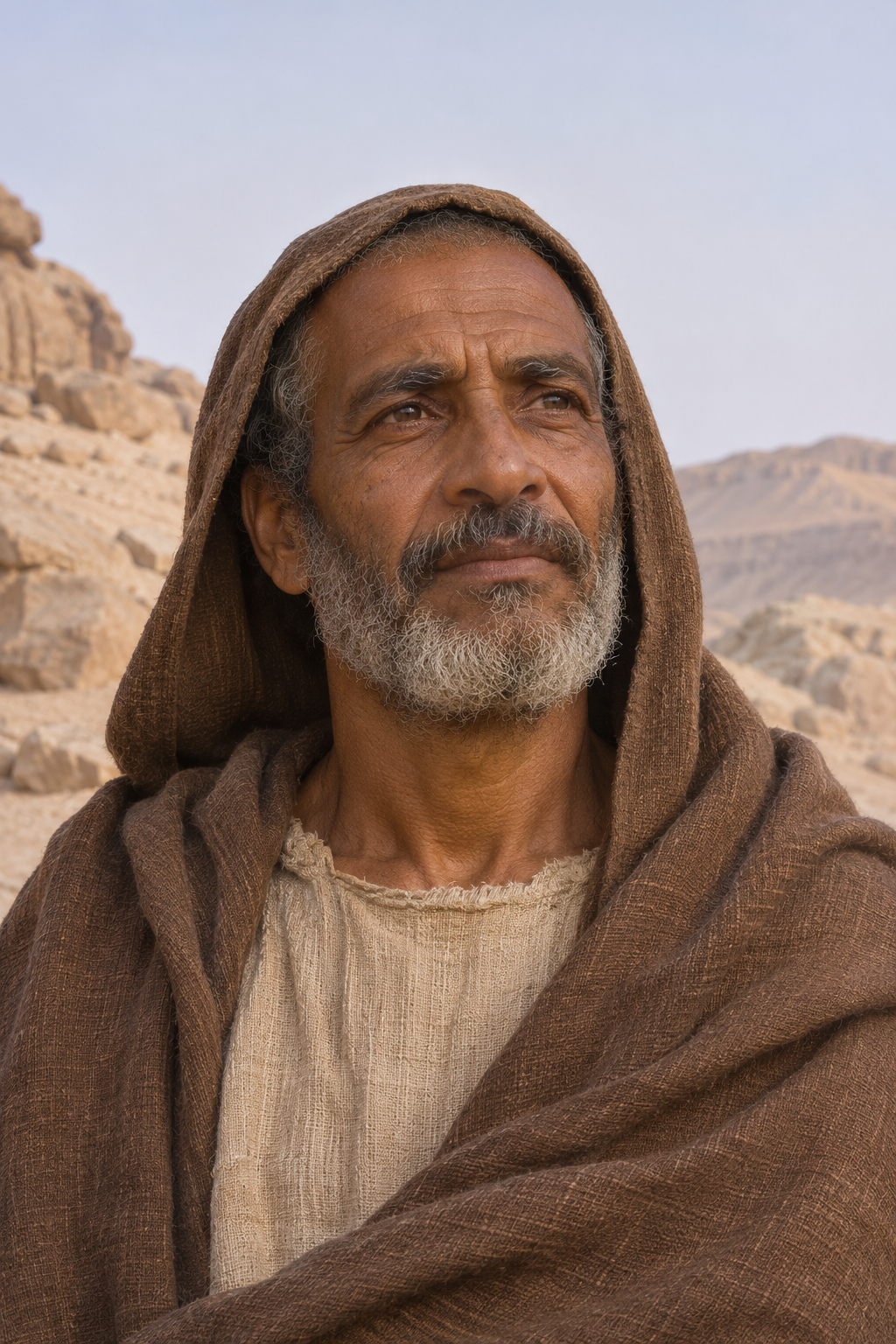
About John the Short
John the Short, or John Colobos, is a elder in the Sayings of the Desert Fathers, but those sayings do not supply a continuous eyewitness life. Stephen J. Davis counts forty-seven stories and sayings in the Greek alphabetical collection and explains that they passed orally between monks before compilation in the sixth century. A much later Life reshaped selected sayings into a connected narrative. The process created memorable portraits of obedience and compassion while also allowing material from other monks named John to move into his story. His historical outline is therefore thinner than the episodes associated with his name may suggest.
The Life attributed to Zacharias of Sakha says John came from the Oxyrhynchite region and went to Scetis as a young man. There he learned from an elder called Amoi or Ammoes. Tatjana Starodubcev summarizes its account of his entry into monastic life and of twelve years spent caring for the elder when he became ill. The story makes patient service the test of John’s training. Its details come from a retrospective panegyric, however, not a dated register of his arrival or his hours beside Amoi. It is safer to understand the episodes as the community’s memory of discipleship.
The sayings show John responding to a particular person rather than delivering a formal rule. When brothers gathered to ask him about their thoughts, another elder mocked him. John answered by admitting that the critic had seen only his outward faults, turning the rebuke away from quarrel. A forgetful monk returned repeatedly for advice and worried that he was a burden. John compared himself to a lamp that loses nothing when other lamps are lit from it and invited the monk back. These stories present authority as patience with someone seeking help, even while their dialogue remains literary recollection.
Other sayings place that patience outside the cell. When a brother guiding a group at night lost the road, John pretended to be too weak to continue so the group could wait until morning without shaming him. A longer narrative tells of Paesia, an orphan who had once welcomed monks but fell into poverty and sexual exploitation. John visited her and spoke with her; the story ends in her repentance and death. These do not establish a verifiable travel diary or Paesia’s circumstances. They show that the tradition joined concern for a neighbor to the spiritual stillness sought in the desert.
The Coptic Encyclopedia describes humility, endurance, prayer, work, and care for one’s neighbor as recurrent themes in material attributed to John. A saying preserved under Poemen’s name gathers these virtues into a single list, but Lucien Regnault cautions that the list may be a later synthesis. The point is not to imagine John reciting a finished program. Rather, the collection presents brief answers fitted to the person before him and a disciplined attention to anger, labor, and another monk’s need. The record supports a teacher with a recognizable spiritual reputation while leaving uncertain which compact sayings were his own words.
The dry branch story shows why that caution matters. In John’s later Life, Amoi orders him to water a dead stick for years until it bears fruit, a visible sign of obedience. Davis traces an earlier version in Cassian’s Institutes to John of Lycopolis; there the elder eventually pulls up the branch and discards it. The story was transferred to John the Short and given a different ending. It expresses a monastic ideal, but it cannot safely be used as a witnessed event in this John’s childhood or as evidence that the two Johns were the same monk.
John’s later Life places him in Scetis until a raid in the early fifth century and then near Clysma, where it says he died. The Encyclopedia treats 409 as a possible death year rather than a certain one. Traditions about returning his remains to Scetis and monasteries bearing his name show how his memory took root in more than one Egyptian region. They cannot by themselves settle whether every later shrine belonged to the same John. The surviving narrative is strongest when read as a history of devotion around a monk remembered for guidance, rather than a fully dated itinerary.
John’s memory reached readers through sayings, Coptic narrative, and Arabic and Syriac versions. Starodubcev traces those translations and notes that his relics were moved within Egypt while his cult remained especially rooted in Coptic communities. Medieval images in Egypt and beyond sometimes show him shorter than companion saints, turning his epithet into a visual cue. Neither painted stature nor a translated Life proves details of his physical appearance. What endured most clearly was the portrait of an elder whose humility could be expressed in a brief answer, a visit to someone in trouble, or a patient refusal to shame another brother.
Wondering how to weigh the stories and sources? Learn how to read a saint biography.