Biography
Jonathan Myrick Daniels
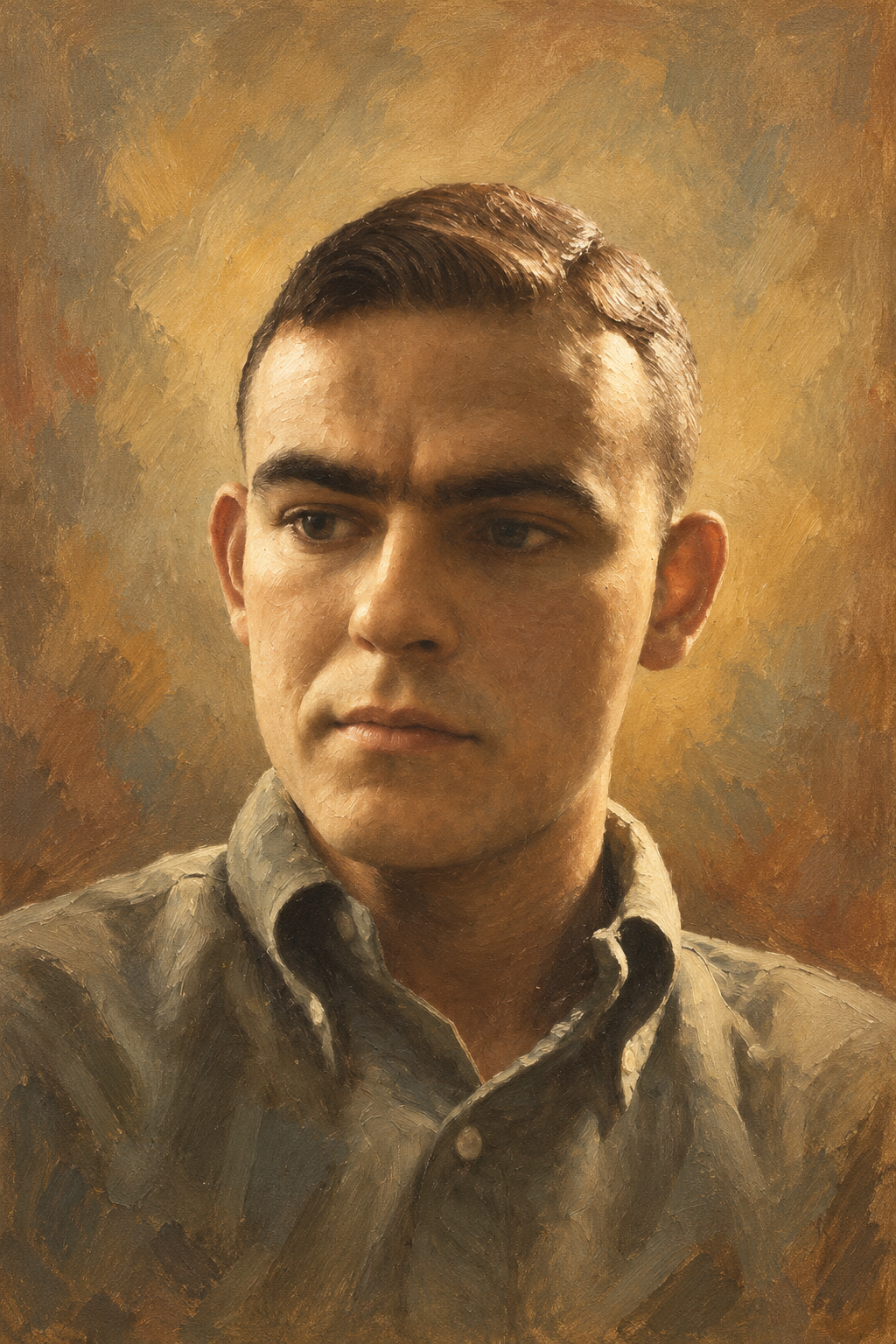
About Jonathan Myrick Daniels
Jonathan Myrick Daniels went to Alabama as a seminarian and became part of the work for Black voting rights and equal treatment. He tutored children, helped register voters, and joined efforts to integrate an Episcopal congregation. His time there was brief, but it placed his religious commitments within the daily struggle against segregation. On August 20, 1965, he was killed in Hayneville while protecting fellow activist Ruby Sales from a shotgun blast.
Daniels was born in Keene, New Hampshire, on March 20, 1939. Raised in a Congregationalist family, he joined St. James Episcopal Church while still young. He attended the Virginia Military Institute and later studied English literature at Harvard. His interest in ordained ministry returned while he was attending the Church of the Advent in Boston. In 1963 he entered Episcopal Theological School in Cambridge, sponsored by his home parish.
His commitment to civil rights did not begin as an uncomplicated rejection of authority. The Episcopal Archives records that he initially defended Alabama Bishop Charles Carpenter’s opposition to outside civil rights workers entering the diocese without permission. The violence in Selma and Martin Luther King Jr.’s appeal changed his judgment. Respect for church order could no longer settle the question of what he should do. He went south with fellow seminarian Judith Upham and came to believe that remaining involved was necessary to the integrity of his faith.
The seminary allowed them to continue their coursework while staying in Alabama and return for examinations. They lived with the West family in Selma and worked to integrate worship at St. Paul’s Episcopal Church. The Archives describes some success in bringing mixed groups to services, but continuing resistance among parish leaders and members. Their work challenged segregation within their own church as well as in public life.
The West family’s hospitality was itself a risk. Hosting a white organizer from the North exposed a Black household to danger. The parish account remembers the friendship and mutual support that developed between Daniels and his hosts.
Daniels returned to Alabama after his examinations. His presence depended on relationships with local people who were already organizing and bearing the risks of resistance. In her later testimony, Ruby Sales explained that the Fort Deposit protest grew from local young people’s anger at merchants’ exploitation and disrespect toward their parents. The organizers debated the danger, but felt obliged to support the young people’s leadership. This was a community’s struggle in which Daniels participated, not a movement that began with his arrival.
He was arrested with other protesters on August 14 and taken to jail in Hayneville. The prisoners endured crowded, unsanitary conditions. Six days later they were released without transportation waiting for them. Daniels, Sales, Joyce Bailey, and Catholic priest Richard Morrisroe went to a nearby store for something to drink. Thomas Coleman confronted them with a shotgun. Daniels moved Sales out of danger and was killed; Morrisroe was shot while fleeing and survived his injuries.
Sales’s recollection preserves the confusion of those moments. She remembered being pulled backward and falling, hearing the shots, and at first believing that she herself was dead. Bailey called to her, and the two escaped together. Her account also remembers the fear around them and the difficulty of finding help. It gives the event a survivor’s perspective rather than reducing it to a single, easily understood gesture.
Coleman claimed self-defense and was tried for manslaughter before an all-white jury, which acquitted him. The Episcopal Church’s response included criticism of a justice system that denied minorities equal treatment. Episcopal News Service later described the campaign for integrated juries that followed, undertaken by the Episcopal Society for Cultural and Racial Unity with other organizations. The response to Daniels’s death therefore included efforts to change public institutions, alongside mourning and memorial services.
His funeral took place at St. James in Keene, the parish that had supported his preparation for ministry. The Episcopal Church remembers him on August 14, the date of his arrest. He is honored as a seminarian and martyr; he had not completed the path to ordination.
Remembering him also requires attention to the life of the woman he saved. In a 2011 oral history, Sales described her struggle to acknowledge his sacrifice without allowing that event to define her entire identity. She wanted a life beyond the label attached to her survival. Her reflection does not diminish Daniels’s action. It asks that gratitude and remembrance leave room for the continued work and dignity of those who lived.
Sales also placed the struggle within a longer history of Black organizing, education, and resistance to violence. She understood it as a movement for human dignity and wider possibilities for life, not only a series of isolated civil rights events. That perspective gives Daniels’s story its setting: his courage mattered within a community whose struggle preceded him and continued after his death.
Wondering how to weigh the stories and sources? Learn how to read a saint biography.