Biography
Jorge Vargas González
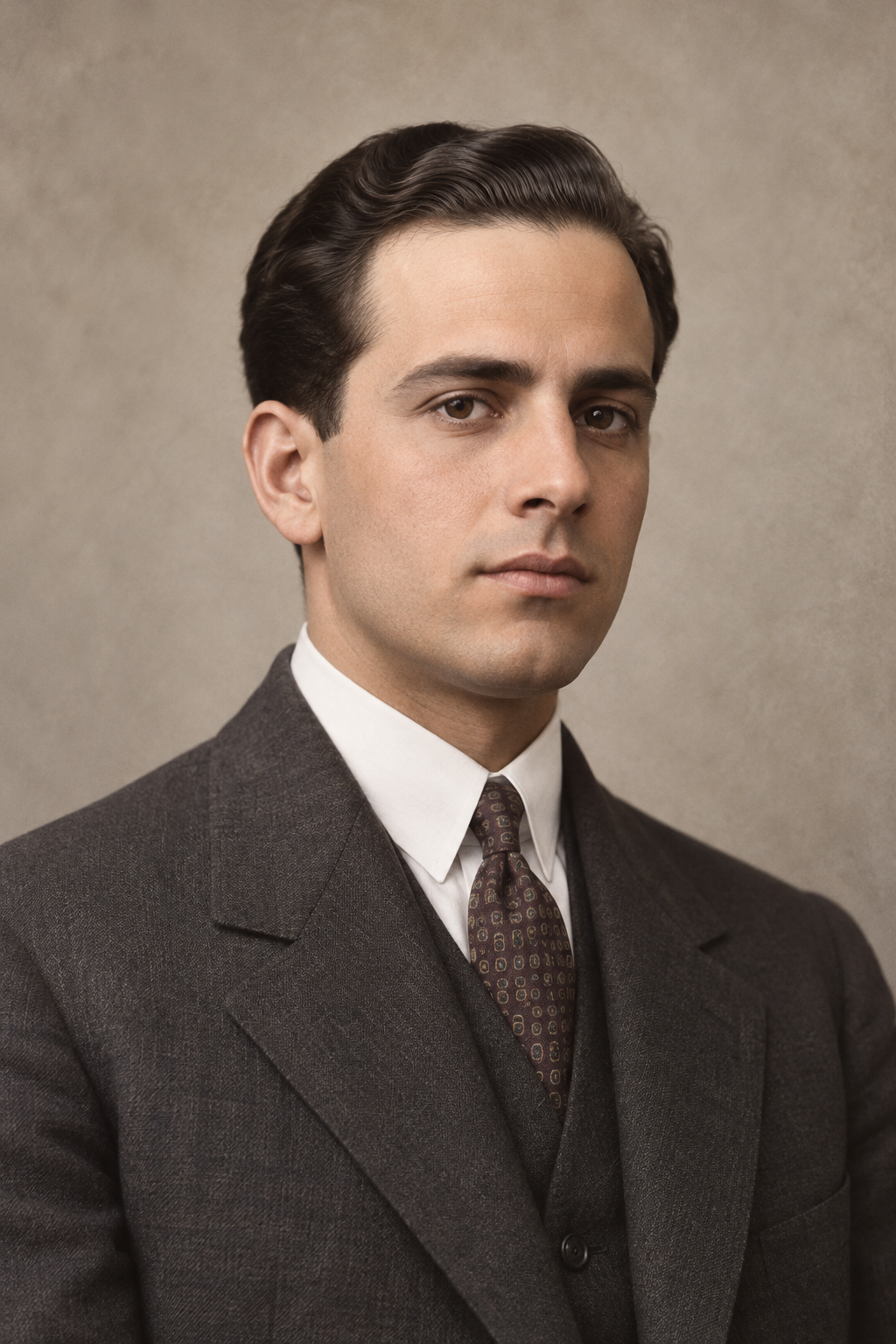
About Jorge Vargas González
Jorge Vargas González was a Catholic layman from Ahualulco de Mercado, Jalisco. Born on September 28, 1899, he later moved with his family to Guadalajara and joined the Catholic Association of Young Mexicans.
He trained in accounting and took an administrative job with the Compañía Hidroeléctrica de Jalisco. His education also included Catholic study circles that addressed apologetics, sociology and economics. The University of Guadalajara’s biography describes his participation in peaceful demonstrations and the boycott opposing restrictions on religious life.
The university account describes a disagreement over his education. His father wanted him to pursue a university career, while Jorge chose employment after his accounting training and Catholic cultural studies. That account draws partly on an interview concerning a letter to his father; the original letter has not been examined here. His decision was therefore a choice of work after study, not evidence that he had lacked educational opportunities.
The family home also sheltered the priest Lino Aguirre. The diocesan account places a family pharmacy at the corner of the property, where visitors could come without immediately drawing attention to those hidden inside. It recalls Jorge sharing his room with Anacleto.
His family sheltered Anacleto González Flores during the religious conflict. Police arrested Jorge, Anacleto and Jorge’s brothers Ramón and Florentino at the family home. The prisoners were taken to the Cuartel Colorado. A diocesan account describes a relative’s effort to obtain legal protection, which came too late to save the condemned men.
Jorge was killed on April 1, 1927.
He was beatified in Guadalajara on November 20, 2005.
Florentino survived the imprisonment; his release must be distinguished from the deaths of Jorge and Ramón.
His memory remains connected to Ahualulco. A diocesan chronicle describes the town’s May 2024 commemoration of the transfer of his and Ramón’s remains there in 1949. An exhibition included material about the exhumation and the original reliquary.
Wondering how to weigh the stories and sources? Learn how to read a saint biography.