Biography
José Olallo Valdés
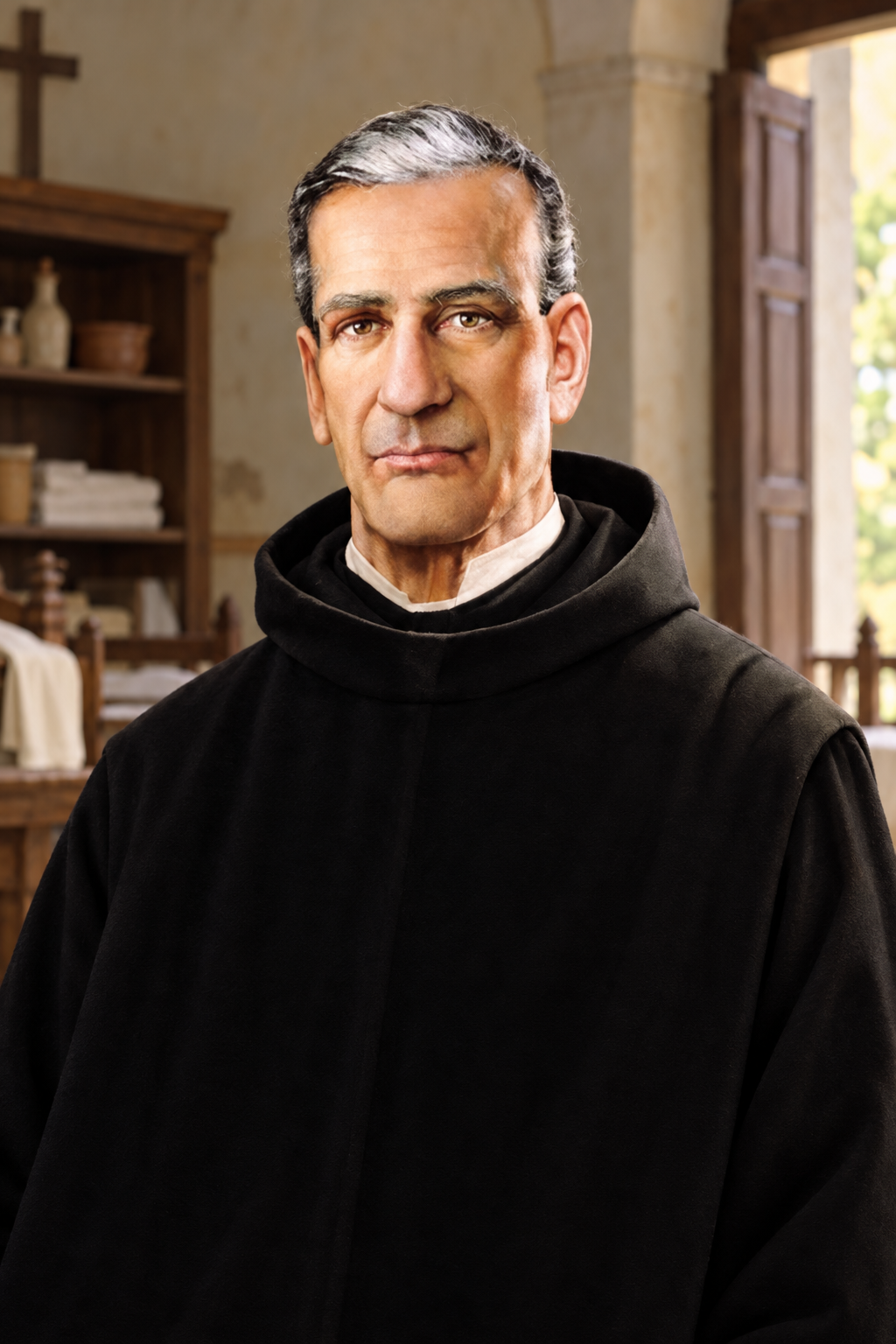
About José Olallo Valdés
José Olallo Valdés was born in Havana on February 12, 1820, to parents whose identities are not recorded in his official biography. He grew up in charitable institutions and entered the Hospital Order of Saint John of God as a young teenager. In April 1835 he was assigned to the hospital at Puerto Príncipe, now Camagüey, where he spent the rest of his life caring for patients.
The order’s account describes his service during the cholera epidemic of 1851. He worked as senior nurse and became superior of the community in 1856 without giving up direct care of sick and needy people. His responsibilities included tending wounds and sores, and his patients included poor people and enslaved people. The same account records that he spent his last thirteen years without another brother in the community.
Félix Lizaso, the postulator responsible for presenting his cause for beatification, recalled another difficulty in Olallo’s early hospital life. According to Lizaso, his first superior in Camagüey initially regarded him as an immature youth. Within months, that distrust had given way to affection and confidence in his work. Lizaso also described a prolonged responsibility within the shrinking community: Olallo cared for his seriously ill fellow brother, Juan Manuel Torres, for ten years. The interview places this personal care alongside his public hospital duties. His eventual solitude followed years of attending to a companion whose needs required sustained practical support.
A later nursing history by Onassys Barreiro Alberdi and Yanet Blanco Fleites describes the practical routines behind this service. Olallo began by checking the wards, changing soiled materials and helping patients wash. He prepared medicines as the hospital doctor prescribed and accompanied the doctor on rounds, writing down instructions at the bedside. He also watched over the distribution of meals so that food reached everyone. The account presents nursing as a combination of treatment, cleanliness, nourishment and attention to individual patients.
The same history describes work beyond the wards. People from the neighborhood came for care, and Olallo visited sick neighbors at night when they asked for help. He kept notebooks recording admissions, discharges, illnesses and the hospital’s financial transactions. He also taught poor children to read and write. Before resting, he went through the wards again; when a patient was seriously ill, he returned during the night to offer company and relief. These details come from a retrospective account, rather than hospital registers examined for this biography.
The apostolic letter recalls that he remained at the hospital when religious orders were being suppressed. It also records his participation in spiritual exercises led by Archbishop Anthony Mary Claret in July 1851. Later he relinquished responsibility for administration to the local charitable authorities, allowing him to concentrate on caring for patients. His work extended to sick prisoners, enslaved people, and orphans.
During the Ten Years’ War, he cared for prisoners and wounded people without making social or political allegiance a condition of assistance. The Holy See’s biography describes his defense of patients whom the government had not authorized to receive care. Although commonly called Padre Olallo, he declined an invitation to become a priest because he understood his vocation as service to sick and poor people.
At his beatification, Cardinal José Saraiva Martins recalled an episode in which Olallo intervened before military authorities to protect the people of Camagüey. According to the cardinal’s account, he prevented the ringing of bells intended as a signal for an attack. The homily also remembered his care for sick prisoners before, during, and after the conflict. These recollections placed his hospital service within the wider dangers faced by the city’s vulnerable inhabitants.
Olallo died in his hospital in 1889. The order’s history emphasizes that local people continued to remember him even when the brothers were no longer present in Cuba. On the centenary of his death, residents sought the opening of his cause from the bishop and the order’s superior general. His remains now rest in the church beside the former hospital.
His beatification took place in Camagüey on November 29, 2008, with Cardinal José Saraiva Martins presiding as the pope’s representative. The order’s report describes a cultural tribute on the preceding evening, involving local musicians, dancers, and dramatic performers. The Mass filled the Plaza de la Caridad and brought together Cuban bishops, members of the hospital order, civil representatives, and many residents. Afterward, his remains were carried back to the Church of Saint John of God through the city streets.
The apostolic letter authorizes the title Blessed and the celebration of his feast on February 12 in the places and manner established by church law.
The report of the celebration recalled his daily provision of bread for poor people at the hospital door. His public remembrance centered on care made concrete through nursing, food, and a sustained presence among people in need.
Wondering how to weigh the stories and sources? Learn how to read a saint biography.