Biography
Joseph
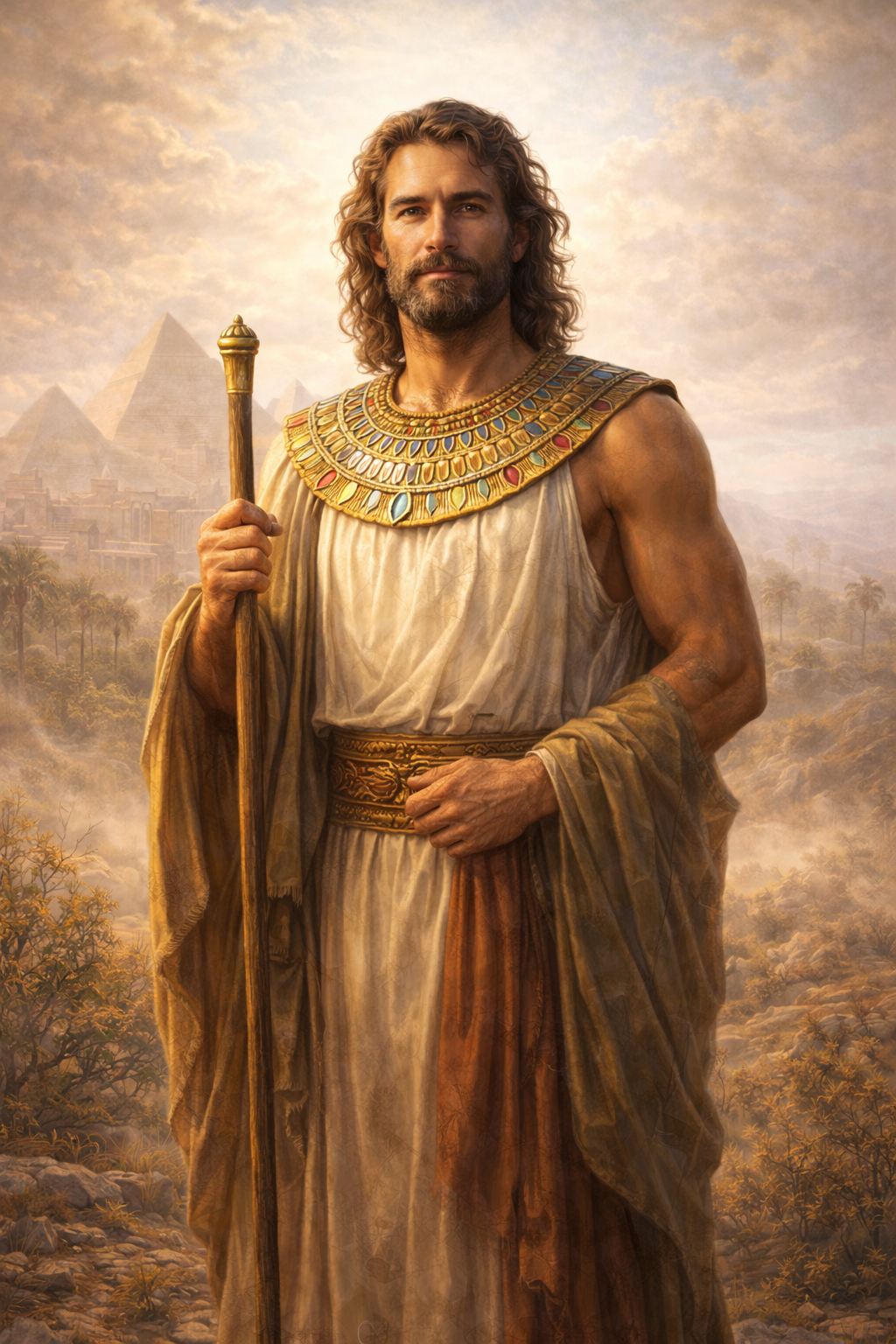
About Joseph
Joseph enters the Genesis narrative as a son of Jacob and Rachel, born after Rachel's long period without children. Rachel names him Joseph and connects the name with her hope for another son. Genesis later describes him at seventeen, tending flocks with his brothers and reporting their misconduct to Jacob. Jacob's marked affection for Joseph and the special garment he gives him deepen resentment within the household. Joseph also recounts dreams in which his brothers, and then his family, bow before him. The text presents those dreams as part of the conflict; it does not provide an independent calendar date or a modern psychological portrait.
Jacob sends Joseph from the valley of Hebron to find his brothers near Shechem. A man redirects him to Dothan, where the brothers see him approaching and discuss killing him. Reuben argues against bloodshed, intending to rescue him, but Joseph is stripped and placed in an empty cistern. While Reuben is absent, traders carry Joseph toward Egypt after a sale described with overlapping Ishmaelite and Midianite language. The brothers stain Joseph's garment and allow Jacob to conclude that a wild animal killed him. Genesis thereby remembers Joseph's movement to Egypt through betrayal, trafficking, and family deception rather than voluntary migration.
In Egypt Joseph is sold to Potiphar, an officer of Pharaoh. Genesis says that Joseph prospers and is placed over Potiphar's household. When Potiphar's wife repeatedly demands sex, Joseph refuses, citing loyalty to his master and sin against God. She then accuses him after retaining his garment, and Potiphar has him confined. The narrative does not identify her by name or claim that Joseph received a hearing. Even in prison Joseph is entrusted with responsibility, a repeated narrative pattern that links competence with vulnerability under other people's power.
Joseph meets Pharaoh's chief cupbearer and baker in custody and interprets their dreams. He tells the cupbearer that restoration is coming and asks to be remembered, while warning the baker of death. The outcomes follow the interpretations, but the restored cupbearer initially forgets Joseph. Two years later Pharaoh dreams of cattle and grain, and the cupbearer finally recalls the imprisoned interpreter. Joseph tells Pharaoh that interpretation belongs to God before explaining the dreams as seven abundant years followed by seven years of famine. He also proposes collecting grain during abundance.
Pharaoh appoints Joseph over Egypt, gives him an Egyptian name, and arranges his marriage to Asenath. Joseph administers grain collection before the famine and becomes the father of Manasseh and Ephraim. The narrative assigns him an age of thirty at his elevation, but that figure belongs to its internal chronology and is not converted here into a BCE year. When famine spreads, people come to Egypt for grain. Psalm 105 and Acts later retell Joseph's enslavement and rise as part of Israel's sacred memory, not as independent administrative archives.
Joseph's brothers arrive from Canaan to buy food and bow before the official they do not recognize. Joseph recognizes them, recalls his dreams, and questions them as spies. He holds Simeon while requiring the others to return with Benjamin. Their distress awakens memories of what they did to Joseph, and Reuben reminds them that he had opposed harming the boy. Joseph turns away and weeps. He secretly restores their money, an action that supplies food but also increases their fear when they discover it.
When the famine forces a second journey, Judah pledges responsibility for Benjamin. Joseph receives the brothers, asks about Jacob, and is overcome on seeing Benjamin. After a meal he arranges a final test by placing his silver cup in Benjamin's sack. Judah then offers himself in Benjamin's place because losing the younger son would devastate their father. The speech shows that the family has changed since Joseph was abandoned. Joseph's testing is ethically difficult, but Genesis uses it to bring concealed guilt, responsibility, and care into the open.
Joseph can no longer control his emotion and reveals his identity. He tells his frightened brothers not to be distressed, interpreting his arrival in Egypt as a means by which lives were preserved during famine. That providential interpretation is Joseph's claim within Genesis; it should not be generalized to excuse trafficking or abuse. He embraces Benjamin, weeps with his brothers, and sends provisions and wagons for Jacob's household. Pharaoh supports the invitation, and Jacob agrees to go after hearing that Joseph is alive.
Genesis lists Jacob's household entering Egypt and stages the reunion in Goshen. Joseph presents members of his family to Pharaoh and settles them in the region of Rameses. The famine administration then centralizes money, livestock, land, and labor under Pharaoh, while priestly land remains exempt. The account records both preservation through stored grain and the concentration of royal power. A careful biography must retain both features rather than turning Joseph's administration into uncomplicated praise. The place-names support regional map events, but they do not justify an invented route or precise archaeological coordinates.
Near the end of Jacob's life, Joseph brings Manasseh and Ephraim for a blessing. Jacob crosses his hands, placing the greater blessing on the younger Ephraim despite Joseph's objection. After Jacob dies, Joseph leads an Egyptian mourning procession and burial journey to Canaan. His brothers again fear retaliation, but Joseph weeps, reassures them, and promises to provide for them and their children. Genesis gives Joseph a narrative lifespan of 110 years and says that his body was embalmed and placed in a coffin in Egypt. No independently documented birth or death year follows from that literary chronology.
Later Jewish and Christian scriptures remember Joseph as a person sold into slavery whom God did not abandon. Christian liturgy also names the patriarch among the forefathers, while the Orthodox Church in America observes their collective Sunday between December 11 and 17. These commemorations document reception rather than prove every narrated detail. Joseph's story remains significant for its unsparing movement through favoritism, exploitation, integrity, administration, testing, reconciliation, and care. Its strongest virtues appear in actions: resisting coercion, serving responsibly in confinement, preparing for famine, forgiving without denying wrongdoing, and sustaining the family that had harmed him.
Wondering how to weigh the stories and sources? Learn how to read a saint biography.
Prayers for Joseph
Forefathers hymn excerpt mentioning Joseph
We commemorate the Patriarch Joseph