Biography
Joseph Calasanz
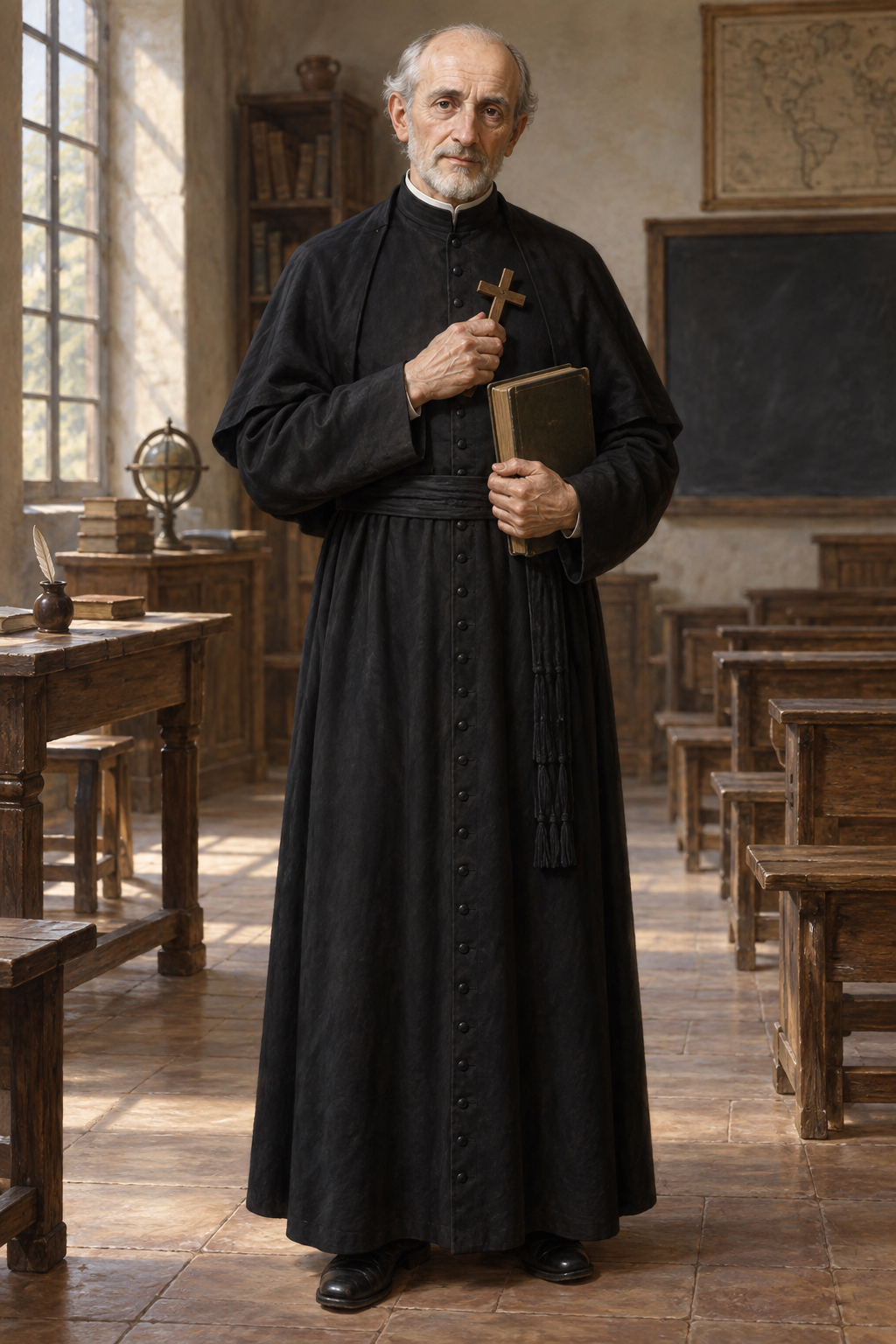
About Joseph Calasanz
Joseph Calasanz is remembered as a pioneer of Christian popular education and founder of the Piarist tradition. Pope Francis, addressing the Calasanzian Family, places his charism in the service of young people, especially those who were poor. The emphasis is not merely on the existence of schools; it is on education as a response to inequality and as a form of Christian care.
The founding context was Rome. A Vatican education document recalls the beginnings of a free school and the emergence of the Piarists. This setting shows why Calasanz’s work was distinctive: children without means could be excluded from instruction that was increasingly necessary for civic, social, and religious life. Free schooling made a practical claim about dignity.
Calasanz’s educational vision was integral. Francis describes a formation that attends to the whole person rather than treating knowledge as merely technical. For Christian educators, this includes intellectual development, moral responsibility, faith, relationships, and preparation for life. It should not be confused with paternalism: the point is to recognize young people as persons with gifts and a future, including those whom poverty might otherwise keep outside the classroom.
The Piarist community gave this vision a durable form. A founder does not simply establish a building; he forms a way of life through which teaching becomes a shared vocation. The sources show that the Calasanzian legacy is carried forward through religious and lay educators who seek to keep the poor at the center of their work. That continuity is part of what makes Calasanz’s charism an ecclesial rather than purely personal achievement.
Pope Francis also connects the tradition with contemporary educational challenges. The historical founder should not be made to speak directly to every modern issue, but the principle is clear: educational institutions must ask who is excluded, who lacks resources, and how learning can serve human flourishing. In this respect, Calasanz’s legacy continues to be examined not only in classrooms but in the social choices that determine who can enter them.
This source packet stays within what its evidence supports. It presents Joseph Calasanz as a priest and founder associated with free education in Rome, a spiritual father of the Piarists, and a patron of Christian popular schools. Exact birth and death data, foundation dates, and other structured facts require separate confirmation before acceptance. The documented heart of his story is already clear: he saw poor children’s education as a work of justice and charity.
Free schooling was a practical expression of this conviction. It addressed a barrier that could keep children outside the forms of learning needed for participation in social and religious life. The founding context in Rome gives the charism a concrete setting, but the source does not require a romantic picture of early classrooms. It supports a more durable claim: education was treated as a work of mercy because poverty should not decide whether a child can learn.
The word “integral” helps describe the Piarist vision. It includes intellectual formation, but it refuses to treat young people as minds alone. Faith, moral responsibility, relationships, and preparation for life are part of the whole person. This does not make education a tool of control. It calls educators to recognize young people as people with dignity, gifts, and a future that should not be narrowed by the circumstances into which they were born.
Calasanz’s work took institutional form because a school needs more than good intentions. Teachers require formation; students require stable welcome; communities require resources and shared responsibility. The Piarist tradition gave these needs a religious and communal structure. A source packet cannot document every later school or policy, but it can identify this founding principle: care for poor children must be organized if it is to endure.
Pope Francis’s modern reflection also keeps the legacy from becoming merely historical. Educational exclusion now appears in many forms, including displacement, unequal resources, disability, language barriers, and the loss of supportive relationships. Calasanz should not be made to speak directly to situations he did not know. His charism can nevertheless invite schools to ask whom they are failing to welcome and how learning can be made genuinely accessible.
The patronage of Christian popular schools is received within this same horizon. It honors a founder whose educational work combined faith and justice. It does not relieve institutions of the responsibility to provide competent teaching and safe care. Instead, it makes their mission accountable to the dignity of young people, particularly those most likely to be excluded.
For a reliable public account, these documented themes are enough. Joseph Calasanz was a priest and Piarist founder who established a free-school tradition in Rome and directed it toward poor children. His legacy continues to ask whether education is treated as a privilege or as a shared good. Exact chronology remains a separate research task, not a gap to fill with invention.
Wondering how to weigh the stories and sources? Learn how to read a saint biography.