Biography
Juan Diego
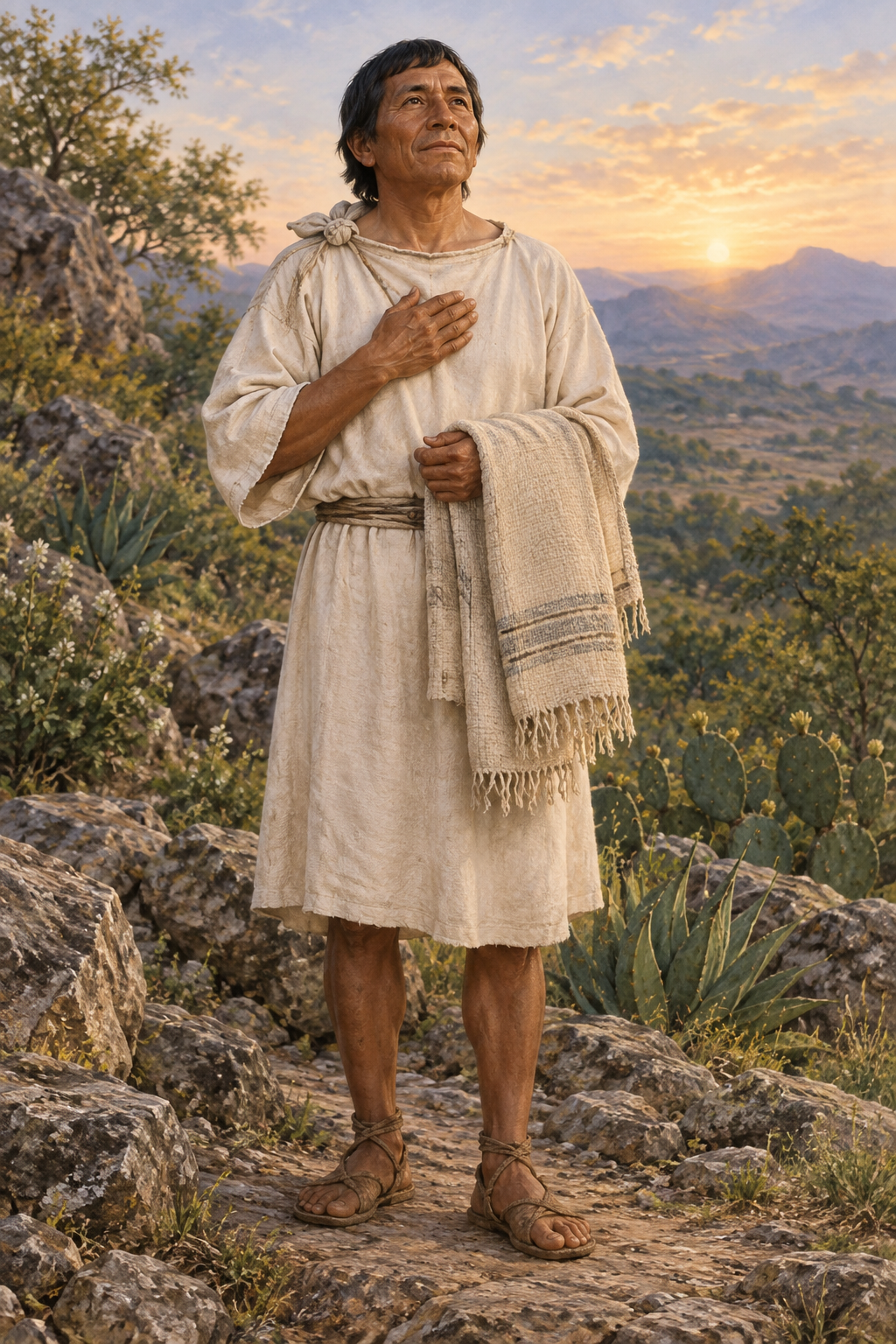
About Juan Diego
Juan Diego is honored as an Indigenous Christian associated with the earliest Mexican Catholic tradition surrounding Our Lady of Guadalupe. The Vatican biography gives traditional dates of 1474–1548 and names Cuautitlán as his place of origin. It also reports his baptism in the early colonial period. These details belong to a received ecclesial account and should be presented with the source’s own caution rather than treated as a modern archive independently proving every event.
The Guadalupan apparition narrative is central to Juan Diego’s devotion. The Vatican biography explicitly frames the tradition through later sources. That wording is essential: Christians may receive the narrative as a formative devotional tradition, but a historical catalog must not claim that every conversation, date, and miracle is independently documented from the sixteenth century. The difference allows the entry to be reverent without confusing tradition and documentary proof.
John Paul II canonized Juan Diego in Mexico in 2002 and described him as the first Indigenous saint of the American continent. In his homily, the Pope connected Juan Diego’s witness with the dignity, faith, and cultural identity of Indigenous peoples. The canonization is a major fact of Church reception; it does not require reducing Juan Diego to an emblem or treating Indigenous identity as a decorative feature.
The story’s spiritual power lies in its presentation of the Gospel within the languages, symbols, and communities of the Americas. This theological reception should be handled with humility. Indigenous Christian history includes joy, suffering, coercion, resilience, and complex local agency. Juan Diego’s canonization has significance precisely because it refuses to describe Indigenous peoples as outside the Church’s holiness or merely as recipients of someone else’s story.
The available sources support an account centered on faithfulness and reception, not an exhaustive private biography. Juan Diego was from Cuautitlán, became a Christian, is linked by later tradition to Guadalupe, and was canonized in 2002. The life dates in the Vatican account can be used with source attribution and appropriate caution. Detailed apparition events belong under an explicit tradition label.
For many believers, Juan Diego remains a sign of God’s closeness to people who have been overlooked. The source packet does not turn that spiritual meaning into a claim that all historical questions are settled. It preserves both the faith of a living devotion and the honesty needed for public historical content. That balance respects the saint, the Guadalupan tradition, and Indigenous communities whose histories deserve careful listening.
The historical category of tradition should not be confused with unimportance. The Guadalupan narrative has formed prayer, art, pilgrimage, and communal identity for generations. Its spiritual authority for believers is rooted in reception, worship, and testimony. A public account can acknowledge that living force while also saying that the narrative was written and transmitted through later sources rather than recorded in a complete contemporary archive.
Cuautitlán and the traditional dates provide a modest historical frame, but they do not entitle the catalog to fill every year of Juan Diego’s life with detail. The baptism account and the tradition surrounding Guadalupe belong to a complex colonial history that must be approached with care. Indigenous communities were not merely passive settings for evangelization; they had languages, memories, social structures, and forms of agency that continue to shape Catholic life in Mexico and beyond.
John Paul II’s canonization in 2002 is therefore important in more than a ceremonial sense. Calling Juan Diego the first Indigenous saint of the American continent publicly affirmed that Indigenous Christian witness belongs at the heart of the Church’s holiness. That recognition should not erase the violence and coercion that affected Indigenous peoples in colonial history. It can be received as an invitation to listen more attentively to Indigenous Catholic communities and to honor their dignity.
The apparition tradition is also a source of theological reflection on inculturation. Christians have understood the Guadalupan story as proclaiming the Gospel through symbols and language meaningful in the Americas. This interpretation should not be used to flatten cultural differences or claim an uncomplicated harmony between Christianity and colonial power. It does explain why the tradition remains a source of hope for many people who seek a faith that speaks within, rather than against, their histories.
Juan Diego’s identification as a lay Indigenous Christian also matters. Holiness is not restricted to clergy, missionaries, or people with institutional authority. The Church’s reception of his life makes visible a witness rooted in an ordinary person and a local community. That spiritual significance can be stated without turning every devotional detail into an independently verified historical fact.
The strongest account therefore holds together devotion and honesty. Juan Diego is traditionally associated with Cuautitlán, baptism, and Guadalupe; the apparition narrative is explicitly labeled tradition; and his canonization in 2002 gives the Church’s public reception of him a firm historical point. That balance honors the tradition without demanding that readers abandon careful distinctions about evidence.
Wondering how to weigh the stories and sources? Learn how to read a saint biography.