Biography
Julia Chester Emery
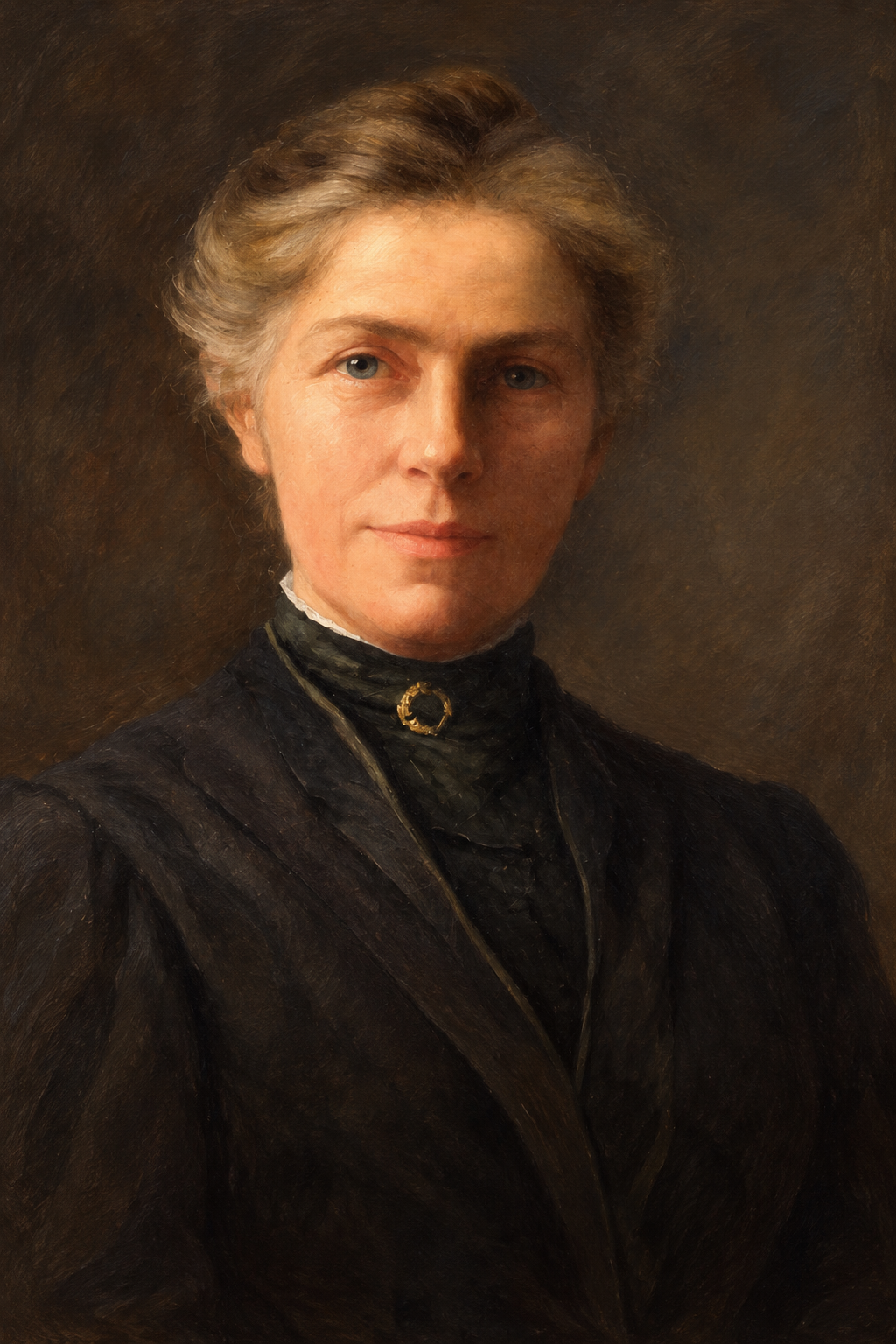
About Julia Chester Emery
Julia Chester Emery helped make women’s organized work a lasting force in the Episcopal Church. Born in Dorchester, Massachusetts, on September 24, 1852, she became secretary of the Woman’s Auxiliary in 1876 and served for forty years.
Her letter to her father on May 4, 1876, preserves her response to the proposed appointment. She reported that the secretaries had met and chosen her to take Mary’s place, but had allowed her time to consider her answer. She asked what her father thought and identified her youth as the most obvious objection. She wondered how the women with whom she would work might receive someone so young. At the same time, she told him that Mary had already heard favorable comments about her succeeding to the office. The work seemed varied and extensive, with difficult parts, but she did not consider any part impossible. She expected a heavy responsibility and hoped to consult Mary and other advisers. Rather than claiming certainty or enthusiasm, she described the opportunity as something that had come to her quietly and naturally. She repeated that she had not yet decided and wanted her father’s opinion. The letter records deliberation before acceptance, rather than a retrospective account of an inevitable vocation.
She succeeded her sister Mary, who recommended her for the position. Her work connected women supporting missions with the people serving in them. Alongside shipments of clothing and supplies, the Auxiliary developed a lending library that sent missionaries fiction and nonfiction by mail. Emery represented the Diocese of New York at the Pan-Anglican Congress in 1908 and the Board of Missions at the World Missionary Conference in Scotland in 1910.
A contemporary report of her visit to the 1908 Pan-Anglican Congress shows how travel could serve the Auxiliary’s work at home. Published in The Spirit of Missions as The Travelling Secretary, it describes her attendance at discussions about missionary methods and the preparation of workers. The report urges women who had attended to share what they learned through letters, parish publications and local meetings. Branches unable to send representatives were encouraged to draw on those that had. It also recommends placing the published congress papers in diocesan libraries for future reference. Attention to the congress’s careful organization led to another practical lesson: the need to enlist more voluntary help. These recommendations connect her international participation with the continuing education of women in scattered branches, treating the journey as a way to circulate knowledge rather than as an experience belonging only to its participants.
The growth of the Auxiliary also raised questions about who would control its work. A United Thank Offering history, drawing on historian Mary Sudman Donovan, describes the Board of Missions’ concern that special gifts to individual missionary projects could weaken its authority to set priorities. Emery and her sister defended the Auxiliary’s existing contribution while proposing broader responsibilities for women. Their efforts to sustain missionary work were also efforts to secure women’s influence within the church.
Emery’s own resignation letter gives a quieter view of her leadership. Writing to Bishop Lloyd on April 7, 1916, she recalled that she had been chosen secretary forty years and two months earlier. She considered that a long tenure and believed the office should pass into other hands. She did not describe herself as unable to work: she said she was well and strong. Rather, she offered to serve the church in another capacity connected with the Board or the Auxiliary. The letter closes with thanks for the friendship and kindness shown to her. Retirement from her office thus did not mean withdrawing her willingness to serve.
She later turned to historical writing. In 1921 she published A Century of Endeavor and A Half-Century of Progress, recording the work of the church and the Auxiliary.
Her preface to A Century of Endeavor explains how that historical work began. Bishop Lloyd and John W. Wood had asked her to examine the Missionary Society’s records and make notes. Emery describes using convention journals, diocesan records, reports, church histories and biographies in the Church Missions House library, alongside nearly fifty years of personal recollections. The research drew her beyond the original commission. She carefully defined the book’s limits: it traced the Society’s efforts to organize and sustain mission, rather than attempting a full account of life in the mission field. She also acknowledged that its institutional story could not adequately record all the voluntary service behind it. Her choice of title was deliberate. She called it a history of endeavor because she believed that much work remained unfinished. For Emery, recording the past meant providing experience on which later workers could build, rather than announcing that the church’s task had been completed.
Her longtime colleague Margaret Tomes describes visiting her in Scarsdale on the day she died, January 9, 1922. The Episcopal Church remembers her that day as a lay leader and missionary.
Wondering how to weigh the stories and sources? Learn how to read a saint biography.