Biography
Laura Vicuña
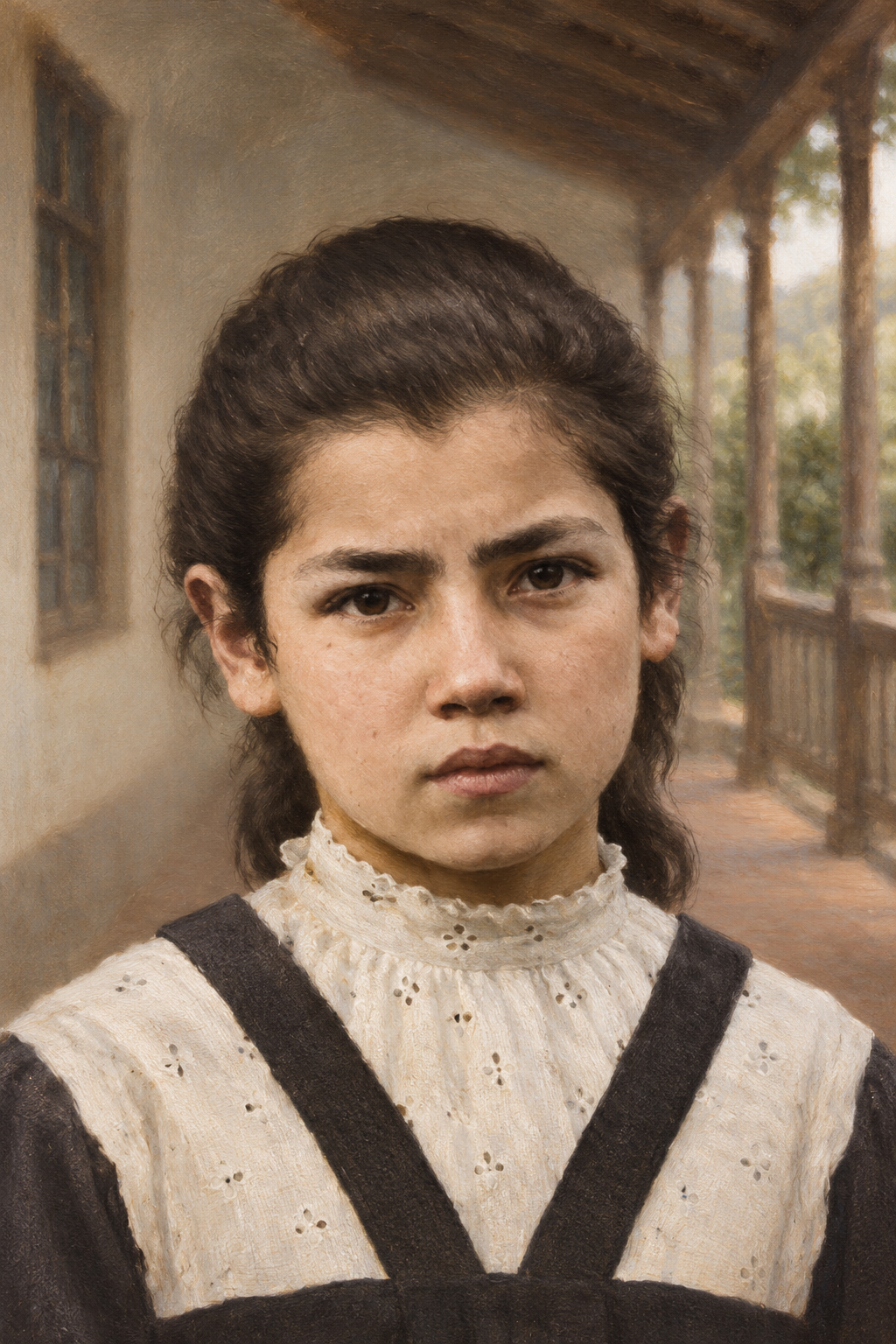
About Laura Vicuña
Laura Vicuña was a Chilean girl whose schooling in Argentina became the center of a short but deeply remembered religious life. She was born in Santiago in 1891 and lost her father while still young. Her mother took her to Argentina. Laura attended a school run by the Daughters of Mary Help of Christians, the Salesian Sisters. Her life joined two countries and the educational community that would preserve her memory.
The sisters welcomed her into their school in 1900. Their account places her First Communion in the following year and describes her wish to love God, help others know Christ and remain faithful to the commitments she was learning. Religious formation was therefore part of ordinary school life, rather than a public ministry or a position of authority. The same account records private promises of poverty, chastity and obedience made with her confessor’s permission. These were personal commitments; Laura was a pupil and did not become a professed Salesian sister.
A study by the Salesian priest Hugo Strahsburger San Martín identifies several adults in that environment. They included the director Angela Piai, the Chilean sister Rosa Azócar and the priest Augusto Crestanello, Laura’s spiritual director. His study describes the school as a small boarding establishment in a mission settlement. Lessons, recreation, prayer and preparation for the sacraments formed an interwoven daily routine. This account also places the school within a rural society in which families could be isolated and economically dependent on powerful landowners. The setting helps explain why the support of an educational community mattered in Laura’s story.
Her mother lived with a ranch owner. In the account John Paul II repeated at Laura’s beatification, that relationship was marked by the man’s violence, and the household became dangerous for Laura as well. The pope described the Salesian school as a spiritual refuge. He also recounted Laura’s concern for her mother’s religious life and her offering of her own life to God for her mother. This is the devotional interpretation preserved by her Catholic witnesses and publicly received in the beatification homily, rather than a medical explanation of her eventual death.
Laura’s final illness brought that concern into the accounts of her last days. The Salesian Sisters report that she spoke to her mother about the offering and that her mother subsequently returned to the sacraments. They give Junín de los Andes as the place of her death on 22 January 1904. She was twelve. The community continued to remember both her religious determination and the family suffering surrounding her. Her remains were later kept in the sisters’ chapel in Bahía Blanca, Argentina.
The way her story was handed down needs care. Crestanello wrote an early biography, and later Salesian writers retold and interpreted his account. Strahsburger compares versions of the resolutions associated with Laura’s First Communion. He notes that a phrase explicitly referring to her family appears in Luigi Castano’s later telling but is absent from the Crestanello and Ciro Brugna texts he discusses. This comparison shows why remembered words should not all be treated as an unchanged personal diary. The spiritual meaning later writers found in Laura’s life can be described without presenting every later formulation as her exact speech.
John Paul II beatified Laura at Colle Don Bosco in Italy on 3 September 1988, during the centenary year of John Bosco’s death. He placed her among young people formed through Salesian education and specifically acknowledged the work of the Daughters of Mary Help of Christians. The ceremony connected remembrance of one pupil with the wider history of that religious family. His homily also drew attention to children’s need for a family environment of love and human and Christian formation. Her Catholic recognition is that of a blessed; it does not turn the violence she experienced into an example to be sought.
Later members of the Salesian community have returned to the story with particular attention to vulnerable children. In a 2018 interview, the sisters Susana Billordo and Silvia Dupont explained their decision to write about Laura for young people whose lives also contained abandonment or family violence. They emphasized the community around her: women who educated and accompanied her, and adults who listened and offered another way of relating. Their reading directs attention toward the support surrounding a child, as well as toward the child’s own faith.
Laura’s name also belongs to practical social work. Fundación María Auxiliadora describes a Salesian project begun in Torrent, Spain, in 1975 for the support and advancement of women. It also records an association created in 1993 and a day center for children and adolescents opened in 1999 under her name. The foundation’s account links education, preparation for work and support for people becoming independent. In this continuing institutional memory, the Chilean schoolgirl is associated with places where young people and women receive the help and opportunities that her own brief life made urgently visible.
Wondering how to weigh the stories and sources? Learn how to read a saint biography.