Biography
Liduina Meneguzzi
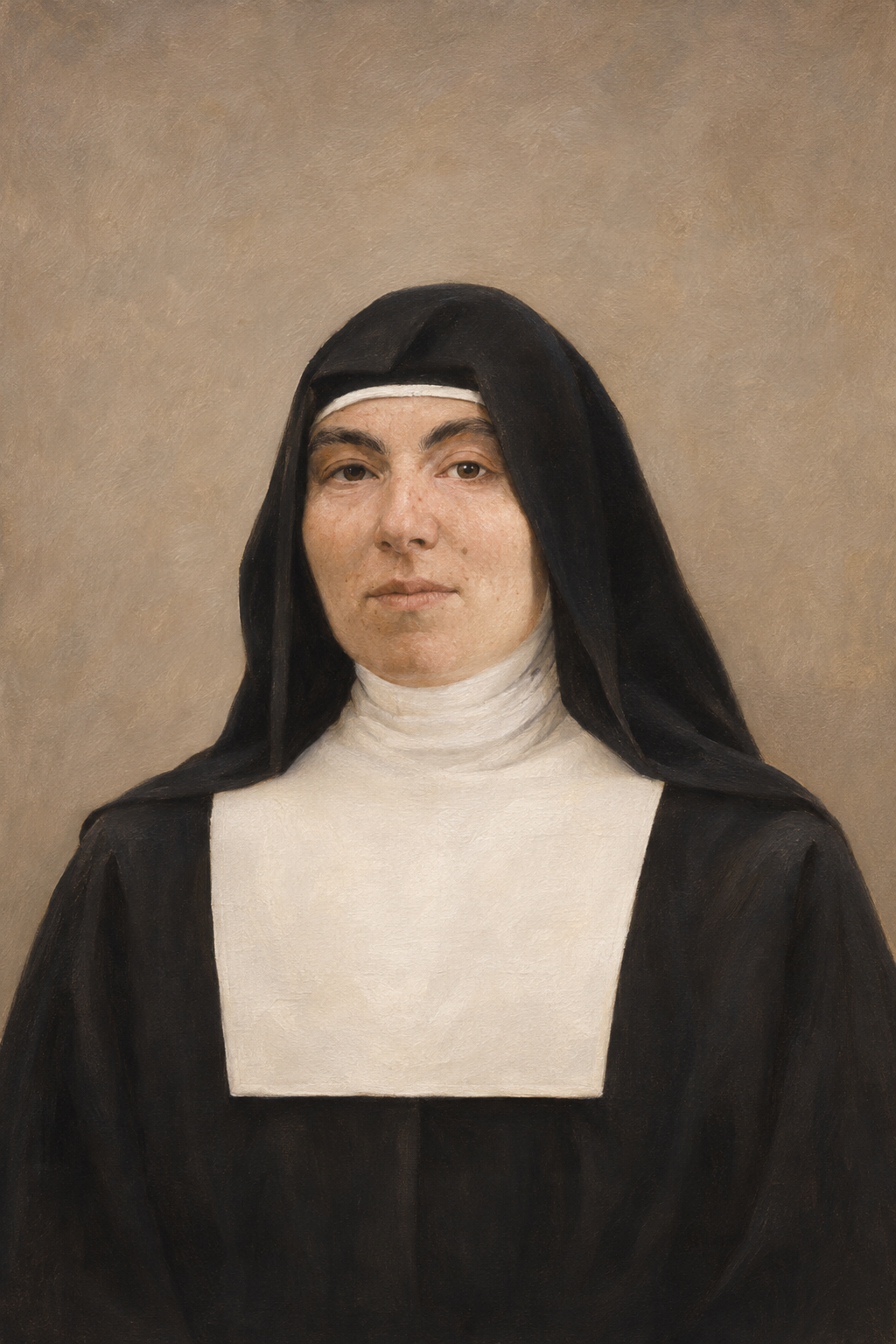
About Liduina Meneguzzi
Elisa Angela Meneguzzi was born on 12 September 1901 at Giarre, a village near Abano Terme in the province of Padua. Her family worked in agriculture and lived modestly. Catholic practice was part of her childhood, and she later helped teach catechism. At fourteen she began working outside the home to contribute to the family’s support. Employment in private households and the hotels of the thermal resort occupied the years before she entered a religious congregation.
Camporese’s account places her work at the Due Torri hotel and connects her religious formation with Salesian sisters already present around Abano. Her desire for consecrated life developed amid ordinary employment and family responsibilities. The article also records a brief period of nursing preparation at Padua’s hospital before her departure for Africa. A memorial relief at the Giustinianeo recalls that training. Her later service therefore grew from practical work as well as from an aspiration to missionary life.
She entered the Sisters of Saint Francis de Sales in Padua on 5 March 1926 and received the name Liduina. Her duties at the Santa Croce boarding school included household service, the sacristy and nursing. Students remembered her as someone they could approach for help and advice. These tasks placed her close to the daily needs of a school community. The congregation’s name refers to Francis de Sales; it should not be confused with a different institute simply because the word Salesian appears in translation.
Her first religious profession followed in 1928, and she made perpetual profession in 1934. In 1937 she was sent to Ethiopia with other sisters from her community. This fulfilled a long-standing wish to become a missionary. The assignment took her to Dire Dawa, where people of different cultural backgrounds and religious traditions lived alongside one another. Her principal work was nursing in the Parini hospital, a setting in which care brought her into direct contact with patients whose lives and beliefs differed from her own.
The hospital’s work changed under the pressures of war, and wounded soldiers arrived for treatment. The official biography remembers Liduina helping move injured people to shelter during bombardments and returning to assist others. It also describes her care extending across racial and religious distinctions. The account’s central image is a nurse whose response was directed toward the person suffering before her. Her religious purpose was expressed through that service, including the care of those approaching death.
A later account from Italy’s Military Ordinariate recalls her hesitation before asking to go on mission. She doubted her abilities but was willing to undertake even cleaning work. The same remembrance notes that her service did not always receive understanding or gratitude. This detail gives a more demanding picture than praise alone. Work among sick and wounded people included relationships that could be difficult, and her community remembered persistence in care despite those difficulties.
The postulator Andrea Ambrosi later described her as a point of reference for hospital staff as well as patients. His account emphasized encouragement for people in distress and comfort for the dying. He also connected her reputation with the respect she received among Muslims and other non-Catholics. The language of an ecumenical flame belongs to that later Catholic interpretation of her life. It expresses the community’s remembrance of care offered beyond the boundaries of its own religious membership.
Illness eventually interrupted her work. She died at Dire Dawa on 2 December 1941, after an operation and a short final period of decline. She was forty years old. Her body was initially buried in the city, among the graves of Italian soldiers. The Catholic cause later examined her life, and John Paul II proclaimed her Blessed on 20 October 2002. Her recognition was that of a religious woman whose service expressed charity; she was not beatified as a martyr killed for the faith.
At the beatification, the pope recalled her work in the mission hospital and her generosity toward people of different religions. He placed her memory within a message of hope, love, solidarity and service. The ceremony also honoured other witnesses from very different circumstances. Liduina’s part in it remained closely connected with nursing and with the poor and suffering people she had served in Ethiopia. Her brief missionary assignment became central to the Church’s public remembrance of her life.
The following day, John Paul II greeted pilgrims from Padua and the Sisters of Saint Francis de Sales. He again emphasized her missionary character, remembering care for the wounded, encouragement for the afflicted and consolation for the dying. His address presented her example through respect for human life and generous self-giving. This was the message addressed to the community that continued to preserve her memory, linking an international celebration in Rome with her own religious family and home diocese.
Her memory also remains rooted in the places where she grew up. In 2026, the parish priest of Giarre and San Lorenzo spoke about understanding her as a real woman whose generosity was expressed in daily life. He recalled her years around Abano and the continuing connection of local families with her story. That local remembrance complements the account of hospital service abroad. It keeps visible the many years of work, formation and relationships that preceded the four years she spent in Ethiopia.
Wondering how to weigh the stories and sources? Learn how to read a saint biography.