Biography
Lillian Trasher
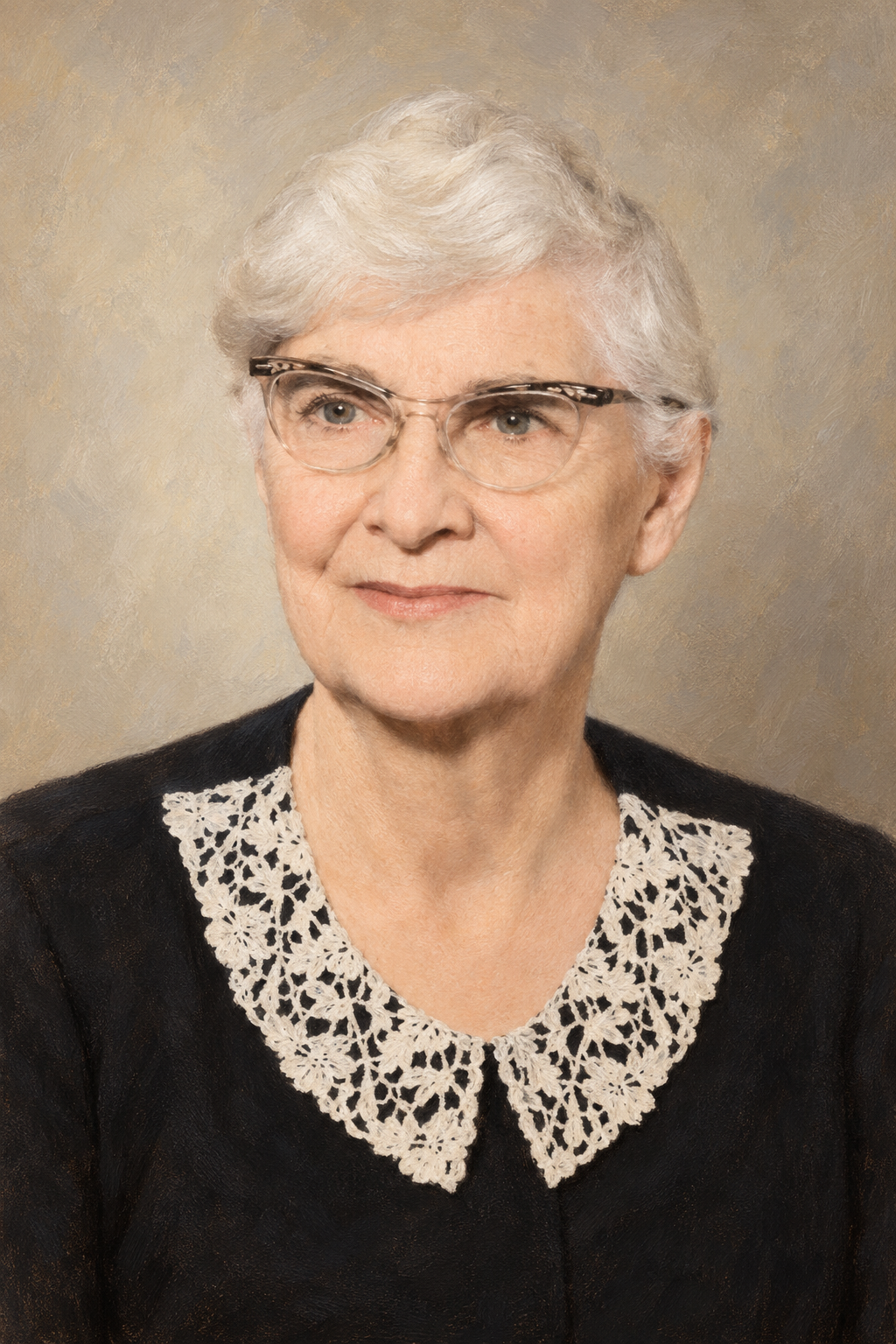
About Lillian Trasher
Lillian Trasher was an American Pentecostal missionary whose work in Egypt centered on the care of children. Born in Jacksonville, Florida, she grew up in Brunswick, Georgia, and later moved with her family to Asheville, North Carolina. An invitation from Mattie Perry brought her into orphanage work. There she learned practical tasks such as caring for infants, making clothes, and teaching children with limited resources. She also studied at a Bible school in Cincinnati and traveled as an evangelist before leaving for Egypt in 1910.
Her orphanage began in 1911 after she took responsibility for a baby whose mother had died. She initially worked without the support of a mission board. Her church connections changed over time: she held evangelistic credentials with the Church of God before affiliating with the Assemblies of God in 1919. Her work combined material care and religious instruction.
In a report published in 1935, Trasher described the daily difficulty of feeding a large household. Money for food could run short even while she was caring for sick infants. She recalled anonymous gifts, assistance from local friends, and a money order from South Africa arriving when supplies were needed. A staff member responsible for meals appears in the account, reminding readers that the work required other people as well as its founder. Trasher understood these gifts as evidence of God’s care. Her article is testimony to that conviction, rather than independent proof of miraculous intervention. It also records an ordinary network of donors, postal communication, purchasing, and shared responsibility. She was caring for three infants in her own room while one baby was ill and the mail brought only five dollars for bread. Rather than leave the child, she telephoned the post office to ask about incoming funds. Other gifts covered meat for the children, while another shortage involved soap, sugar, and flour. She described sending a donkey cart into town to collect provisions.
Historian Beth Baron places the institution within Egyptian society. Local women, wealthy families, merchants, workers, and rural donors contributed food, clothing, money, and services. Egyptian staff and widowed residents supplied essential labor. Children who grew up in the home helped care for later arrivals. The institution was therefore sustained by Egyptian participation, not only by an American founder and overseas supporters. Baron also notes that many residents had a surviving parent whose circumstances made care difficult. The name orphanage should not imply that every child had lost both parents.
Religious instruction became a source of conflict. Baron describes a 1926 charitable trust that provided for Muslim children to be taught Islam and Christian children to receive Assemblies of God instruction. Muslim children nevertheless attended Christian services. The contrast between those arrangements and actual practice became important during the anti-missionary controversy of 1933.
A contemporary Pentecostal Evangel report, based on Trasher’s correspondence, said officials examined the orphanage, its accounts, and its financial reports. It presented their response as appreciative, but also recorded the governor’s decision to transfer Muslim children to government institutions so that they would not receive Christian missionary teaching. The article described Trasher’s distress when the children left and the mission’s hope that its teaching would continue to influence them. This denominational account preserves both the care she offered and the explicitly evangelistic purpose of the institution. It is not the original government inspection record.
The shelter also carried difficult consequences for some families. Baron’s account notes that widows could be physically separated and socially distanced from their children within the institution. Their work helped sustain the home, while their relationships with their children could be altered by its organization.
Trasher’s work continued into old age. In 1960 she shortened a visit to the United States because of illness, wishing to return to Egypt. She died on December 17, 1961. The obituary published by the Pentecostal Evangel described former residents returning for her funeral and a procession through Assiout before burial in the orphanage cemetery. It also remembered the buildings that housed the community’s work: dormitories, medical facilities, classrooms, a chapel, and spaces for preparing and sharing meals. Her legacy included the people educated there and the continuing institution, as well as her personal reputation. Her later American visits included the Assemblies of God General Council in Oklahoma City in 1955 and the International Sunday School Convention in Minneapolis in 1960. A building for widows on the orphanage staff was her last construction project; its dedication took place shortly before her death, according to the obituary’s photograph caption.
Her Anglican commemoration is local in scope here. The Episcopal Church’s General Convention removed her entry from Holy Women, Holy Men in 2015.
All Saints Episcopal Church nevertheless issued a service bulletin for her commemoration on December 19, 2024. This records an actual parish observance, while her lifetime ministry belonged to Pentecostal churches.
Wondering how to weigh the stories and sources? Learn how to read a saint biography.