Biography
Lindalva Justo de Oliveira
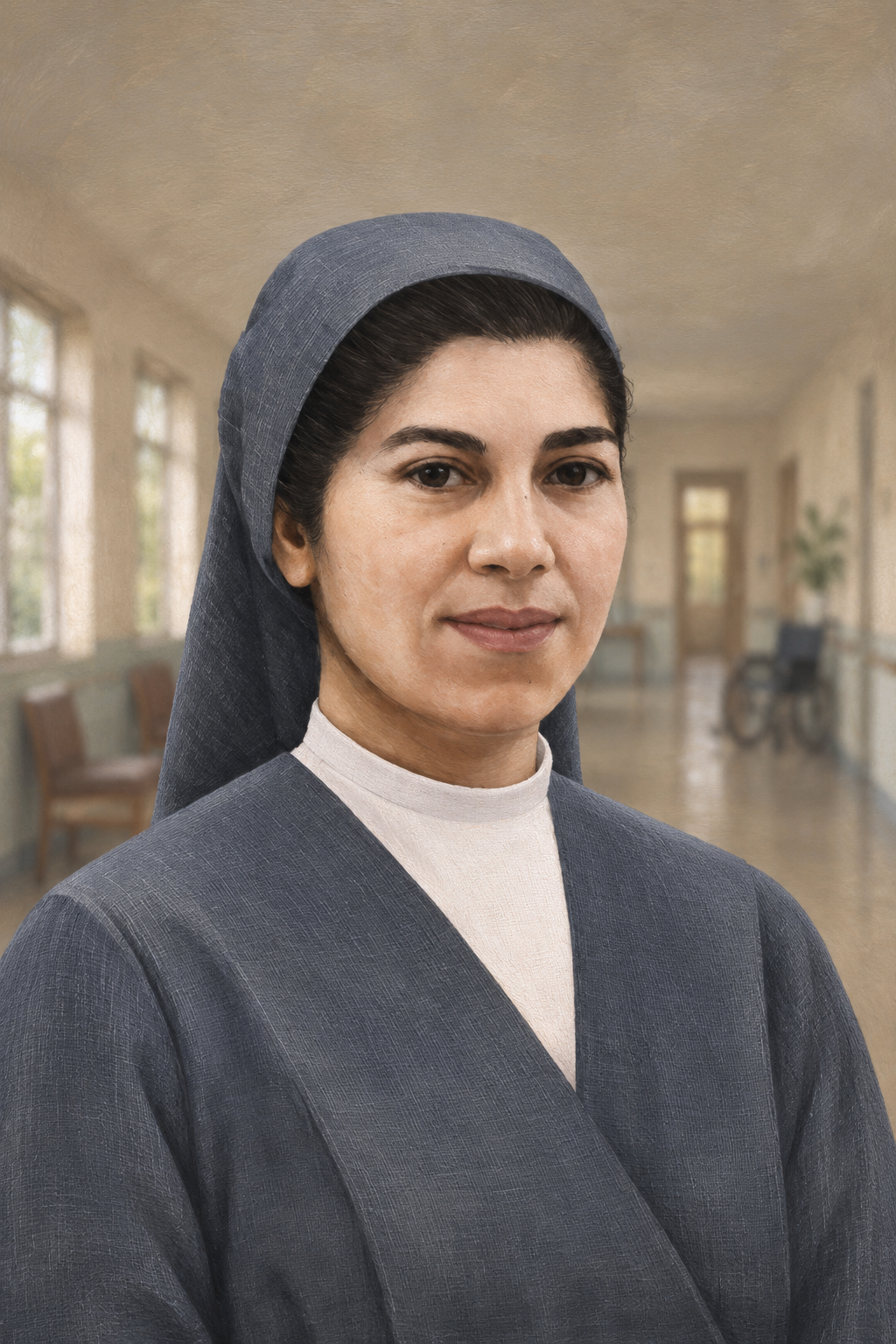
About Lindalva Justo de Oliveira
Lindalva Justo de Oliveira grew up in a large family in Rio Grande do Norte. Her parents’ Catholic faith formed part of ordinary life, and the Daughters of Charity remember a child willing to help at home and attentive to people who were poor or alone. Their account also recalls her trying to settle disagreements among friends. The habits later associated with her care of older people began in these family and neighborhood relationships, well before she entered the community for which she is now known.
She was born at Sítio Malhada da Areia, in the municipality of Açu, on 20 October 1953. Her family later moved so that the children could attend school. In Natal she lived with her brother’s family and completed an administrative-assistant qualification in 1979. Employment in shops and at a petrol station helped her support her mother. She also visited a home for older people after work, finding time for service alongside the need to earn a living.
Caring for her father during his final illness deepened her concern for people who needed help. The community’s biography connects that experience with her later request for admission. She did not describe herself as someone whose path had always been settled. The published account of her request presents a woman conscious of a long-standing call, but ready only then to undertake this form of service. Family obligations and discernment were therefore part of her approach to the Daughters of Charity.
The apostolic letter recording her beatification traces the steps that followed. Her preparation included study, volunteer work and participation in a vocational movement from 1986. She sought admission in 1987 and began the postulancy in February 1988. Formation preceded her assignment to Salvador in 1991. Those stages matter because her later public memory can make a short period of community life appear detached from the years of work and preparation that came before it.
At the Abrigo Dom Pedro II in Salvador, Lindalva cared for older men who needed assistance. Her work included humble daily tasks, concern for people suffering most and attention to spiritual as well as material needs. The Holy See’s biography remembers singing and prayer with residents, and her effort to make outings possible. Such details place her service in the routines of a residential home: food, companionship, practical care and the effort to make people feel included.
Her community understood this work within the tradition of Vincent de Paul and Louise de Marillac. At the beatification, Saraiva Martins connected Lindalva’s service with that tradition’s attention to the poorest people. He described prayer as a hidden root of practical action, and hope and joy as qualities that should accompany it. The interpretation gives a specifically Christian meaning to the tasks of care, without making the residents’ material needs secondary. For the sisters honoring her, ordinary service and devotion belonged together.
Lindalva was killed at the home on 9 April 1993, Good Friday.
She had taken part in the parish Way of the Cross and returned to prepare breakfast for the residents. A man living at the home, who had harassed her, attacked her while she was serving there. The official record remembers her death within that work of care.
She was thirty-nine and had spent only a few years in the Company of the Daughters of Charity.
Writing to the sisters in June 2007, Superior General Evelyne Franc recalled how strongly people had responded to Lindalva’s faith and service. She presented the approaching beatification as a joy for the whole Company and especially for the sisters in Brazil. The letter also anticipated the participation of Lindalva’s mother, siblings and former companions in formation. That attention to family and community placed the celebration within relationships that had continued after her death, rather than presenting her simply as an isolated heroic figure.
The beatification was celebrated in Salvador on 2 December 2007. Cardinal José Saraiva Martins’s homily explicitly greeted her mother among those present. He recalled a woman from a poor northeastern Brazilian family whose work was recognizable to the people honoring her. The homily emphasized service, prayer, hope and the joy she communicated to others. Its religious interpretation connected the testimony of her death with the manner in which she had lived and served, giving the daily life of the sister a central place in the celebration.
In later remembrance, the Archdiocese of Salvador has continued that emphasis. A report of her January memorial Mass records prayer at the Instituto Nossa Senhora da Salette, where her relics are kept, and a separate celebration at the place of her death. Cardinal Sergio da Rocha described her witness through service to poor people and called for her life to be better known. The two locations preserve different aspects of remembrance: the place where she worked and died, and a chapel where the church honors her memory.
Wondering how to weigh the stories and sources? Learn how to read a saint biography.