Biography
Magdalena of Mălainița
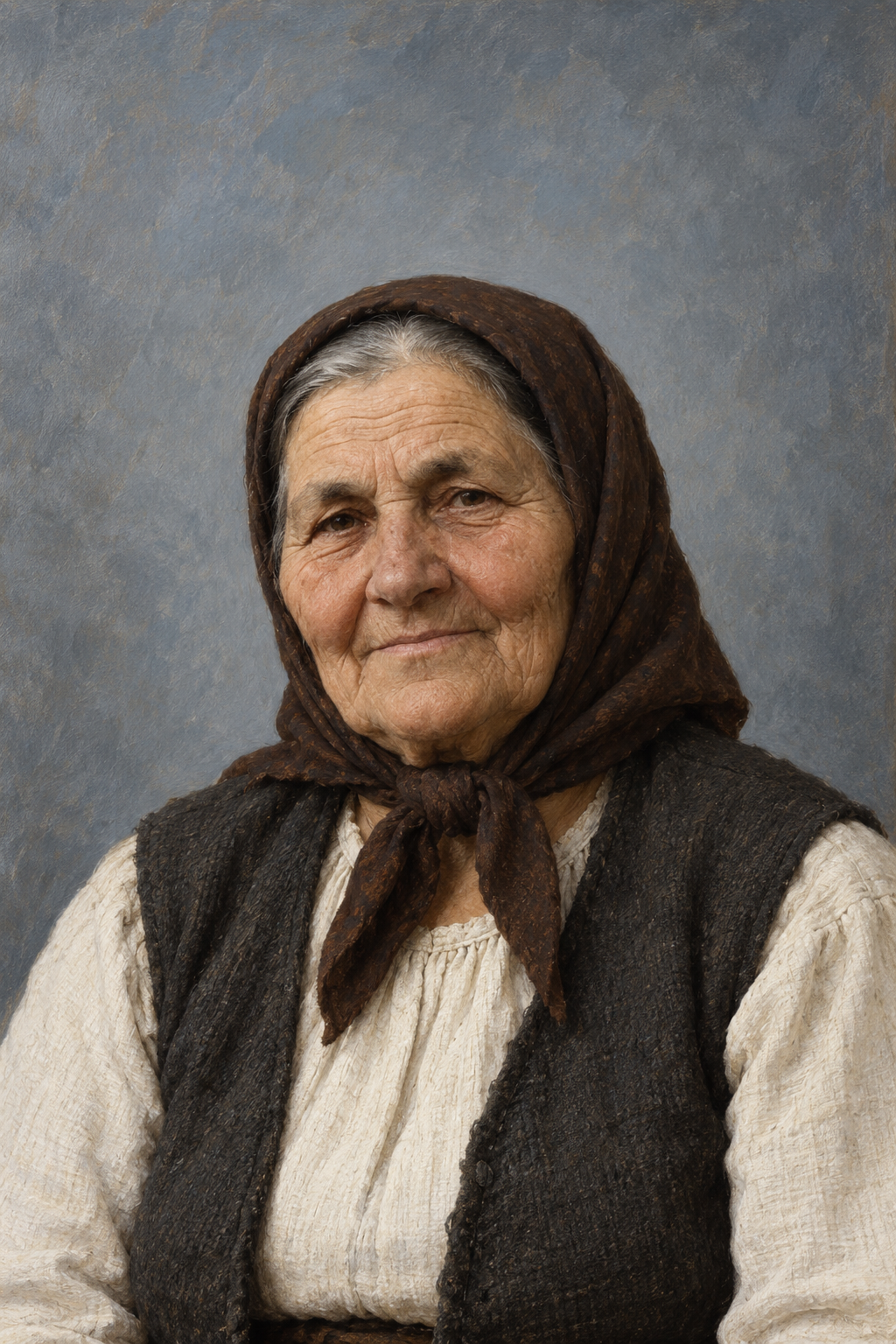
About Magdalena of Mălainița
Magdalena of Mălainița was a married Orthodox laywoman whose life became closely associated with the villages of the Timoc Valley. Born in Șciubic on November 22, 1895, she was the daughter of Milenko Ilić and Milca. She married Miloș of Mălainița, but he died in the First World War, leaving her with a young child.
During the Bulgarian occupation of Serbia in 1915–1918, the church in her native village lost its priest. The church’s account remembers Magdalena reading and singing so that communal prayer could continue. Her service remained that of a laywoman; it was not an ordination to the priesthood. She continued attending church through the difficult years that followed, including communist rule after the Second World War.
Boian Alexandrovici, the Romanian Orthodox vicar of Timoc, describes her ability to speak both Romanian and Serbian as important to her neighbors. She explained religious teaching in Romanian to people who struggled to understand the language of worship. He remembers her influence as quiet and practical, rooted in her ordinary conduct rather than public speeches.
A collection of villagers’ memories published by Alexandrovici gives a more everyday picture. Magdalena tended sheep, read religious books, and helped people keep track of feast days and fasts when calendars were scarce. Neighbors recalled her gentle speech and hard work, including work with oxen. Their recollections place prayer within a working household rather than apart from it.
Illness eventually made the long walk to church difficult. According to Alexandrovici, she moved to Negotin about six months before her death so that she could reach services more easily. His account also preserves her longing to visit Jerusalem and a dream in which she believed she had made that pilgrimage; it does not establish that she physically traveled there.
She died on October 15, 1962. The Romanian Orthodox Church’s canonization decree, proclaimed locally on September 13, 2026, established October 15 as her feast. A monastery was later built at Mălainița on land associated with her life. Alexandrovici reports that her remains were brought from Negotin and reburied there before her canonization. He recounts healing testimonies connected with her grave as expressions of the community’s devotion.
Patriarch Daniel describes Romanian and Serbian believers as honoring Magdalena together as protector of the Timoc Valley’s villages. That local devotion reflects her remembered role in helping neighbors across linguistic boundaries.
Wondering how to weigh the stories and sources? Learn how to read a saint biography.