Biography
Marcella of Rome
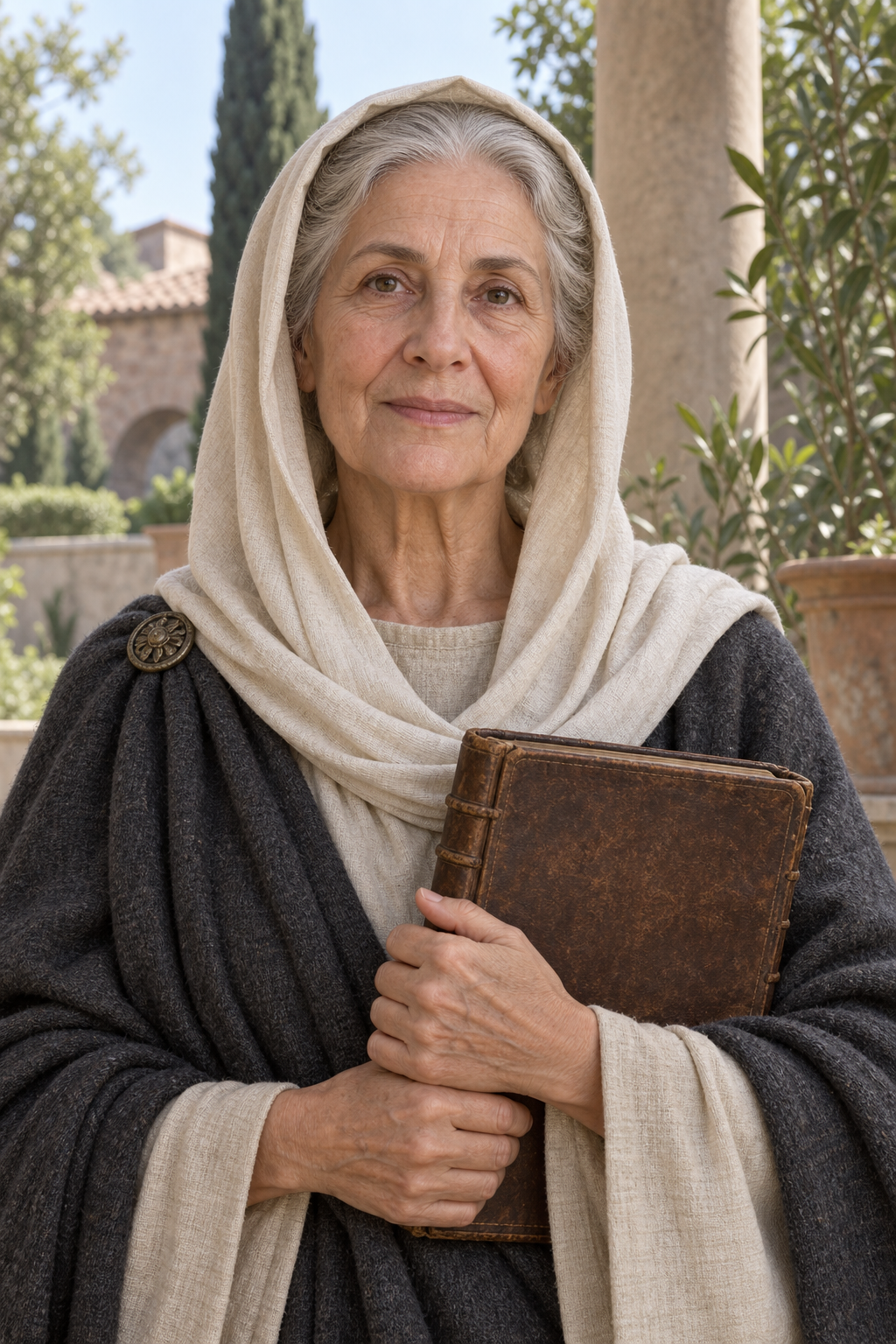
About Marcella of Rome
Marcella belonged to an aristocratic Roman family in the fourth century, but nearly everything known about her comes through Jerome. His Letter 127, written to Principia about two years after Marcella's death, is both the fullest witness and a work of praise. Jerome says Marcella lost her father while young and was widowed less than seven months after marriage. Her mother Albina supported a proposed second marriage to the wealthy consular Cerealis. Marcella declined. Jerome presents that decision as the beginning of a life ordered around chastity, modest living, prayer, and study rather than another advantageous household alliance. His friendship gives the account immediacy, while its memorial purpose requires readers to distinguish testimony from neutral biography.
Jerome describes Marcella as one of the first aristocratic Roman women openly to adopt practices associated with eastern ascetic life. She had heard about monastic communities from Alexandrian clergy who visited Rome. She did not leave the city for a desert settlement. Instead, she reshaped life within her household through simple dress, disciplined fasting, restraint in receiving visitors, care in speech, and sustained reading of Scripture. Other women were influenced by this example. Calling her house the first women's monastery in Rome would be too precise; the evidence shows a household circle practicing ascetic discipline, not a documented institution with a surviving rule or foundation charter.
Marcella's intellectual work became especially visible when Jerome lived in Rome from 382 to 385. He recalls that she questioned him closely about biblical language and interpretation. She did not accept an answer merely because he supplied it, but tested explanations and pressed for reasons. The surviving correspondence bears out the relationship from one side: Columbia University's Epistolae project identifies seventeen extant letters addressed to Marcella, while none of her own letters survives. Those texts discuss Hebrew expressions, translation choices, difficult passages, and theological disputes. They reveal a Roman woman participating seriously in scholarly networks that shaped Latin biblical interpretation, although her voice must now be reconstructed through replies written by a male correspondent.
When Jerome left Rome in 385, Marcella remained. Letter 127 says that distance did not end their exchange; letters crossed between them, and people in Rome sought Marcella's explanations of Scripture. Jerome adds that she often presented an answer as his or another teacher's rather than claiming authority publicly for herself. His description reflects both her learning and the gendered constraints of late Roman religious debate. Modern scholarship warns against reducing Marcella to a passive pupil. The correspondence shows questions, patronage, friendship, and scholarly collaboration. It does not preserve a treatise under her name, and disputed attribution of individual letters should not become certainty that Marcella authored them.
A major controversy reached Rome around the teaching of Origen. Jerome credits Marcella with gathering testimony, challenging advocates to explain themselves, and helping move Roman church leaders against positions she considered dangerous. His account is partisan: Jerome himself was deeply engaged in the dispute and praises an ally. It nevertheless documents how he understood Marcella's role—as an informed participant capable of evaluating texts, corresponding across distance, and acting within church networks. The episode complicates the image of an isolated widow. Her discipline included public consequences, and biblical study equipped her to intervene in a conflict involving clergy, translations, and competing claims about orthodox teaching.
Marcella shared her life with other women. Principia is the clearest relationship: Jerome addresses the memorial to her and describes the two women as living together in religious discipline. Marcella's wider circle included Albina, Paula, Eustochium, Lea, and others connected through households, study, charity, and ascetic practice. These were not interchangeable roles. Principia was her close companion; Albina was her mother; Jerome was a correspondent and teacher; the Roman women formed a network rather than a single formally constituted order. Recording those distinctions avoids turning a diverse circle into an institution that the sources do not establish.
In 410 Alaric's forces entered Rome. Jerome says soldiers confronted Marcella and beat her while demanding treasure. He reports that she did not plead for wealth but begged them not to harm Principia. The women then found refuge at the basilica of Saint Paul outside the walls, and Marcella died shortly afterward. Because this scene is reported by Jerome from afar in a memorial letter, its personal details are probable rather than independently documented. The account does not establish January 31 as her exact death date or prove that injuries alone caused it.
Vatican News commemorates Marcella on January 31. Her enduring significance rests on sustained intellectual and communal work. A widow with social standing redirected household resources toward disciplined study and fellowship. She asked exacting questions, maintained correspondence after Jerome's departure, helped others interpret Scripture, opposed teachings she judged harmful, and, in Jerome's final portrait, acted to protect Principia during violence. Remembering those actions while acknowledging dependence on Jerome allows Marcella to appear as a historical participant rather than either a decorative disciple or an invented modern academic.
Wondering how to weigh the stories and sources? Learn how to read a saint biography.