Biography
Margaret of Cortona
About Margaret of Cortona
Margaret of Cortona rebuilt her life around prayer and care for people in need. Born at Laviano in 1247, she settled in Cortona after losing the man with whom she had lived and had a son. Two women, Marinaria and Raineria, gave her shelter; she supported herself by helping women in childbirth. Giunta Bevegnati, her medieval biographer, says reluctant friars admitted her after repeated requests.
She sought admission to the Franciscan penitential life during the 1270s. She was not a cloistered nun: her religious life developed among townspeople, benefactors and spiritual advisers. Historian Giuseppe Barone cautions against projecting the later organization of the Franciscan Third Order onto these earlier years. The papal rule that drew lay penitents more firmly into Franciscan oversight came in 1289, after Margaret had already begun her public work.
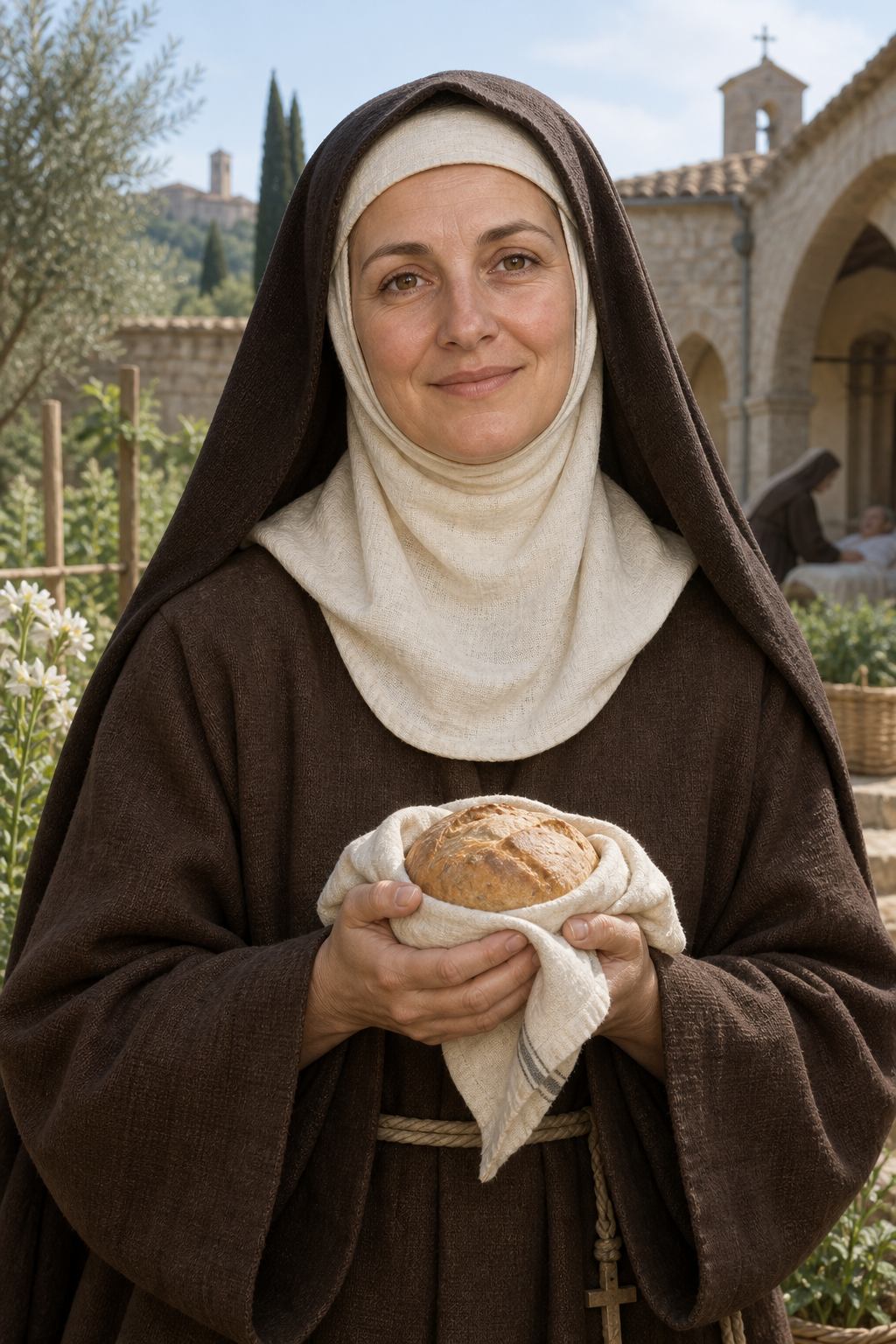
Caring for poor and sick people became an undertaking that Margaret could not sustain alone. The Italian state archives' account of Cortona's hospital identifies Uguccio Casali and Madonna Diabella as supporters of the hospice she founded. It became the Hospital of Santa Maria della Misericordia in 1286. The institution gave her charitable work an enduring home, rather than leaving assistance dependent entirely on one woman's daily efforts.
The associated confraternity's surviving statutes show how organized assistance worked in her Cortona. Officers collected bread and money each week and distributed help to poor households and prisoners. A notary recorded business, while officers had to account for what they received and spent. The rules also provided for clothing and kept lists of recipients so that limited supplies could reach more people. Women could participate in prayer without being bound to make the same financial contributions as other members. Members were urged to support peace in the town as well as attend to material need. These were the community's regulations, not a rule written by Margaret, but they give substance to the organized charity surrounding her work.
Her prayer drew attention too. Giunta portrays her absorbed in Christ's Passion, expressing grief and longing in scenes that moved those around her. Music and images belonged to that devotional setting: Mattia Zangari's study relates the Life's Passion narrative to Cortona's religious songs and the imagery of the suffering Christ. For Zangari, prayer, pictures and song together shaped the religious experience preserved in the biography.
Margaret also pursued a place for sustained prayer at the top of Cortona. A letter issued by Bishop Ildebrandino of Arezzo on August 27, 1290 answers her request to build a church inside the town walls, above the church of Marzano. Her proposal included a priest to celebrate worship, a bell and a burial ground for those serving God there. The bishop granted permission while retaining the existing ecclesiastical rights over the new foundation. The proposed dedication joined Basil, Giles and Catherine, and the permission provided for their feasts to be observed there. The project therefore joined Margaret's initiative to a permanent place of worship, with responsibilities extending beyond her own cell.
The town participated in making that foundation work. A September 6, 1290 record identifies the commune as owner of the land and payer for the church's construction. It records the selection of the priest Badia as rector, his acceptance and the church authorities' confirmation. Badia received possession through the church doors, altar cloths and bell rope, concrete signs of the duties entrusted to him.
In her last years Margaret's spiritual care passed from the friars to Badia. She remained near San Basilio until her death on February 22, 1297. Her body stayed there rather than going to the Franciscan church below.
Her neighbors soon made the site a focus of public devotion. Bishop Peter of Chiusi appealed for contributions toward a new church in her honor, praising her compassion during life and reporting the miracles attributed to her. His letter offered an indulgence to those who contributed or visited devoutly. The appeal brought the needs of the building before a wider diocesan audience, inviting lay people and clergy to help sustain the new sanctuary.
Artists gave different emphases to the woman Cortona remembered. Joanna Cannon contrasts an early panel's scenes of penitence and prayer with a later marble monument and wall paintings that emphasized Margaret's victories and public role. One hospital scene showed visitors being welcomed, wounds being tended, and bread and alms gathered for distribution. Such images kept her charitable work visible alongside her contemplative life. The elaborate memorial also presented a woman without civic office with honors resembling those of an important public figure.
Pope Benedict XIII canonized Margaret on May 16, 1728. When John Paul II visited Cortona in 1993, he emphasized her work for peace, the hospital and assistance to women in childbirth. His prayer asked that devotion become concrete service to poor, sick and marginalized people. That continuing connection between prayer and organized care is a particular part of Margaret's place in Cortona's history.
Wondering how to weigh the stories and sources? Learn how to read a saint biography.
Prayers for Margaret of Cortona
Margaret of Cortona: petition
accompagnaci, ti preghiamo, fino alla casa del Padre.