Biography
Maria Brâncoveanu
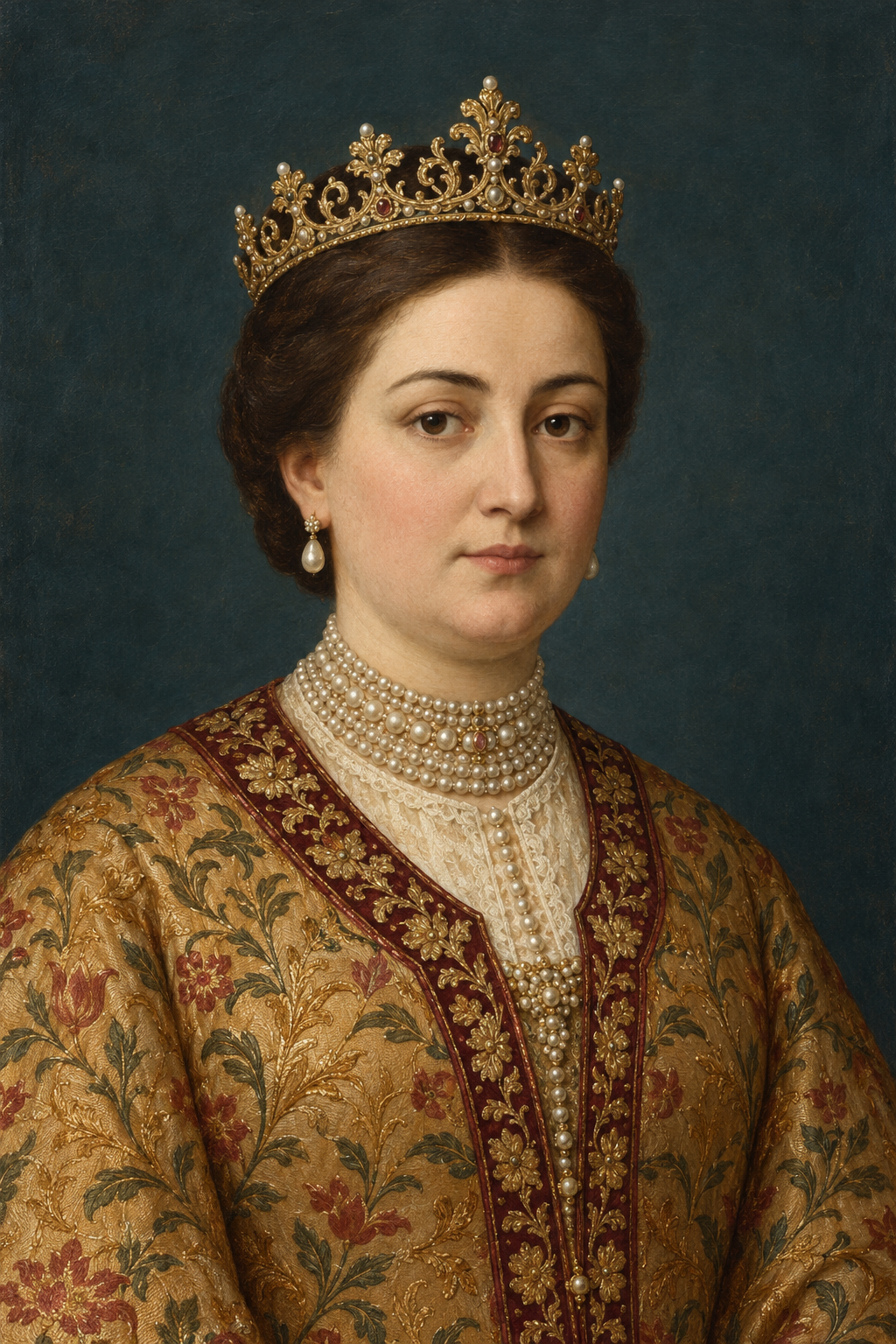
About Maria Brâncoveanu
Maria Brâncoveanu was the wife of Constantin Brâncoveanu, ruler of Wallachia, and a benefactor of Orthodox churches and monasteries. She belonged to the family of Neagu of Negoești and was a granddaughter of Prince Antonie of Popești. The church’s proclamation places her birth in the later seventeenth century, without fixing an exact year.
Maria, also called Marica, married Constantin in 1674. Their family included seven daughters and four sons. When her husband became ruler in 1688, she entered a household whose wealth and political connections extended well beyond Wallachia.
Historian Mariana Lazăr identifies her as a founder or restorer of several religious houses, including the infirmary church at Hurezi, Surpatele and Viforâta. Her activity included administration of property as well as religious giving. The canonization account also recalls the household’s provision of teachers for its children and gifts to religious communities beyond Wallachia. It names Constantinople, Alexandria, Antioch, Jerusalem and Mount Athos among the places receiving support. These connections extended her benefaction beyond the foundations nearest home.
The family attended the consecration of St George the New in 1707. In his account of the church, priest Emil Nedelea Cărămizaru identifies a vessel used for distributing blessed bread as Maria’s own gift. He distinguishes it from a chalice given by her husband and other objects donated by later members of the family. The individual gifts preserve different contributions within a shared religious foundation.
The family’s position collapsed in 1714. Constantin was arrested, taken to Constantinople and tortured in efforts to locate his wealth. He, their four sons and the counselor Ianache were executed there. Maria survived imprisonment and exile. Accounts of her suffering must not turn her into one of those executed or assume that she personally witnessed the killings.
The exile took the surviving household to Kütahya in Asia Minor. Maria’s sons-in-law and her grandson Constantin were among those caught in its consequences. The return to Wallachia left them with the task of rebuilding family life after confiscation and imprisonment. Survival did not restore the household that had existed before 1714.
Lazăr’s study dates the family’s return to March 1717 and describes Maria’s efforts to recover assets and settle heavy debts. Her inheritance arrangements included serfs and enslaved people alongside estates and other property, a troubling part of the wealth she administered.
These categories had distinct meanings in Wallachia: serfs were bound dependants, while enslaved people were treated as property. The terminology in estate records should not be softened into a description of ordinary employment. Her will also reveals limits and tensions within the family. She stated that she could not read, challenged documents prepared by others and disputed the retention of valuables by relatives. Alongside inheritance provisions, she required repairs to religious foundations, memorial services and clothing for impoverished children of boyar families.
The arrangements reached beyond local estates. Lazăr describes Maria allocating funds held in Venice and Vienna, balancing inheritances against debts and memorial obligations. Her will also required repayment to the families of former servants who had suffered during the confiscations.
Her husband’s remains were brought to the family’s church of St George the New in Bucharest in 1720. A silver lamp associated with Maria identifies his burial and expresses her wish to rest there too. The lamp is a material witness to remembrance, distinct from later accounts of the family’s grief.
The church also preserves an embroidered burial cloth associated with her. Cărămizaru reports the tradition that Maria made it herself and brought it with her husband’s remains in 1720. That attribution is a remembered tradition, distinct from the dated inscription on the lamp. It cannot by itself establish who stitched the surviving textile.
The church’s received life recalls extended periods of prayer and charitable giving at Surpatele in her later years. It places her death in December 1729 and her burial at St George the New. The historical study is more cautious about the burial, describing it as probable rather than certain.
The Romanian Orthodox Church approved her canonization in 2025. Its local proclamation took place at St George the New on August 16, 2026, when relics honored as hers were distributed to churches associated with her benefaction.
Her annual feast is August 16, shared with the Brâncoveanu martyrs. The 2026 ceremony linked her remembrance to several of those foundations. Icons containing relic fragments were given to churches and monasteries including Surpatele, Viforâta and Dintr-un Lemn. The distribution was an act of ecclesiastical recognition and devotion. Its meaning belongs to the church’s public commemoration, without supplying independent proof for every historical detail transmitted in the later accounts of her life.
The restored infirmary church at Hurezi has since received her as an additional patron. A Romanian Orthodox parish formerly dedicated to Gregory the Theologian likewise added her as a second patron.
That parish serves Schiedam and Rotterdam in the Netherlands.
Wondering how to weigh the stories and sources? Learn how to read a saint biography.