Biography
Maria Carola Cecchin
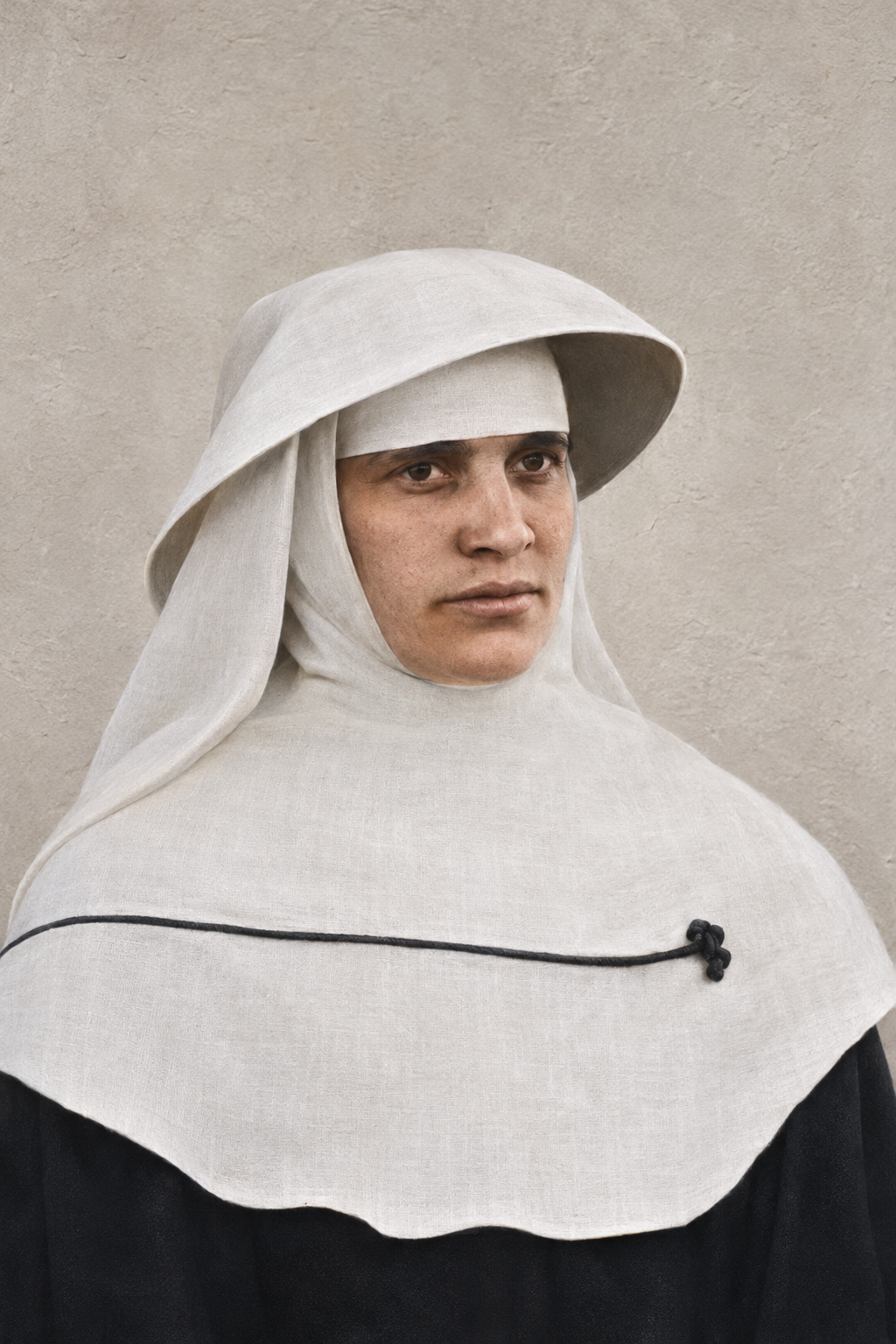
About Maria Carola Cecchin
Maria Carola Cecchin spent twenty years in Kenya as a member of the Sisters of Saint Giuseppe Benedetto Cottolengo. Born Fiorina Cecchin in Cittadella on 3 April 1877, she first sought admission to the Dorothean sisters, who did not accept her because of concern about her health. Through the help of her parish priest, she found a place within the Cottolengo community. She began formation in Turin in 1896 and made her religious profession in 1899. Her early assignments included work as a cook at Giaveno and in Turin. In 1905 she was sent to Kenya to work alongside the Consolata missionaries.
The congregation’s biography follows her through several mission stations, beginning with Limuru and Tuthu and continuing through Iciagaki, Mugoiri and Wambogo to Tigania. Much of the work was practical. At Iciagaki, where the accommodation was rudimentary, she helped make the house habitable, cultivated a garden and cared for the courtyard. As superior, she also brought the small community together. These tasks were part of establishing a place where the sisters could live and work. When circumstances required it, she moved again. During the First World War she went to replace sisters who had been sent to a field hospital. Her missionary life therefore involved repeated changes of assignment as well as the daily demands of a religious household.
Lodovica Maria Zanet’s account describes a woman who traveled between villages to teach the catechism and visit sick people. It also recalls her service during the influenza epidemic, when she continued caring for others despite becoming ill herself. The work required learning how to live in a different climate and culture, while responding to needs that could be immediate and exhausting. Her responsibilities were not confined to the buildings of a mission station. The account describes visits, relationships and care for vulnerable people, including children. It presents her religious commitment through those activities, while acknowledging the illness and wartime disruption that made them difficult. Such descriptions come through the community’s later biographical tradition; they preserve how her work was remembered rather than a complete daily record of her life.
The collaboration between the Cottolengo sisters and the Consolata missionaries eventually became strained. The Dicastery’s biography acknowledges disagreements and difficulties affecting the sisters’ living conditions. The sisters were recalled to Italy. Cecchin, already seriously ill, was among the last to leave. She died aboard the ship carrying her home on 13 November 1925, and her body was buried in the Red Sea.
The way people remembered her mattered to the later investigation of her life. In a homily before her beatification, Cardinal Marcello Semeraro drew on testimonies collected for the cause. He described a superior remembered for combining instruction and correction with consolation and kindness. He also recalled an account of her sitting with local people in the evening, when shared presence could carry meaning even without much conversation. Semeraro interpreted these memories through the congregation’s understanding of attentive, maternal care. His homily is a later theological reading of the testimony, and its descriptions should be understood in that setting. It offers a view of the relationships that her community considered central to her life, beyond the list of places where she worked.
Her story survived because others took care to record it. Sister Scolastica Piano, who had also served in Africa, gathered recollections from sisters, Consolata missionaries, brothers and other people who knew Cecchin. The resulting biography, Soavi memorie, became an important source for the cause. The congregation’s history explicitly acknowledges the apologetic character of biographies of that period. It also describes comparison with missionary histories and documents held in several archives. A diocesan inquiry opened in Turin in April 2014 and concluded in October of the same year. That long interval between Cecchin’s death and the formal inquiry makes the earlier collection of memories especially significant: the process depended on preserved writings and testimony as well as the continuing memory of her service.
Reporting in 2020, Eliana Camporese described some of the material traces of that life. A family member preserved a crucifix, while letters and a booklet for language study remained in Turin. The same report included the recollection of Sister Crescentina Vigliano, who was with Cecchin during her final illness at sea. It also recorded the response of the postulator, Antonietta Bosetti, who emphasized her practical work and service, and of the sisters’ superior general, Elda Pezzuto, who saw her example within the continuing vocation of the congregation. These sources connect the public recognition of Cecchin with particular people who preserved, studied and interpreted her memory.
Cecchin was beatified in Kenya on 5 November 2022.
The liturgical text published by her congregation provides an optional memorial on 13 November. She is honored as a blessed and religious sister, remembered for the connection between her faith and her care for people in Kenya.
Wondering how to weigh the stories and sources? Learn how to read a saint biography.