Biography
María Crescencia Pérez
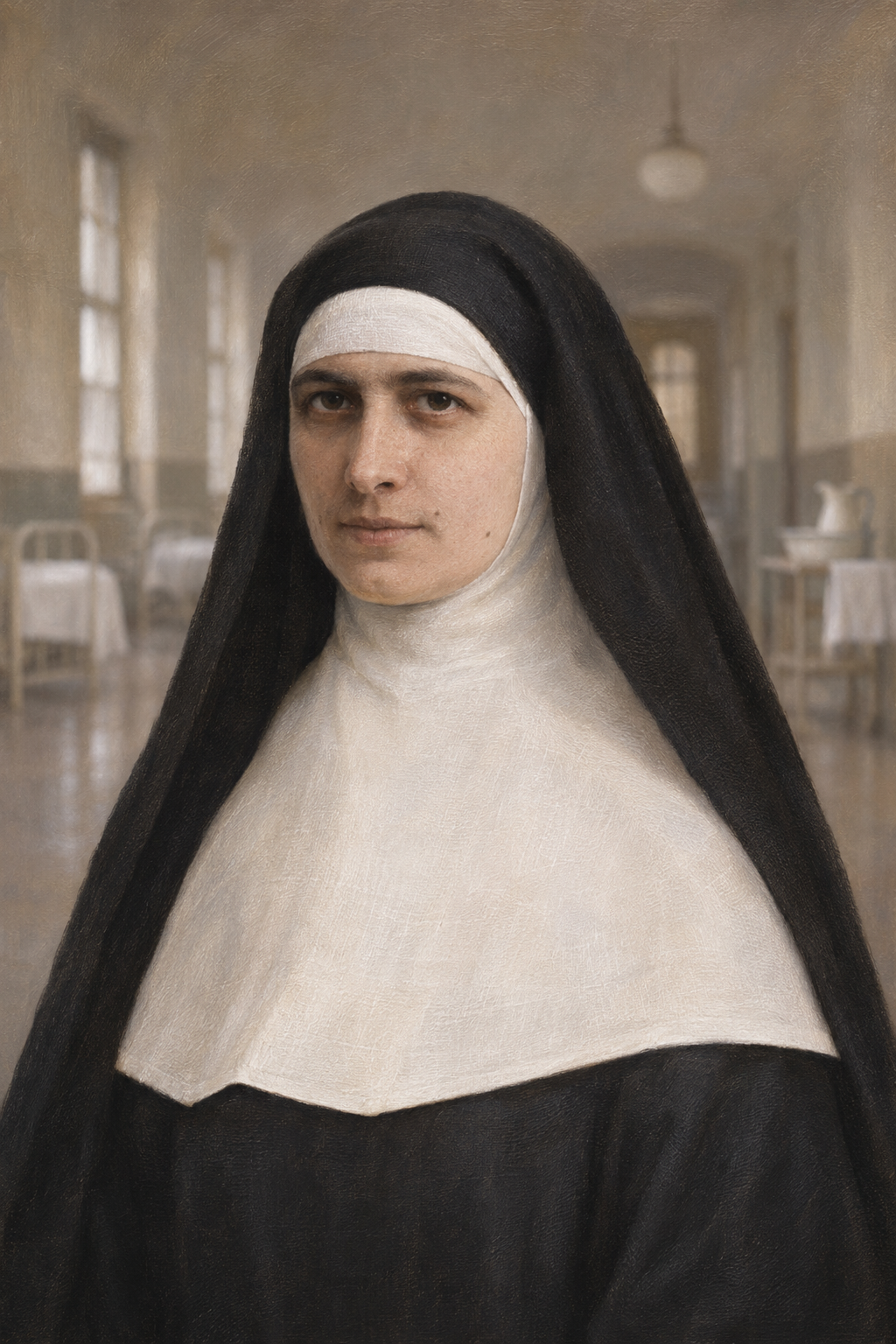
About María Crescencia Pérez
María Crescencia Pérez spent her working life teaching children and caring for patients in Argentina and Chile. Born María Angélica Pérez in San Martín, in the province of Buenos Aires, she belonged to a family of Spanish immigrants. The family’s livelihood was insecure, and repeated moves formed part of her childhood. At Pergamino she attended the school run by the Daughters of Mary Most Holy of the Garden, usually called the Hermanas del Huerto. The community that educated her would also become the religious congregation in which she served.
She trained in practical skills as well as religious subjects. Her congregation records that she remained after primary school to learn sewing and embroidery, earning a qualification to teach such work in December 1914. Recollections preserved in the same biography describe her helping with younger boarding pupils and attending to their hygiene, prayers and catechism. These memories concern the responsibilities of a pupil before she became a sister. They also show the connection between the school’s everyday needs and the work of teaching that she later undertook.
At the end of 1915 she entered the novitiate in Buenos Aires. With the religious habit she received the name María Crescencia. Her early assignments included teaching catechism and needlework to girls at the congregation’s Buenos Aires school. The Chilean bishops’ short biography then places her move into hospital service at the end of 1924. At the Maritime Sanatorium in Mar del Plata she cared for girls with bone tuberculosis. Her work therefore moved from a classroom into an institution where the education and daily care of sick children belonged together.
Her published correspondence provides a more personal view of those years. In a letter from the sanatorium in October 1925, she expressed concern about her brother Antonio’s illness, welcomed news of his improvement and urged him to eat and take care of himself. The letter moved easily between family news and prayer. In December she apologized for delayed replies, explaining that work and a retreat had occupied her time. She reassured her family that writing less often did not mean forgetting them. These are transcriptions published by her congregation; the original manuscripts have not been independently examined.
A further letter, dated November 1926, records her attempt to reassure her family about her own thinness. She said that she was eating well and receiving care from her superior. She also described plans to travel to Villa Devoto for a retreat and her expectation of completing it in early December. Such details place religious commitment beside ordinary concerns about meals, travel, health and keeping in touch. They do not establish a clinical diagnosis, but they preserve the voice of a sister trying to maintain close family ties while living away from home.
Her health continued to decline. In 1928 her superiors sent her to Vallenar in northern Chile, hoping a different climate would help. The sisters had served at the hospital there since 1915. A Chilean church account describes the poverty and disrupted housing that followed a destructive earthquake in the town before her arrival. Within that setting she continued to serve patients and live with the religious community. Her final years were therefore spent away from her country and family, in a place where illness and material hardship affected many of those around her.
The Dicastery’s account describes a range of duties in Vallenar: assisting in the maternity ward and pharmacy, working in the kitchen and chapel, and teaching catechism. It remembers a readiness to take on different tasks rather than one prominent office. Illness eventually limited this service. She died at Vallenar on 20 May 1932, aged thirty-four. The public biographies connect her illness with tuberculosis, but their differing descriptions do not establish the exact time or circumstances in which she acquired the infection. The ordinary work they preserve remains the clearest outline of her life.
In November 2012 the bishops of Argentina issued a statement for her approaching beatification. They emphasized simplicity, prayer and care for poor and sick people, and described her memory as especially meaningful for women in religious life. Their statement placed her within the wider service carried out by religious communities, including work that receives little public attention. It presented her life as one in which devotion and practical proximity to people in pain were joined. This was an interpretation of her Catholic witness, rather than a claim that her work had been dramatic or widely noticed in her lifetime.
Chile also prepared to mark the occasion. The Copiapó diocesan report recalled her affectionate local remembrance in Vallenar and noted a Chilean bishops’ web special about her life and mission, including a pastoral letter by Bishop Gaspar Quintana.
Her beatification took place in Pergamino on 17 November 2012. The next day Benedict XVI publicly acknowledged it at the Angelus, identifying her congregation and recalling the gentleness associated with her faith.
Wondering how to weigh the stories and sources? Learn how to read a saint biography.