Biography
María de San José Alvarado
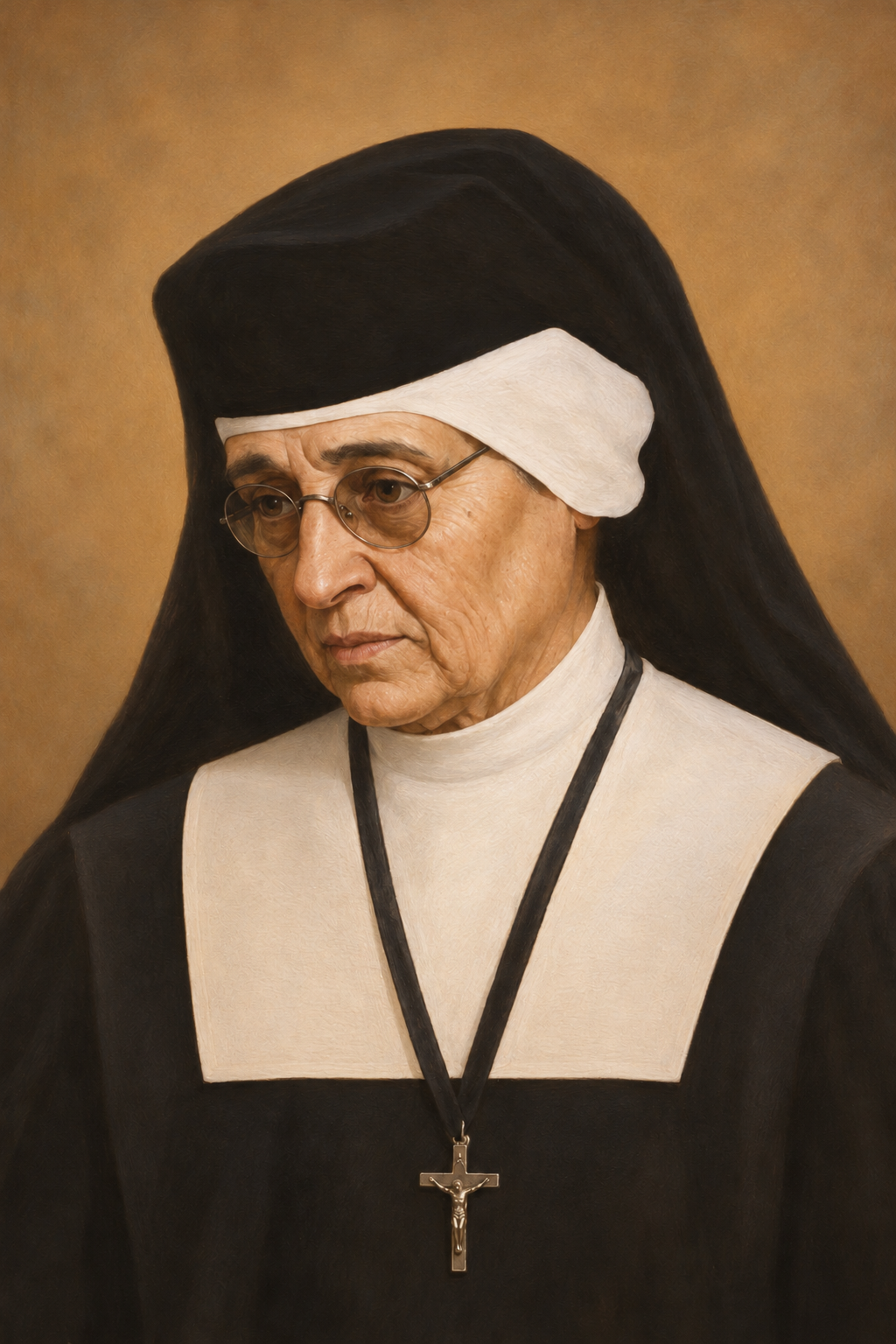
About María de San José Alvarado
María de San José Alvarado was a Venezuelan founder whose religious community developed from a hospital and a group of young volunteers. Born Laura Alvarado Cardozo at Choroní on April 25, 1875, she moved with her family to Maracay while still a child. There she continued her education and learned from her mother and grandmother to visit sick people and assist poor neighbors. She hoped to enter a contemplative convent, but circumstances prevented it. Instead, she made a private commitment to consecrated life. When the priest Vicente López Aveledo opened a small hospital during an epidemic, Laura joined the work. The young women serving with her became known as the Samaritanas. Their attention gradually extended beyond patients to elderly people and orphaned girls.
The hospital association at Maracay became the foundation of a religious congregation following Augustine's rule. Laura took the religious name María de San José and guided the community's organization and expansion for decades. The history written by Ángel Martínez Cuesta traces hospitals and homes through several Venezuelan towns. Hospitals at La Victoria and Villa de Cura were followed by an orphanage at Maracay, and later foundations at Coro, Calabozo, Ocumare del Tuy, Barquisimeto and Los Teques. The pattern combined medical assistance with provision for people who needed a home. Not every foundation became permanent; the historical account explicitly notes that some failed to consolidate. Formal diocesan approval came in 1927. In 1950 the congregation adopted its Recollect identity and became associated with the Augustinian Recollect Order. Pontifical approval followed in 1952. The pontifical approval was dated November 15 of that year. These stages distinguish the original local hospital work from the later juridical organization of the institute. María remained responsible for leadership until 1960, when another superior succeeded her.
Its range of services went beyond hospitals. Fernando Rojo Martínez's account of Augustinian women records homes for impoverished people, social and educational centers, and a night school for the advancement of women. He places María's work within an Augustinian tradition of service to sick people, children and the elderly. The educational activities formed part of the congregation's response to need alongside medical and residential care.
An account by the Scalabrinian priest Antonio Marcon offers a personal glimpse of her later years. Italian missionaries ministering to emigrants at Maracay used the chapel of the Inmaculada Concepción home with her help. Marcon remembered the Sunday Mass celebrated there for the Italian community. He recalled an elderly María moving a chair so the adult altar servers could sit during the sermon, despite the weakness of her final years. For him, the small gesture expressed a habit of service that remained after much of her physical strength had gone. He also remembered her unobtrusive attention during worship. His reminiscence credits her hospitality, prayer and sacrifices with supporting the beginnings of the Italian Catholic mission at Maracay. This was one local priest's testimony to a relationship he knew, rather than a general assertion about every community the sisters served. It places the founder amid continuing daily responsibilities, even when she was no longer leading the congregation.
After relinquishing leadership, she lived at the Maracay home, sharing its modest tasks and caring for the girls. She died after a long illness on April 2, 1967. The city declared mourning, and many people came to her funeral.
John Paul II beatified María in Rome on May 7, 1995. In his homily he described the relationship between her Eucharistic devotion and her care of people whom others were unwilling to receive. She made altar breads by hand and supplied priests without charge. Her sisters continued the work and provided the breads used at the beatification Mass. The pope also remembered the congregation's assistance to elderly people and orphaned children. He presented her prayer and practical charity as parts of the same religious life. The recognition brought a Venezuelan founder before a worldwide Catholic gathering, with representatives of her country present. The homily's account of holiness concerned a woman whose work had been carried out through small institutions and direct care, rather than through political or public office.
Sister Graciela Molina later recalled María as a determined and deeply human founder. In a 2025 article for the Augustinian Recollects, she emphasized the ability to recognize another person's difficulty and respond through practical generosity. The article interpreted the congregation's social and educational works against the poverty and limited educational opportunities of the setting in which María lived. It connected her courage with prayer, while also describing sincerity and compassion as qualities of her dealings with others. This is the religious family's remembrance of its founder and the meaning it continues to draw from her life. Catholics honor her as Blessed María de San José, whose congregation developed from the hospital service begun by Laura and her companions at Maracay.
Wondering how to weigh the stories and sources? Learn how to read a saint biography.