Biography
María Ludovica De Angelis
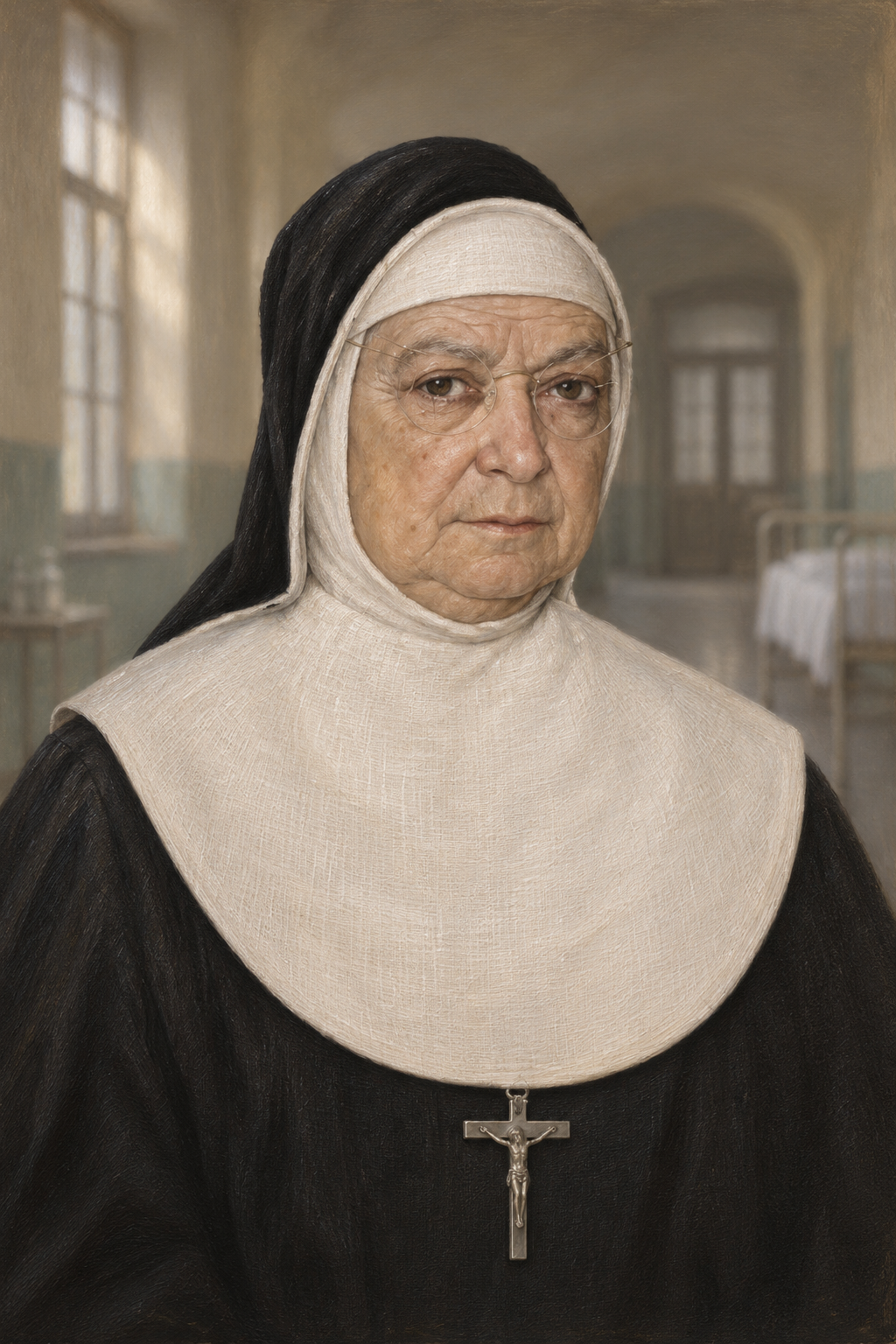
About María Ludovica De Angelis
María Ludovica De Angelis helped turn the daily care of children into a lifetime’s work. Born Antonina De Angelis in the village of San Gregorio, near L’Aquila in Italy, she grew up in a farming family. She was the oldest of eight children and shared in work at home and in the fields. The Catholic community she later joined was the Daughters of Our Lady of Mercy, founded at Savona by María Josefa Rossello. In November 1904 Antonina entered the congregation and received the religious name María Ludovica.
In 1907 she left Italy for Argentina, arriving at Buenos Aires in December. The hospital foundation’s account remembers that she began her work at the children’s hospital in La Plata in the kitchen. These were responsibilities that placed food, supplies and the needs of the community at the center of each day. She later became responsible for the sisters’ community as well. Her early assignments were practical and local, but the institution’s own remembrance links them directly to the much wider responsibilities she eventually carried.
The hospital’s institutional history describes a small pediatric service with two wards and sixty beds in its early years. It places her first work in the pantry and kitchen at the beginning of 1908, then identifies her as an administrator. The same history connects the hospital’s expansion with its passage into provincial administration in 1925 and the construction of additional wards. This was a growing public institution staffed by many people. Ludovica’s role was significant within that collective history; she did not establish the original hospital, which existed before her arrival.
The Holy See’s account of her life describes the patient work behind that growth. She sought financial support for operating rooms, additional accommodation for children and medical equipment. Her efforts extended beyond the main hospital to a place in Mar del Plata where children could convalesce. A farm at City Bell supplied food, while a chapel became another part of the network of care around the community. These projects joined the immediate needs of a sick child with the larger demands of nourishment, recovery and a place for worship.
The apostolic letter issued for her beatification remembers both administration and community relationships. It describes her efforts to encourage cooperation among people working at the hospital and her continuing service despite serious health problems. It also records the loss of a kidney in 1935. The letter places these circumstances within the Catholic understanding of her vocation: prayer, the liturgy and devotion to Christ and Mary sustained work for patients and their families. It does not present her as a physician. Her responsibility was to help make the institution a place where children and those caring for them could be supported.
Ludovica remained associated with the hospital until her death on 25 February 1962. A provincial parliamentary tribute locates her death in La Plata and recalls her move from domestic and supply duties into administration. Her age was eighty-one, following the life dates given in the original Catholic records. The later tribute’s different age need not be repeated to preserve its account of the place she held in the city. The work of a woman who had crossed the Atlantic more than fifty years earlier had become part of La Plata’s institutional memory.
The Catholic Church beatified her in Rome on 3 October 2004. The apostolic letter authorized her annual observance on 25 February in the places and manner permitted by church law. The recognition followed a cause carried forward in the Archdiocese of La Plata and formal judgments concerning her virtues and a healing attributed to her intercession. Those judgments belong to the Catholic process of recognition; they are distinct from an independent medical reassessment. Her public memory was already closely attached to the hospital that bore her name.
That memory continues through gatherings of children and people connected with the institution. Fundación Ludovica reported a concert in the hospital chapel for the anniversary of her birth, bringing together its children’s choir and the Coro Fénix. The event included music and a reading about her life. Such commemorations show the continuing relationship between her religious memory and the hospital community, rather than merely preserving her as a figure in a distant account of migration. Her name remains attached to a place where families bring children who need care.
At a cathedral celebration in February 2025, Archbishop Gustavo Carrara again recalled her arrival in Argentina and her assignment to the hospital community. He highlighted her concern that children receive the best care and placed her service within the work of the Daughters of Our Lady of Mercy. The account returned to the same concrete center of her life: children, illness and a community organized to help. More than a succession of offices, this sustained commitment explains why Ludovica remains closely associated with pediatric care in La Plata.
Wondering how to weigh the stories and sources? Learn how to read a saint biography.