Biography
Martha of Bethany
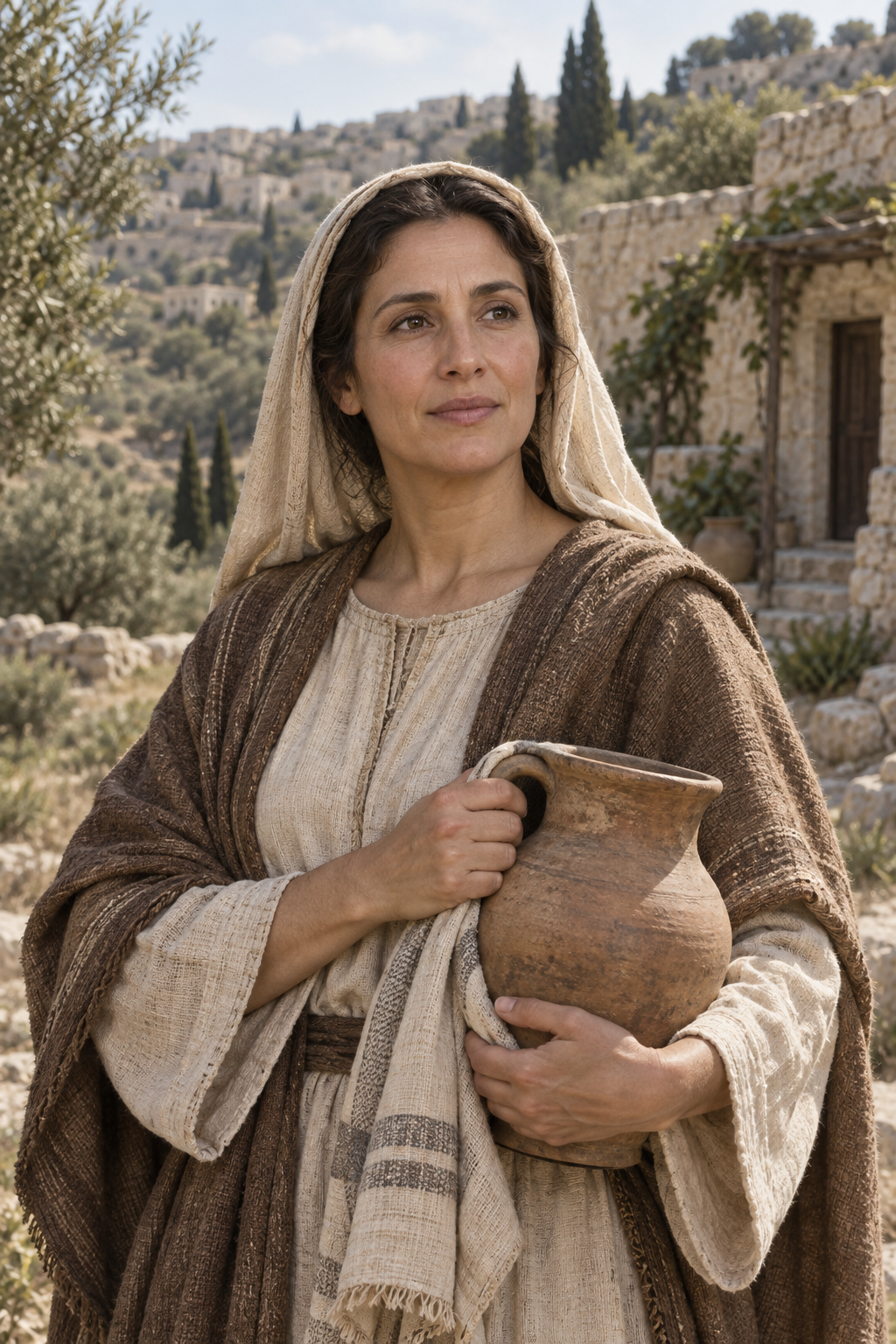
About Martha of Bethany
Martha of Bethany is known from three Gospel scenes and from no independent contemporary record. Luke introduces her when Jesus enters a village and she welcomes him into her house. While Martha is occupied with serving, her sister Mary sits at Jesus' feet and listens. Martha asks Jesus to tell Mary to help her; Jesus answers that Martha is anxious about many things while Mary has chosen the better portion. The passage documents hospitality, work, and a direct conversation with Jesus, but it does not establish Martha's age, marital status, occupation, or family history beyond her relationship to Mary.John gives Martha a fuller theological role. When Lazarus is ill, the sisters send word to Jesus. After Lazarus dies, Martha goes out to meet Jesus while Mary remains at home. Martha says that Lazarus would not have died if Jesus had been present, yet she also expresses confidence that God will grant what Jesus asks. Jesus speaks with her about resurrection and life, and Martha answers with a confession that he is the Christ and Son of God. The narrative presents her as a witness and interlocutor, not merely as a domestic figure.At Lazarus's tomb Martha warns that there will be an odor because he has been dead four days. John preserves this blunt practical remark before Jesus calls Lazarus out. The text does not describe Martha's inner experience or turn the raising into evidence about her later biography; it records her presence and speech in the scene. The event is also the Gospel's last extended encounter with her.Six days before Passover, Jesus returns to Bethany for a supper. John states simply that Martha serves, Lazarus reclines at table, and Mary anoints Jesus' feet. The same service associated with Martha in Luke appears here without a rebuke. John then moves toward the Passion and says that many people came because of Jesus and Lazarus. Martha does not appear again in the canonical text.Bethany is identified in the Gospel as a village near Jerusalem. The place is now commonly associated with al-Eizariya on the southeastern slope of the Mount of Olives, but a modern place-name does not supply evidence about Martha's private home or establish an exact archaeological location for each Gospel scene. This record therefore keeps the place at settlement level. It does not infer a birth village, a burial site, or a route from the later geography of devotion.The household's later liturgical memory developed differently in different traditions. A 2021 Roman decree placed Martha, Mary, and Lazarus together in the General Roman Calendar, explaining that the Gospel presents them as a household of friendship with Jesus. The Orthodox Church in America commemorates Martha and Mary together on June 4. These observances document later Christian remembrance, not additional first-century episodes. Older Western calendars commemorated Martha alone on July 29, and the Roman change also reflects a correction of the long-standing Western conflation of Mary of Bethany with Mary Magdalene. Martha's record should not import Magdalene's separate traditions or attributes.Western medieval legend sent Martha and her siblings to Gaul and associated her with the Tarasque at Tarascon. The dragon, holy-water vessel, and aspergillum became familiar artistic attributes, but the story is much later than the Gospels and has no independent historical basis. This record therefore treats the Provençal material as legend and does not assign Martha a death date, burial place, missionary journey, or formal universal patronage. Popular associations with cooks, household workers, servers, and hospitality arise from the Gospel's service scenes; they are devotional associations rather than a documented universal decree.Martha's name is preserved in several language forms, but the catalog uses Martha of Bethany to prevent confusion with other saints named Martha and with Mary Magdalene. No reliable source establishes her birth or death year, whether she married, or what became of her after the supper. The absence of those details is not a defect to be filled by customary hagiography. Her secure profile remains that of a woman of Bethany who welcomed Jesus, confessed faith at her brother's tomb, and served at the Bethany supper. The canonical material gives her both practical responsibility and theological speech, so a summary that reduces her to anxious household labor is incomplete.For readers, Martha's scenes hold action and contemplation together without turning either into a stereotype. Luke records her work and her complaint; John records her movement toward Jesus, her grief, her practical warning, and her confession. Those details permit a restrained reflection on hospitality, grief, and faith while leaving unknown what the sources do not say. The later legends may explain why artists place a dragon or sprinkler beside her, but they cannot be used to reconstruct her first-century life. The reviewed record consequently presents the Gospel evidence first, identifies tradition as tradition, and leaves unsupported fields empty.
Wondering how to weigh the stories and sources? Learn how to read a saint biography.