Biography
Mary Frances of the Five Wounds
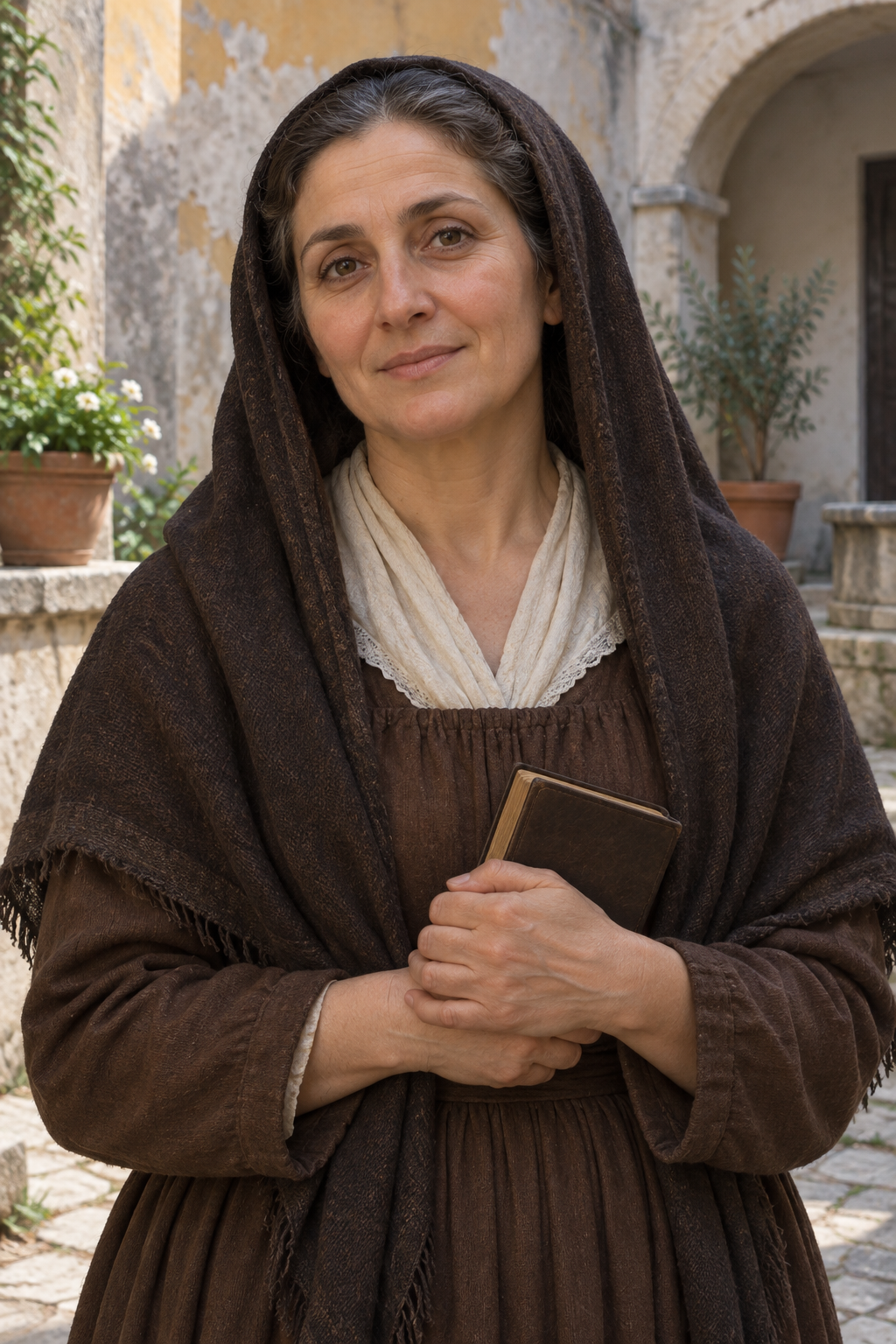
About Mary Frances of the Five Wounds
Mary Frances of the Five Wounds was born Anna Maria Gallo in Naples in 1715. The Vatican Dicastery for the Causes of Saints gives March 25 as her birthday. Historian Genoveffa Palumbo, writing in the Dizionario Biografico degli Italiani, reports that the parish baptismal register indicates she was born March 26 and baptized March 28. Palumbo explains that the March 25 date became a later tradition because it coincided with the Feast of the Annunciation. Since these accounts disagree on the day, this profile records the year but not a month or day.
Gallo grew up in a modest household that supported itself through small-scale textile work. Palumbo uses parish and canonization-process records to place the family within Naples's artisan economy. At sixteen, Gallo rejected a marriage her father wanted for her and sought a religious vocation. She did not enter a cloistered convent; without the dowry normally needed for convent entry, she chose the lay Third Order path and received the habit of the Franciscan reform associated with Peter of Alcantara in September 1731. She took the name Maria Francesca delle Cinque Piaghe while remaining in secular life.
Palumbo explains her status through the local history of bizzoche: women who wore religious dress and followed a religious rule while living outside a monastery. The arrangement combined religious commitment with continued life in the neighborhood and its family and community networks. The Dicastery likewise describes Mary Frances as a virgin of the secular Third Order of Saint Francis who remained in the world. Calling her a nun without qualification would obscure this important distinction; she was a lay tertiary, not a cloistered nun.
Her life unfolded in Naples, especially among the city's Spanish Quarters. Palumbo describes a religious culture shaped by Franciscan spirituality and devotion to Christ's Passion, and reads Mary Frances's chosen name, Five Wounds, within that context. Her scholarly account also examines the testimony collected during the processes for her canonization, including reports of illness, conflict, and extraordinary religious experiences. Those process testimonies reveal how contemporaries and later witnesses understood her reputation, but devotional claims about prophecy or miracles are not treated here as independently verified events.
Mary Frances died in Naples on October 6, 1791. A cause for her canonization began within a few years of her death. Pope Gregory XVI beatified her on November 12, 1843, and Pope Pius IX canonized her on June 29, 1867. The Dicastery for the Causes of Saints lists her liturgical memorial on October 6, and the Italian Episcopal Conference's Roman Martyrology commemorates her on that date as a virgin of the secular Franciscan Third Order. Her story is significant as an example of a religious vocation lived outside the cloister in eighteenth-century Naples.
Wondering how to weigh the stories and sources? Learn how to read a saint biography.