Biography
Mary Magdalene
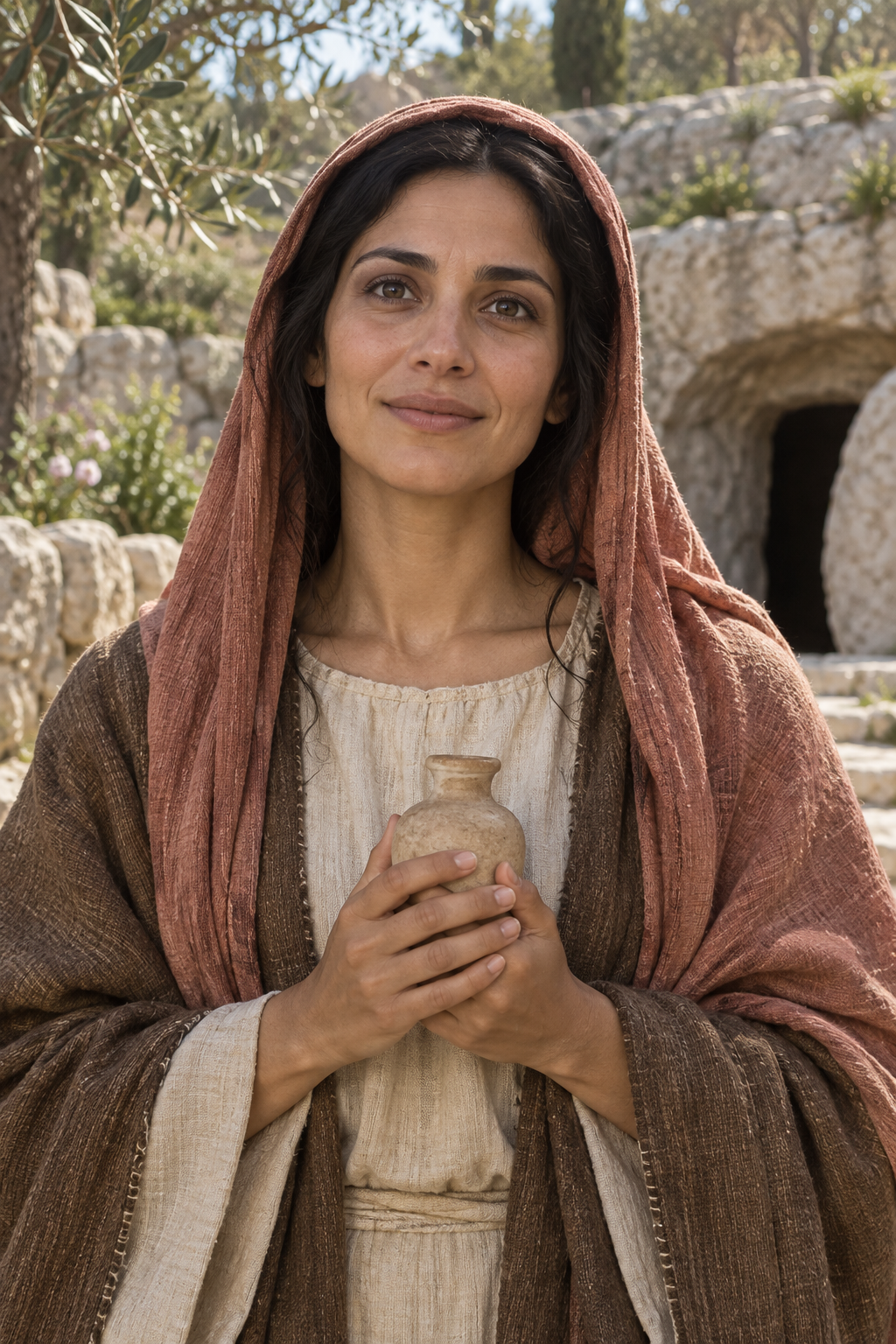
About Mary Magdalene
Mary Magdalene helped support Jesus' ministry alongside other women, according to Luke. Mark places her at the crucifixion and burial. Matthew describes her carrying Easter news. In John, she initially mistakes the risen Jesus for a gardener, recognizes him when he speaks her name, and takes his message to the disciples.
Later Western tradition merged Mary with Mary of Bethany and Luke's unnamed sinful woman. Arthur Roche's explanation of the Roman feast traces Gregory the Great's influence on this identification and its effects on art and worship. He also describes the critical discussion that helped the Roman liturgy distinguish Mary of Magdala from the other women. That distinction allows her witness to be remembered without assigning another woman's history to her.
The Orthodox Church in America's account includes later traditions of preaching in Italy, a red egg presented to Emperor Tiberius, and a final residence in Ephesus. These are devotional traditions rather than a verified itinerary or an established place of death.
Mary's later reception also includes portrayals in the Gospel of Mary and Gospel of Philip. A Harvard research reflection discusses how their rediscovery influenced debates about women's religious leadership. These later writings concern her reception; they do not provide an eyewitness account of her family life.
In 2016, the Roman calendar raised her celebration from memorial to feast. The decision emphasized women's dignity and gave her commemoration the same liturgical rank as those of the apostles.
Wondering how to weigh the stories and sources? Learn how to read a saint biography.
Prayers for Mary Magdalene
Mary Magdalene: collect excerpt
forgive our sins and heal us by your grace