Biography
Matthias the Apostle
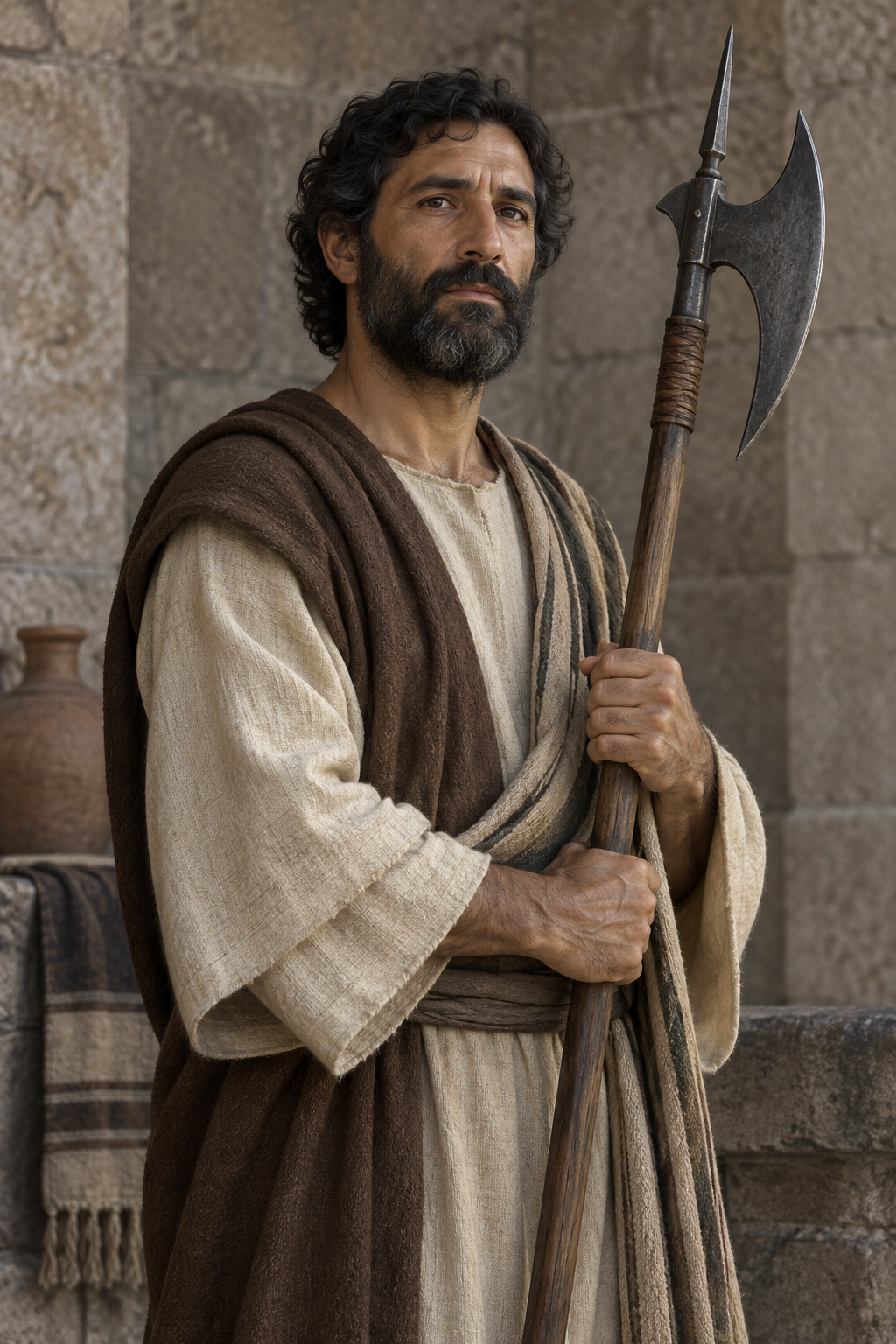
About Matthias the Apostle
The earliest surviving account of Matthias appears in Acts 1:15–26. After Judas Iscariot’s death, Peter addressed a gathering of about one hundred and twenty believers in Jerusalem. He explained that the apostolic circle needed to be restored and defined the relevant qualification: the candidate must have accompanied Jesus’ followers from the baptism of John until the Ascension and become a witness to the resurrection. This description places Matthias among the wider circle of disciples who had followed Jesus through the whole public ministry, although Acts does not narrate his earlier life or describe his family, occupation, age, or place of origin.
The community proposed two men, Joseph called Barsabbas, also known as Justus, and Matthias. They prayed for God to reveal the chosen candidate, then cast lots. The lot fell to Matthias, and he was counted with the Eleven. Acts presents this as the restoration of the Twelve rather than as a private appointment: the gathered community names the qualification, proposes candidates, prays, and receives the result. The account is the only New Testament passage that directly identifies Matthias as the person who entered the apostolic number after Judas.
The text does not continue Matthias’ story. It does not record where he preached, whether he held a particular local office, how he died, or where he was buried. Those omissions matter. Later accounts circulated among Christian communities, but they disagree about his missionary destination and death. Some traditions associate him with Judaea, others with regions farther east or south, and later legendary narratives elaborate his suffering. Such traditions may explain why Matthias acquired particular devotional symbols, but they cannot be merged into a single documented biography.
The figure’s liturgical memory is more stable than the later narrative material. The United States Conference of Catholic Bishops lists the Feast of Saint Matthias, Apostle on 14 May and uses Acts 1:15–17, 20–26 as its first reading. The Gospel assigned for that feast is John 15:9–17, a passage about remaining in love and bearing lasting fruit; it is a liturgical association, not evidence about Matthias’ personal words or actions.
Matthias is therefore best presented with a narrow historical claim. He was a disciple qualified by the apostolic community’s stated criterion, selected after prayer and the casting of lots, and counted among the Eleven. His later life remains uncertain. The value of his record is not that it supplies a complete biography, but that it preserves one moment in which the earliest community understood continuity, witness, and shared discernment as essential to its apostolic mission.
The boundaries of the evidence also clarify what should not be said. Matthias should not be given a precise birthplace simply because later communities connected him with a particular region. He should not be assigned a certain profession, family line, or age, because Acts gives none of these details. Nor should a later martyrdom story be presented as though it were an extension of the apostolic narrative. The responsible account keeps the apostolic selection in the foreground and labels later material as tradition or legend. This restraint is not a failure to complete the profile. It preserves the difference between a first-century witness named in a canonical narrative and devotional biographies assembled many centuries later.
The episode also belongs to the period between the Ascension and Pentecost. Acts describes the disciples remaining in Jerusalem, gathering in prayer, and waiting for the promise Jesus had given them. Matthias’ selection is consequently part of a larger scene of preparation. The community is not depicted as replacing a colleague through political competition or personal ambition. It seeks someone who can testify to the whole course of Jesus’ ministry, from baptism to resurrection, and asks God to disclose the choice. The text gives no private speech by Matthias, but it does preserve the community’s judgment that he met the required standard.
In later Christian calendars, the feast of Matthias keeps that brief scriptural record in public memory. The date differs in some historical calendars and local traditions, so the catalog should identify the calendar and jurisdiction rather than imply that every Christian tradition observes one universal civil date. The reviewed Roman Catholic observance is 14 May. Its readings return to Acts 1 and to Jesus’ teaching in John 15, linking apostolic witness with enduring love and fruitfulness. That liturgical framing can be recorded as reception history while remaining distinct from claims about Matthias’ undocumented personal preaching.
For readers, Matthias’ significance thus rests on a small number of strong claims. He belonged to the circle that had seen the ministry of Jesus; he was publicly proposed; the community prayed; and the decision restored him to the apostolic number. Everything beyond that core should be handled with calibrated language. A profile built in this way remains useful for study, prayer, and teaching because it does not confuse a meaningful silence in the source with permission to invent a life.
Wondering how to weigh the stories and sources? Learn how to read a saint biography.