Biography
Miguel Gómez Loza
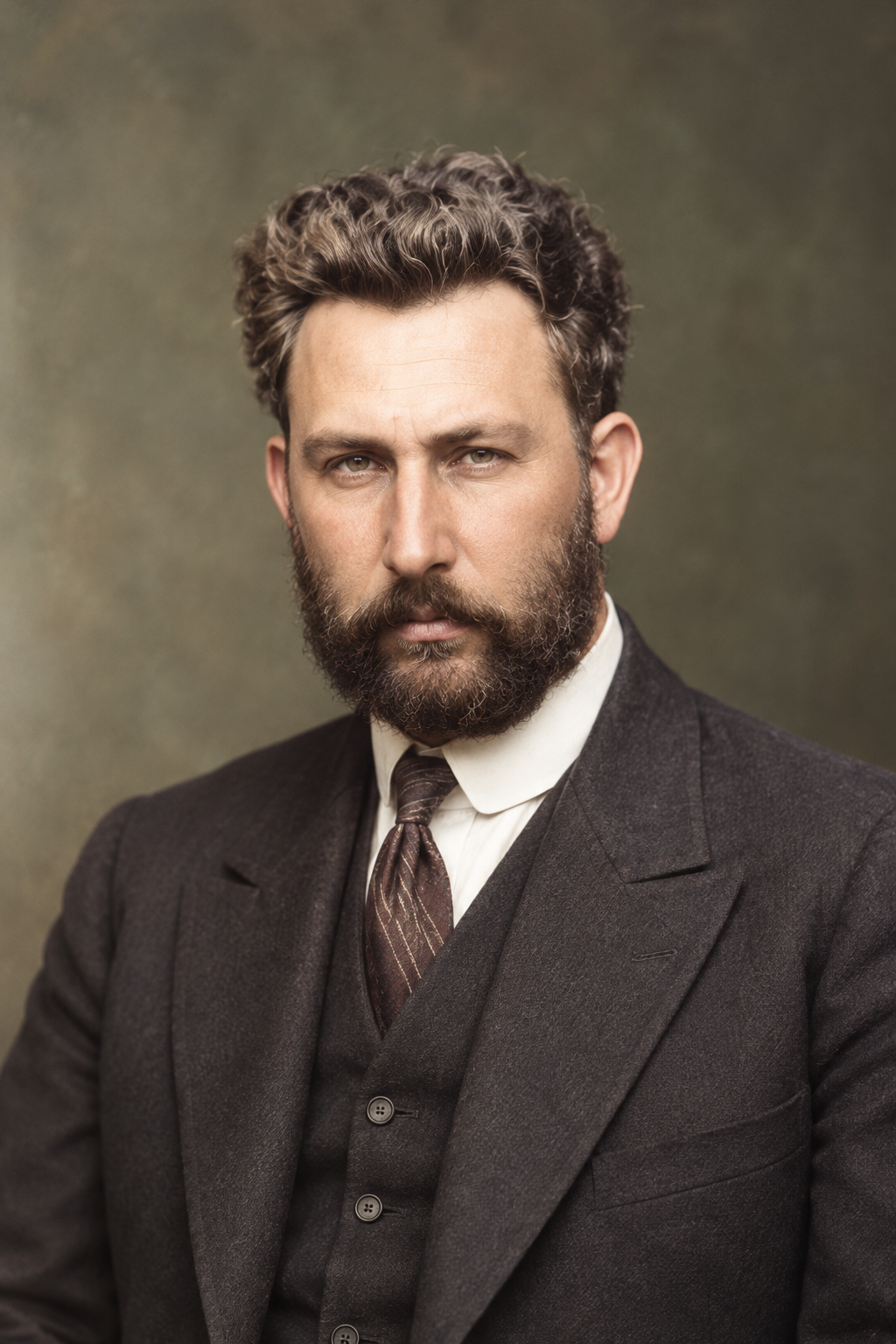
About Miguel Gómez Loza
Miguel Gómez Loza was a Catholic organizer and lawyer from Paredones, Jalisco. He was born on August 11, 1888, and later moved to Guadalajara to study law. He supported workers’ education and helped establish Catholic youth organizations. In 1922 he married María Guadalupe Sánchez Barragán; they had three daughters.
His father died while Miguel was still a small child, leaving his mother, Victoriana, to manage the household. The diocesan biography describes his early life as combining parish schooling with work on the family’s agricultural property. His older brother Elías entered the seminary and later became a priest. Miguel’s interests developed in another direction: local organizing and legal study. Before leaving for Guadalajara, he helped establish a rural savings institution, a consumer cooperative and a cooperative pharmacy. These initiatives connected his Catholic commitments with practical questions of housing, credit and everyday supplies.
Born Miguel Loza Gómez, he later reversed his surnames in honor of his mother, who had supported the family after his father’s death.
His legal education did not lead smoothly to professional recognition. The university biography records that he completed his studies and examinations in 1922, but that the state government subsequently withheld his diploma. He and his wife lived in Arandas before his expulsion forced a temporary move to Guanajuato.
His organizing included workers’ study circles, savings institutions and cooperatives. The University of Guadalajara’s biography describes his leadership in the Catholic labor movement and his work with Anacleto González Flores. He helped lead the Unión Popular.
A letter he wrote to Miguel Palomar y Vizcarra in December 1925 shows him working to clarify responsibilities within the Catholic movement. Replying after consulting Anacleto González Flores, he explained that the Unión Popular regarded itself as part of the national League and as its center in Jalisco. Branches outside the state, he wrote, had been instructed to join the League directly; their remaining connection with the Unión Popular concerned publications they chose to buy. He also distinguished a courteous invitation to a convention from a binding instruction. The letter sought cooperation without extending the organization’s authority over other branches. It records his stated position at that moment, rather than proving that no organizational disagreements existed.
When the religious conflict became an armed rebellion, Gómez Loza took a civil leadership role in territory controlled by the Cristeros. The university biography describes his efforts to seek pardons for federal prisoners and his disagreements with rebel commanders. His political responsibilities brought him into hiding and separated him from his family.
Printing remained part of his work after he went into hiding. The diocesan account describes a small press used to produce Gladium, the Unión Popular’s publication. It was moved between rural locations, including a cave near Presa de López. Alongside this work, Gómez Loza handled correspondence, issued administrative instructions and arbitrated disputes. These responsibilities help explain his civil position within the rebellion without making him detached from its military organization.
In March 1928 he stayed at El Lindero, near Atotonilco. The archdiocese’s extended account says soldiers surrounded the property, and he was shot while attempting to escape and destroy documents relating to the resistance. His body was taken through Atotonilco el Alto to Guadalajara, where he was buried in the cemetery of Mezquitán.
A shorter diocesan notice instead reports capture and torture before his death. The accounts do not establish a single consistent sequence, so the circumstances require caution.
The longer diocesan dossier also records competing place names, so El Lindero is not an uncontested precise location.
A report supplied by Rafael Martínez Camarena to the biographer Camberos Vizcaíno in October 1952 shows how these accounts were being checked. Martínez named three men who said they had seen the body brought into Atotonilco on a donkey. He urged the biographer to correct a proposed account of its being dragged into town, warning that surviving witnesses might otherwise find an error that damaged the narrative’s credibility. He also reported that local people identified Gómez Loza for the soldiers after their arrival. This concerns the treatment and identification of the body, rather than an eyewitness description of the killing.
In the same report, Martínez relayed a different chain of testimony: a doctor said he had interviewed military men who described capture, abuse and shooting. That information reached the biographer through intermediaries. The report survives here as an excerpt in the later diocesan dossier, not as the original document. It helps explain the competing accounts without making every detail equally secure. Martínez’s concern for correction also shows that discrepancies were recognized by people preserving Gómez Loza’s memory.
He was beatified in Guadalajara on November 20, 2005.
Guadalajara commemorates him with Anacleto González Flores and their companions in a shared liturgical memorial. The archdiocese’s instructions distinguish that observance from a separate popular celebration, preserving his place within the community’s remembrance of its Catholic martyrs.
Wondering how to weigh the stories and sources? Learn how to read a saint biography.