Biography
Mollie Brant
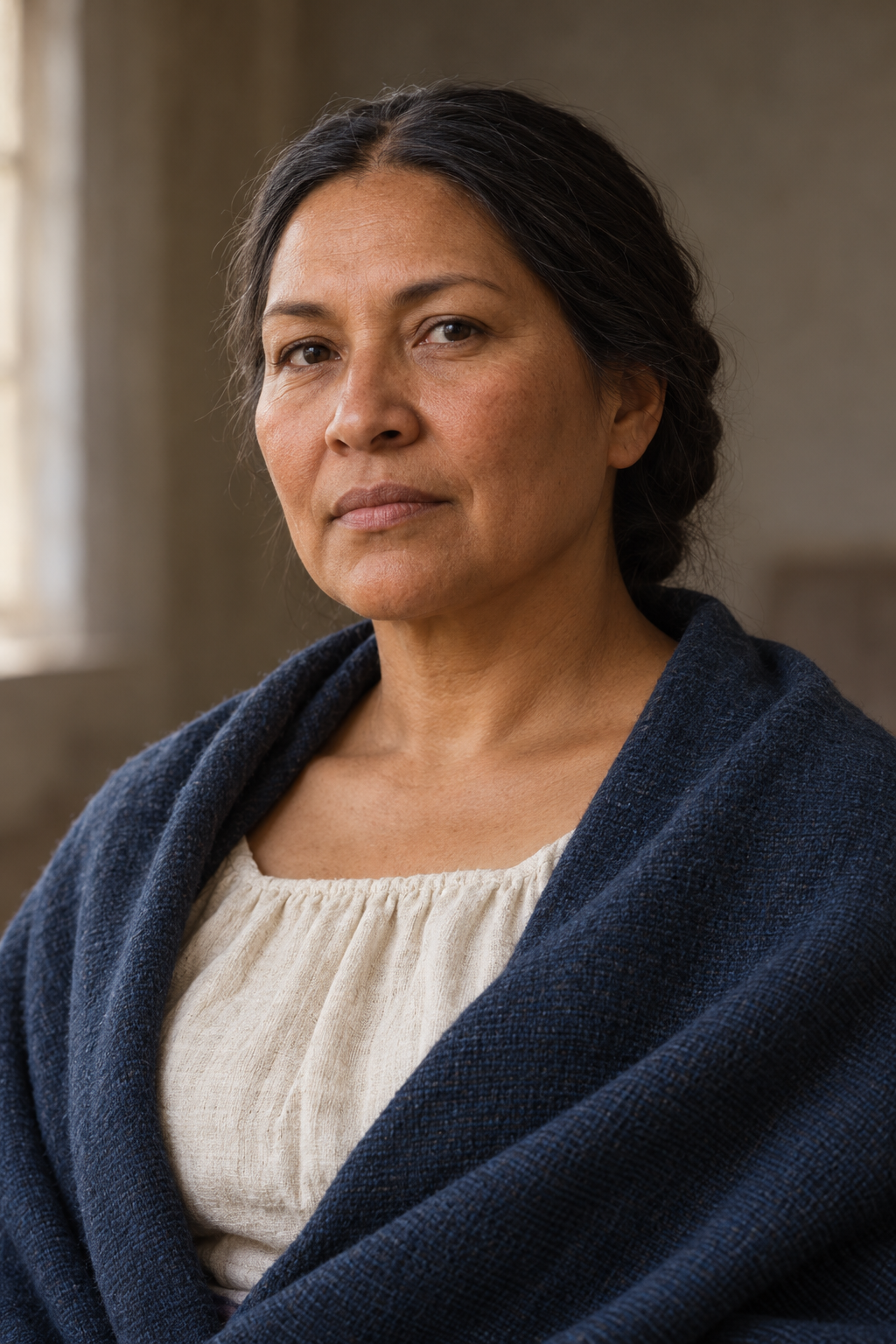
About Mollie Brant
Mollie Brant was a Mohawk woman whose influence connected Indigenous communities and British officials during the upheaval of the American Revolution. Born about 1736, she became the companion of William Johnson, Britain’s superintendent of Indian affairs. They had eight children who survived infancy. Her early life remains uncertain, including her birthplace and education; accounts of a Mohawk marriage ceremony belong to later tradition. After Johnson’s death in 1774, she returned to Canajoharie. War subsequently drove her from her home, and she eventually settled at Kingston.
Johnson’s will shows the material advantages and injustices within their household. It provided Brant with lifetime use of a tract of land, which would afterward pass to her son Peter and his heirs. It also directed that she receive two hundred pounds in New York currency and an enslaved Black woman named Jenny, identified as Juba’s sister. These provisions make her participation in slaveholding part of her documented history. The will described her as his housekeeper while acknowledging her as the mother of eight of his children. The published edition relies on a copy attested in 1808, whose wording its editor compared with other surviving copies; he had not found the original.
Brant’s correspondence reveals her pressing British officials for practical support and fair treatment of their Indigenous allies. Writing from Carleton Island to Daniel Claus in October 1779, she sought arrangements for herself and her family after an exhausting journey. She had also written to Colonel Butler and her brother for advice. Her requests were connected with a wider political warning: allies were dissatisfied with Colonel Johnson’s temper and with the treatment of people whose loyalty was known. Brant insisted that commitments made to them should be fulfilled. The letter combines concern for her household with an assessment of relationships on which the British depended. It survives in the Claus papers; the appearance of her name does not establish that she wrote the document in her own hand.
Another surviving document is explicitly headed as a translated extract of a letter to Claus dated April 12, 1781. Brant reported that her brother Joseph had nearly been killed by people associated with Colonel Johnson. She urged intervention because the episode endangered relations with Britain’s allies. This is evidence of what she reported and feared, rather than independent proof of the circumstances of the attack. The translation also places a limit on claims about Brant’s exact English wording: her political message survives through another person’s recording of it.
Historian Maeve Kane reads this correspondence as skilled diplomacy. Apparently modest requests could convey a serious warning about broken obligations and the consequences of mistreating allies. Family concerns and political responsibility were closely connected. This interpretation helps explain why Brant’s letters deserve attention alongside the reports of colonial officials. They preserve her efforts to influence decisions affecting her family and community, even though the surviving documents do not settle every question about literacy or authorship.
Kane also discusses an earlier dispute involving a British officer and a Seneca woman whose son the officer wanted to take away. According to reports in Johnson’s correspondence, Brant made inquiries but ultimately upheld the mother’s decision. Kane interprets this episode as evidence of Brant’s diplomatic connections and her respect for Haudenosaunee understandings of family. The account reaches us through Johnson’s reports, rather than Brant’s own description. It offers another example of family matters entering diplomacy, while leaving her private feelings and the details of those conversations beyond the surviving evidence.
In 1783 Brant moved to Cataraqui, now Kingston. Haldimand ordered a house built for her and set her annual pension at one hundred pounds. She also received British compensation for wartime losses. A visit to Schenectady in 1785 brought attempts to persuade her to return with her family; she later rejected an American offer of compensation conditional on resettlement. At Kingston she regularly attended St. George’s Anglican services. Her life there followed years of displacement and negotiations over support.
Brant’s final years were spent at Kingston, where she died on April 16, 1796.
The published Kingston parish register records Mary Brant under April 16, 1796, in its funeral section. That entry is a church record of a funeral date, not a separate statement establishing the moment of death. Editor A. H. Young identifies her burial place as the cemetery that became St. Paul’s churchyard and corrects a later account that placed her death in 1805. The record gives a firmer ending to her story than conflicting later recollections.
Canada designated Brant a national historic person in 1994. The commemorative account emphasizes her influence in sustaining the British alliance and the forced displacement she experienced during the Revolution. That national recognition is one part of her later remembrance.
The Anglican Church of Canada commemorates Mollie Brant on April 16. This is an Anglican calendar observance.
Wondering how to weigh the stories and sources? Learn how to read a saint biography.