Biography
Narcisa de Jesús
About Narcisa de Jesús
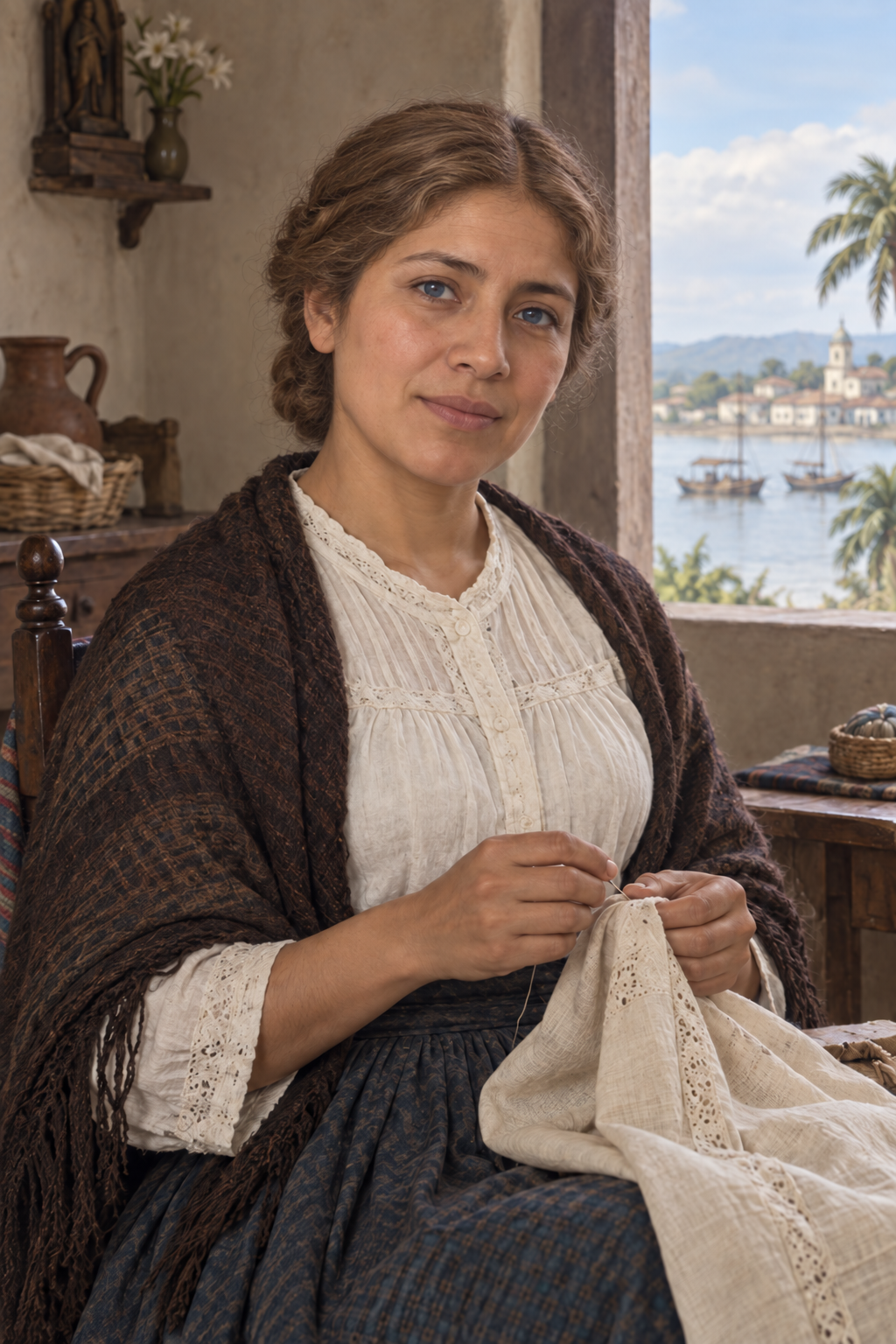
Narcisa de Jesús Martillo Morán was born in 1832 in the San José area of Nobol, near Daule in Ecuador. The national sanctuary devoted to her says her exact birth day is not known; a date sometimes repeated elsewhere rests on an inference from her name. She was the sixth of nine children in a farming family. Her mother died when Narcisa was six, and she learned to read and write with help from a teacher and an older sister. She also learned sewing, weaving, embroidery, and music. Those practical skills later mattered because she earned her own living rather than entering a convent as a professed sister.
As a child, Narcisa practiced prayer and helped with work at home. The Holy See's biography says she taught children in her neighborhood and developed a particular attachment to the life of Mariana of Jesus, an earlier Ecuadorian saint. The biography also describes her withdrawing to a place near a guayabo tree for prayer. These details come from a church life written for canonization; they should be read as the received account of her early devotion, not as a diary written by Narcisa herself. Her childhood did not take place apart from family labor. Prayer, teaching, and domestic work belonged to the same daily setting.
After her father's death, Narcisa moved to Guayaquil. There she supported herself by sewing while continuing the prayer and religious teaching that occupied much of her life. A contemporary account published by Zenit describes her modest lodgings and her deliberate choice to remain a laywoman in the world. Those details matter: accounts of her spirituality need to include the work by which she supported herself. Her move also brought her into a larger city, where she encountered people in need and received spiritual guidance.
Narcisa spent most of her adult life in Guayaquil, with a brief period in Cuenca. She kept working, taught catechism, and cared for people in need. The New Catholic Encyclopedia describes her refusal of an invitation to join the Carmelites in Cuenca; she discerned that her vocation remained in the world. This account places her prayer and service within a chosen lay vocation, rather than treating her as an unnamed convent sister. Benedict XVI later pointed to her life as a seamstress and catechist when presenting her to the universal church.
In 1868 Narcisa traveled to Lima, Peru, after counsel from a Franciscan priest. Zenit's account names Pedro Gual as the adviser who encouraged the move. She lived at the Patrocinio community, where her status remained lay rather than that of a professed Dominican nun. This detail matters because residence at a convent can otherwise suggest that she had joined a religious order. The documented journey and lay residence are clear; accounts of her private spiritual motives belong to the church's interpretation of her life.
Narcisa died in Lima on 8 December 1869. Church narratives associate her death with unusual light and fragrance; these are devotional reports, not independent clinical findings. Her date and place of death are better established than the extraordinary details. Sources also describe demanding penitential practices, which belong to the history of her spirituality and need careful context rather than imitation. Sewing, catechesis, and care for people in need remain central to the public account of her life.
Devotion to Narcisa continued after her death. The Nobol sanctuary traces the transfer of her remains from Lima to Guayaquil in 1955 and their eventual return to her home region. The sanctuary itself developed through donations and local church leadership after her beatification was announced. Its history records building work in the 1990s and a dedication in 1998. Worship began in the unfinished church in 1995, and Ecuador's bishops designated it a national sanctuary in 2009. This long construction history reflects sustained local participation, including gifts from pilgrims whose names were not recorded. These later events are part of the community's remembrance, not episodes in Narcisa's lifetime. They show how a woman who had supported herself by sewing became a local focus of pilgrimage and prayer. The sanctuary's account can document its own institutional history more directly than it can establish every private experience attributed to Narcisa.
John Paul II beatified Narcisa in 1992, and Benedict XVI canonized her on 12 October 2008. The latter's homily called attention to her lay vocation, her work as a seamstress, and her catechesis. The Dicastery for the Causes of Saints lists 8 December as her liturgical memorial. Her enduring significance rests on an unusual combination: a self-supporting woman in nineteenth-century Ecuador who remained outside formal religious vows, worked with her hands, taught faith, helped neighbors, and sought sustained prayer. The record also contains ascetical and extraordinary claims that need attribution. Leaving those claims as church memory protects a clear account of the documented work she did.
Wondering how to weigh the stories and sources? Learn how to read a saint biography.