Saint profile
Naum of Ohrid
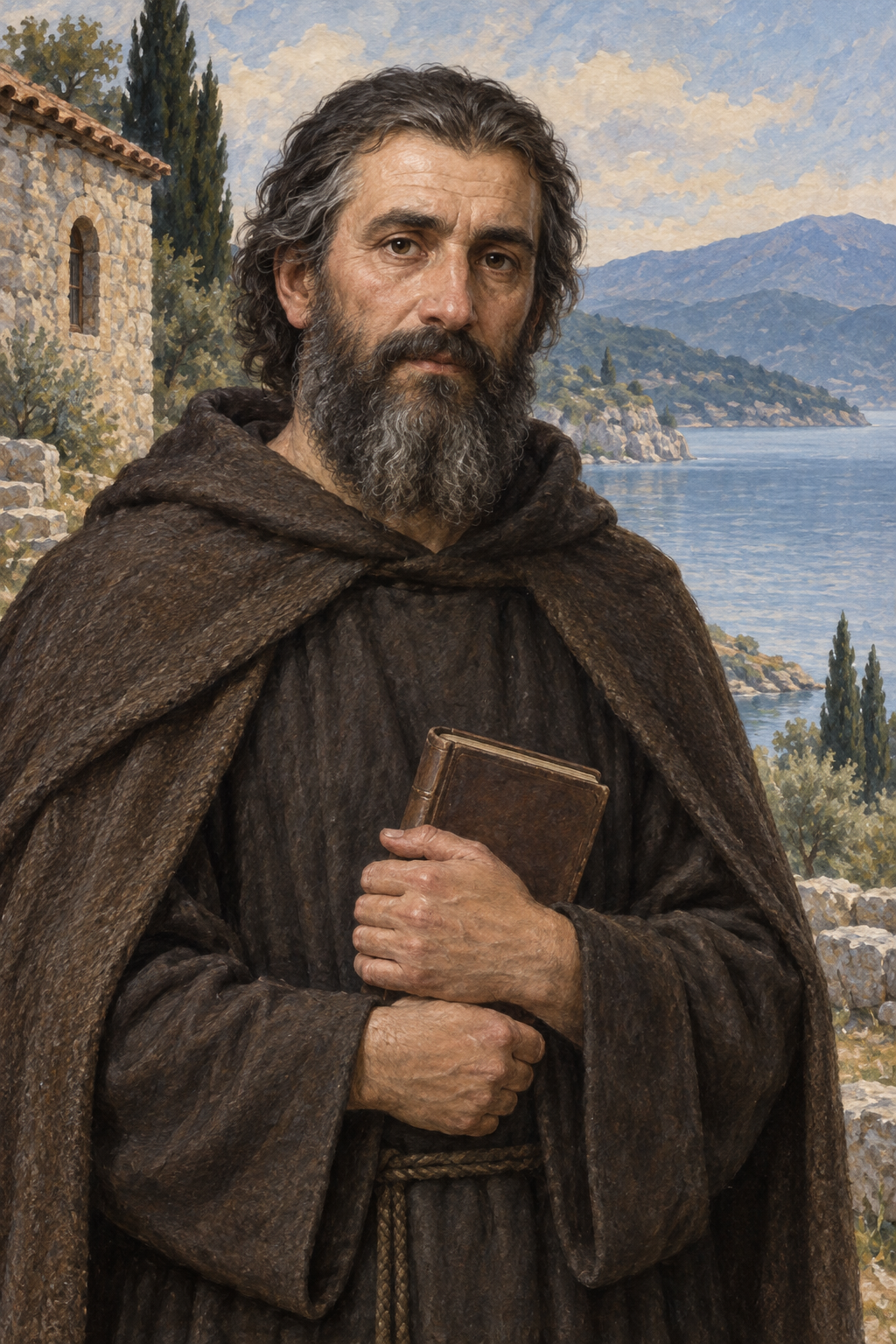
About Naum of Ohrid
The short Slavonic Life of Naum calls him a presbyter, companion of Clement, and fellow sufferer during the disputes that followed Methodius’s death. It says that after Clement was made a bishop, Simeon sent Naum to teach in Clement’s place. Naum taught for seven years, the Life says, and then withdrew to a monastery he had established by the outflow of the White Lake, identified in the transcription’s note as Lake Ohrid. The account says he lived there for ten years and accepted the monastic habit shortly before his death. These are claims of a medieval hagiographic text, not independently verified details of every stage of his life.The Life’s author says the account was written after Naum’s death at the request of Mark, bishop of Devol, and that he knew only a little, as the revered fathers had told him. Modern scholarship dates the short Slavonic Life probably to the tenth century, but it survives in a fifteenth-century copy. It preserves an early memory of Naum’s teaching and monastic community while openly acknowledging the limits of the information available to its author. The Orthodox Church in America says Naum reposed on December 23, 910. The short Life itself gives December 23 and says he died six years before Clement; the year 910 is the conventional chronology, not a year written in this passage.The OCA lists June 20 as Naum’s principal individual commemoration and also commemorates him on December 23. A documentary study of medieval service books finds the December observance by the end of the tenth century. It concludes that June 20 entered liturgical use before Archbishop Joasaph’s eighteenth-century tenure, possibly as early as the thirteenth century, and that it did not replace December 23. The catalog’s May 11 date belongs to Naum’s teachers: the OCA identifies May 11 as the commemoration of Cyril and Methodius, and its May 11 list does not include Naum.
Wondering how to weigh the stories and sources? Learn how to read a saint biography.