Biography
Nympha
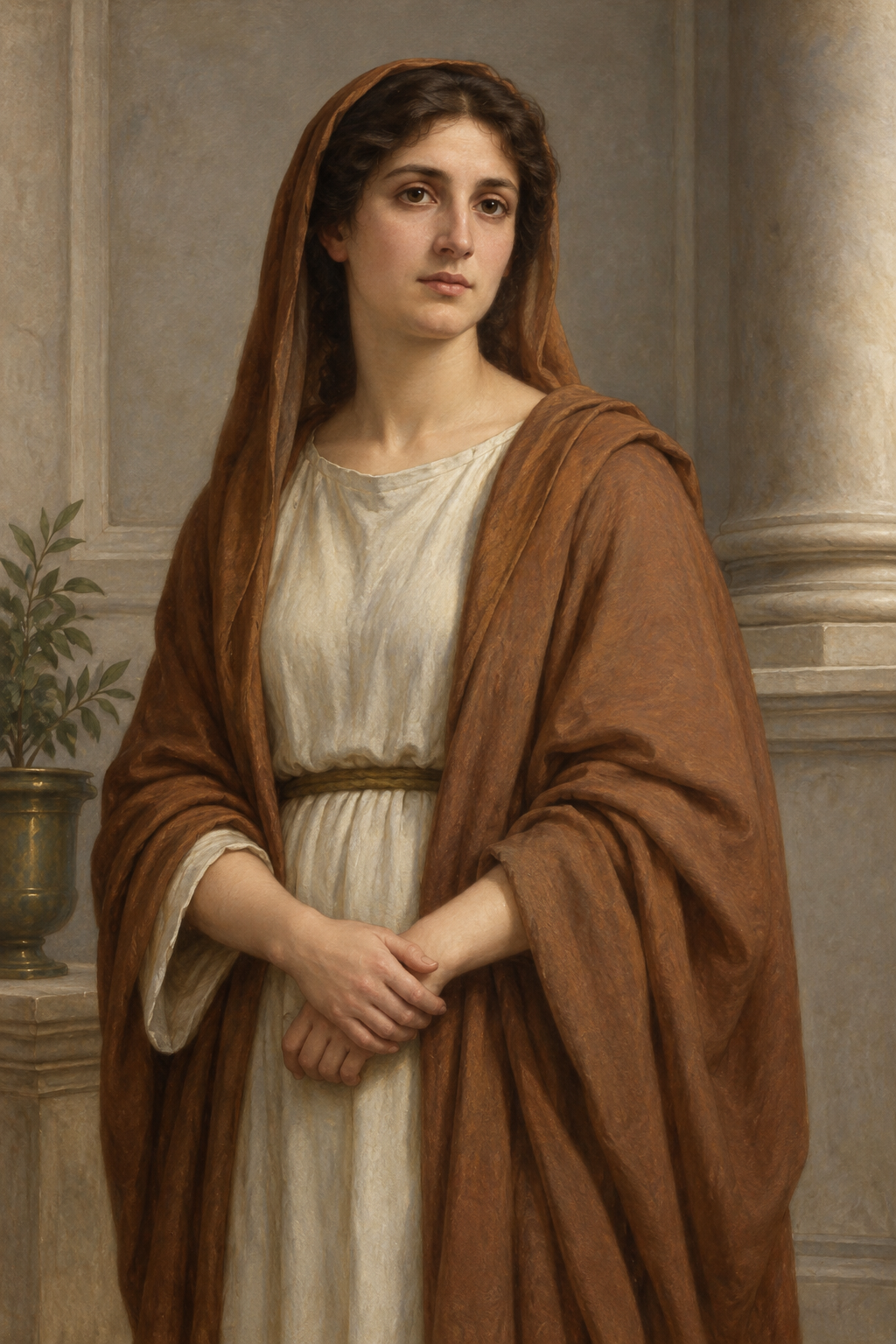
About Nympha
The earliest useful evidence for a cult under the name Nympha is not a biography. The *Liber Pontificalis* records that Pope Leo IV, whose pontificate lasted from 847 to 855, gave a liturgical vestment to a church at Portus dedicated to “blessed Nympha martyr.” Modern historian Eugenio Susi identifies this as an early medieval cult notice and stresses that the surviving evidence is too scant to reconstruct the original Portus saint's identity or personal history. The church's location is evidence for veneration, not proof that Nympha was born, lived, or died there.Later texts add traditions that cannot simply be combined into a verified life. Hagiographic versions associate Nympha with Palermo, but the account of her life differs from the early Portus martyr designation. Susi notes that a later recension, BHL 6256, does not actually narrate a martyrdom and gives November 12 as her death day. The earlier passion tradition and later Roman commemoration use November 10. The Bollandist *Acta Sanctorum* also documents these variants and cautions against treating conflicting legends as proof that two distinct historical women can be identified. This entry therefore preserves the traditions as a composite, unresolved dossier rather than choosing a birthplace, death place, or life chronology.The Roman Martyrology's November 10 entry lists Nympha as a virgin alongside Tryphon and Respicius. Susi traces this association to later Roman sources and explains that liturgical juxtaposition does not prove that the three formed a historical group. The inherited January 19 source is unrelated: there “Nympha” names the place where Martha is said to have died. Neither calendar notice supplies a reliable personal biography. Accordingly, this profile distinguishes the documented existence of a Portus cult from later hagiographic and liturgical claims, and leaves the historical woman's identity unresolved.
Wondering how to weigh the stories and sources? Learn how to read a saint biography.