Biography
Olga of Kiev
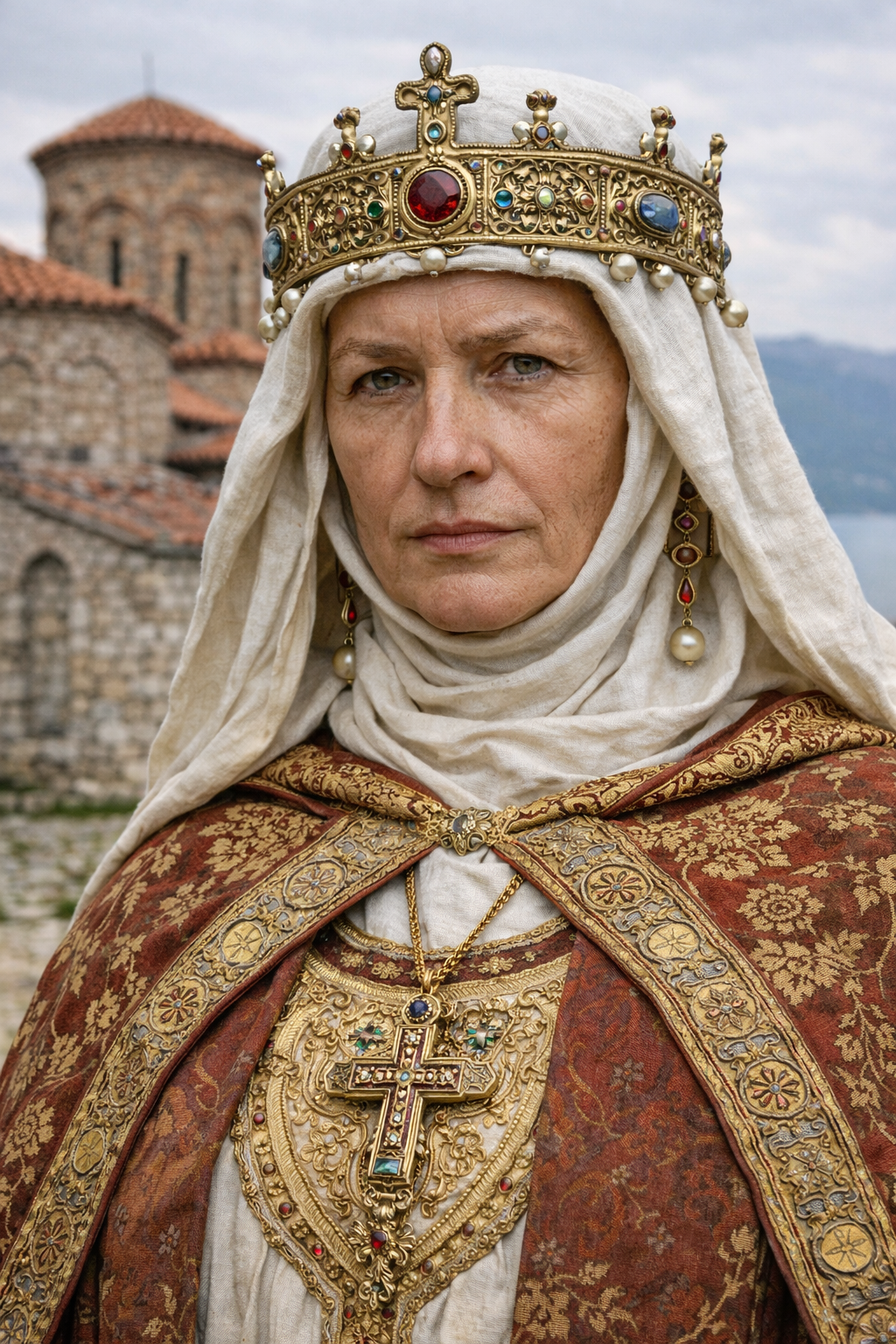
About Olga of Kiev
Olga governed Kyivan Rus after the death of her husband, Prince Ihor, also known as Igor, in 945. Their son Sviatoslav was still a child, and she acted as regent, exercising authority in her own right rather than merely preserving a ceremonial position. The realm centred on Kyiv depended on tribute collected from surrounding peoples. Olga's response to a rebellion and her changes to that system made her an important ruler before the Christian conversion for which she is best remembered.
Olga's birth is usually placed around 890, with Pskov named as her traditional birthplace. Neither an exact date nor a secure account of her childhood survives. She entered the ruling family through marriage to Igor.
The Primary Chronicle makes Igor's death the consequence of returning to the Derevlianians for additional tribute. It then tells an elaborate story of Olga defeating attempts to bring her under the authority of their prince Mal through marriage. She answers successive embassies with lethal deception, and eventually destroys their stronghold. The narrative is a revenge story, not an example of Christian conduct. Its position before her conversion creates a sharp contrast with the Christian ruler whom the chronicler later praises.
Historian David Prestel cautions that these episodes contain the formulas of folklore, including riddling exchanges and repeated acts of vengeance. They cannot all be treated as independently established events. He also notes problems with the Chronicle's early dates: its marriage year of 903 fits poorly with the much later birth it assigns to her son. Neither a precise childhood chronology nor a confident statement of her ethnic background can be extracted from these traditions. What survives is a powerful literary portrait alongside a much narrower historical record.
Olga's administrative measures addressed the instability of tribute collection. She established local collection centres, known as pogosti, and regularized what was owed. She also marked out hunting grounds and strengthened the resources controlled by the princely household. Instead of relying entirely on the ruler's repeated collecting journeys, the system attached obligations to particular places. These changes joined revenue collection to the extension of central authority.
A different kind of evidence places her at the Byzantine court. Constantine VII's Book of Ceremonies describes formal receptions, meetings with the imperial family and banquets for her delegation. Her company included merchants, interpreters and a priest named Gregory. At one stage she sat in conversation with members of the imperial household, an honour distinct from the more formal audience. Dimitri Obolensky's examination of this record shows a ruler participating in elaborate diplomacy, with religious contacts embedded in wider relations between Rus and Byzantium.
The court account does not describe a baptism. That silence matters because later narratives place Olga's conversion in Constantinople, while other interpretations place it in Kyiv. Obolensky weighs the competing accounts without claiming that the problem is finally solved. Even the presence of Gregory in her company does not by itself establish when she became Christian. The visit is conventionally dated to 957; her baptism should not automatically be assigned to the same journey or given its reception dates.
Her new allegiance also had a western diplomatic expression. In 959 she sent envoys to Otto I asking for a bishop and priests. The mission that followed, associated with Adalbert, did not establish a lasting church organization in Rus. At home, Sviatoslav remained opposed to adopting his mother's religion. Yet Olga continued to exercise governmental responsibility when he was absent on campaigns. Conversion did not end her involvement in political affairs, and it did not immediately change the faith of the ruling family or the country.
The Chronicle presents her persistence in personal terms. She urges her son to share the faith she has found, while he fears ridicule from his followers. Near the end of her life, the same narrative has her ask him to remain with her until she has died and been buried. These are reported exchanges, not transcripts. They nevertheless show how the chronicler understood her witness: a mother continuing to speak to a son who would not follow her religious choice.
Olga died in Kyiv in 969. Her son nevertheless gave her a Christian burial in Kyiv. The funeral did not mean that he had accepted her religion. Olga had kept her Christian allegiance within a household that remained divided over belief, and the form of her burial preserved that distinction at her death. Later Christian memory linked her with her grandson Vladimir and the conversion of Rus under him. Prestel points to the eleventh-century writer Hilarion's comparison of the pair with Helen and Constantine. That comparison gave Olga a place in a larger Christian account of rulers and conversion. The Orthodox Church in America now commemorates her as Equal to the Apostles, remembering a Christian beginning that did not reach its fullest public expression during her own lifetime.
Wondering how to weigh the stories and sources? Learn how to read a saint biography.
Prayers for Olga of Kiev
Olga — kontakion petition
O Lord, grant remission of sins unto Thy people.