Biography
Olga of Kwethluk
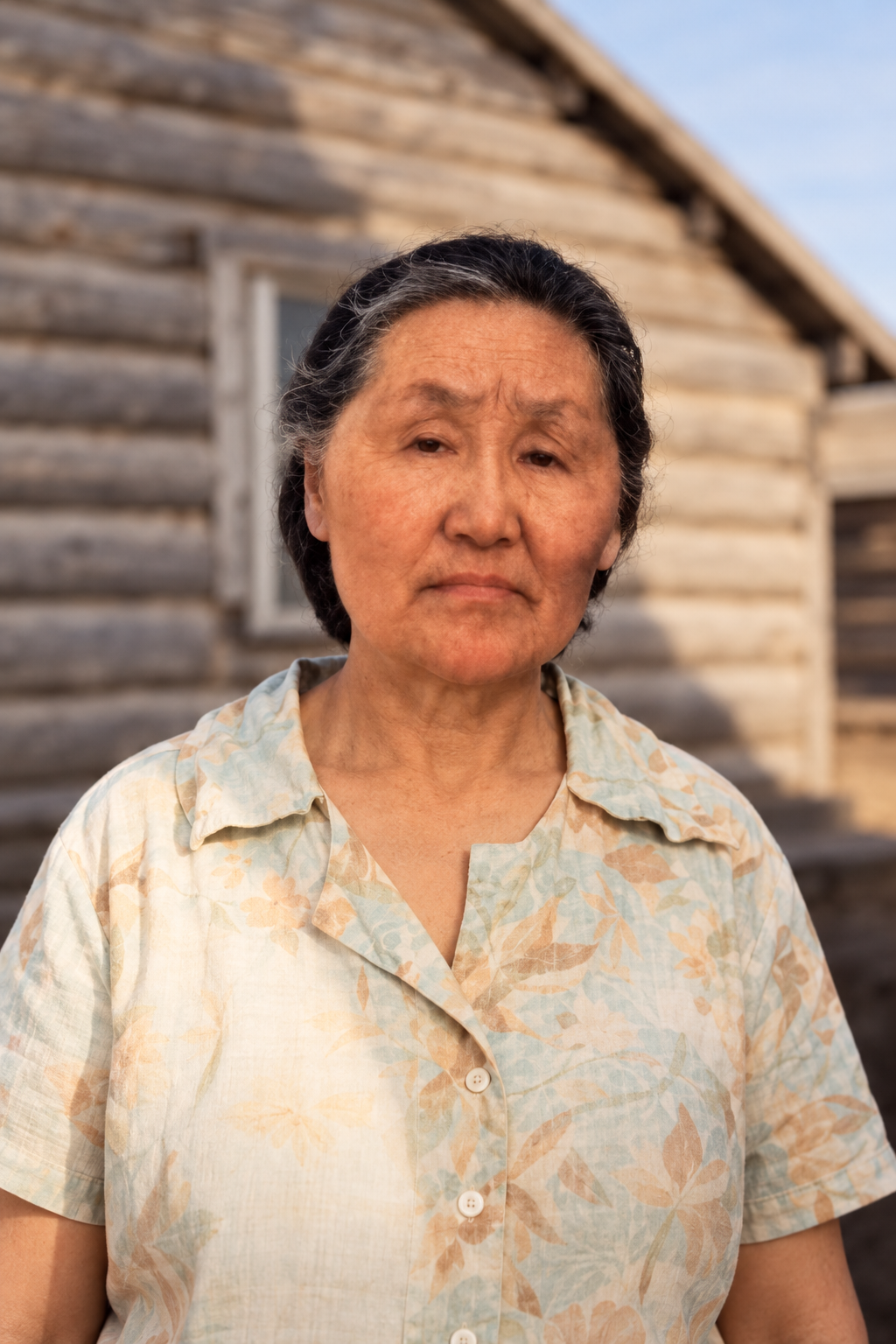
About Olga of Kwethluk
Olga Michael lived in Kwethluk, Alaska, where she worked as a midwife and helped women facing grief and abuse. She was Yup’ik and was known by the name Arrsamquq. Her husband, Nicolai Michael, was a storekeeper and postmaster before becoming an Orthodox priest. She supported the parish of Saint Nicholas by baking altar bread, making clothing and welcoming visitors.
Her granddaughter Olga J. Skinner’s thesis draws on interviews with women who knew her. It identifies Olinka as the eldest of seven children and the only daughter. She spent much of her childhood with reindeer-herding families in the mountains south of Kwethluk. During seasonal returns to the village, she attended school and learned English. The recollections leave her final school grade uncertain.
According to her granddaughter Olga McGill’s family account, Olga and Nicolai had thirteen children, eight of whom survived. Nicolai and several other village men served as church readers before becoming priests.
McGill describes Nicolai and the six other readers as learning their faith themselves before a seminary was available. Her account places Nicolai’s preparation for priesthood within the religious life of the village.
Her daughter Anita remembered her quietly leaving home to attend births. Olga also enlisted her children to wash diapers or babysit so new mothers could rest. Skinner’s account places her midwifery within Yup’ik healing traditions as well as Orthodox faith. The author explicitly acknowledges that surviving information about this work is limited.
Family recollections published by the local broadcaster KYUK bring her domestic life into view. Her granddaughter Atan’ Winkelman remembered being carried on her grandmother’s back, sharing meals and watching her sew. Her daughter Helen Larson recalled women visiting their home for lengthy private conversations over tea. Larson did not listen to those conversations, but remembered the visitors seeming relieved when they left. These memories describe assistance offered within ordinary family and village life.
Recollections collected by Kevin Wigglesworth describe donations of handmade boots and parkas to other communities’ fundraising efforts. He also records that a story she told her children reached print through Teri Sloat’s retelling, The Hungry Giant of the Tundra.
The same account describes her giving her children’s clothing to families in need. She asked the children to remain quiet if they recognized their former clothes being worn by someone else.
Later, Olga taught English to adults, including older villagers. Her lessons included the alphabet and writing names. Skinner records that her daughter Helen sometimes helped with the classes.
Her daughter Anita also remembered help with the alphabet and multiplication tables at home. When the children left for boarding school, Olga wrote letters and sent money, then cooked familiar food when they returned.
Michael Oleksa recalled meeting Olga and Nicolai when he came to Kwethluk as a deacon in 1972. In an interview shortly before his death in 2023, he remembered being welcomed into their home and tasting akutaq there for the first time. His recollection adds a visitor’s perspective to the family memories of hospitality.
Olga died at home in Kwethluk on November 8, 1979, after cancer. The Church’s biography reports later dreams and healings attributed to her intercession, particularly among women who had experienced abuse.
Oleksa later gathered accounts from people who associated experiences of healing with Olga. He told KYUK that he compiled these testimonies and sent them to Bishop Alexei. This correspondence helped bring devotion rooted in Kwethluk to the attention of the Church’s bishops.
For Oleksa, Olga’s importance also lay in the kind of life she had lived. He emphasized that she had neither traveled on a major missionary journey nor written theological books. Her example, he argued, showed that ordinary Christian faithfulness could be recognized as holiness.
On November 8, 2023, the Holy Synod of the Orthodox Church in America decreed that she be numbered among the saints. Its proclamation responded to Bishop Alexei’s petition and the devotion of believers in Alaska and elsewhere. The bishops also directed the preparation of a life, icons and liturgical texts, and recognized her remains as relics.
The proclamation also directed that her name be sent to the heads of other Orthodox churches for their calendars. Until the public glorification, it called for continued prayers for her at memorial services.
The public glorification took place in Kwethluk in June 2025. KYUK reported the final memorial service at the old cemetery and the procession carrying her coffin to Saint Nicholas Church. Her granddaughter particularly valued hearing Yugtun in the services honoring her grandmother. For the family, a person remembered through meals, conversation and sewing had become the focus of a much wider religious devotion.
A later synodal announcement established October 27 as her annual commemoration. The Church specifies that this is the liturgical date on either the Revised Julian or Julian calendar, rather than a single civil date shared by both.
Wondering how to weigh the stories and sources? Learn how to read a saint biography.