Biography
Oscar Romero
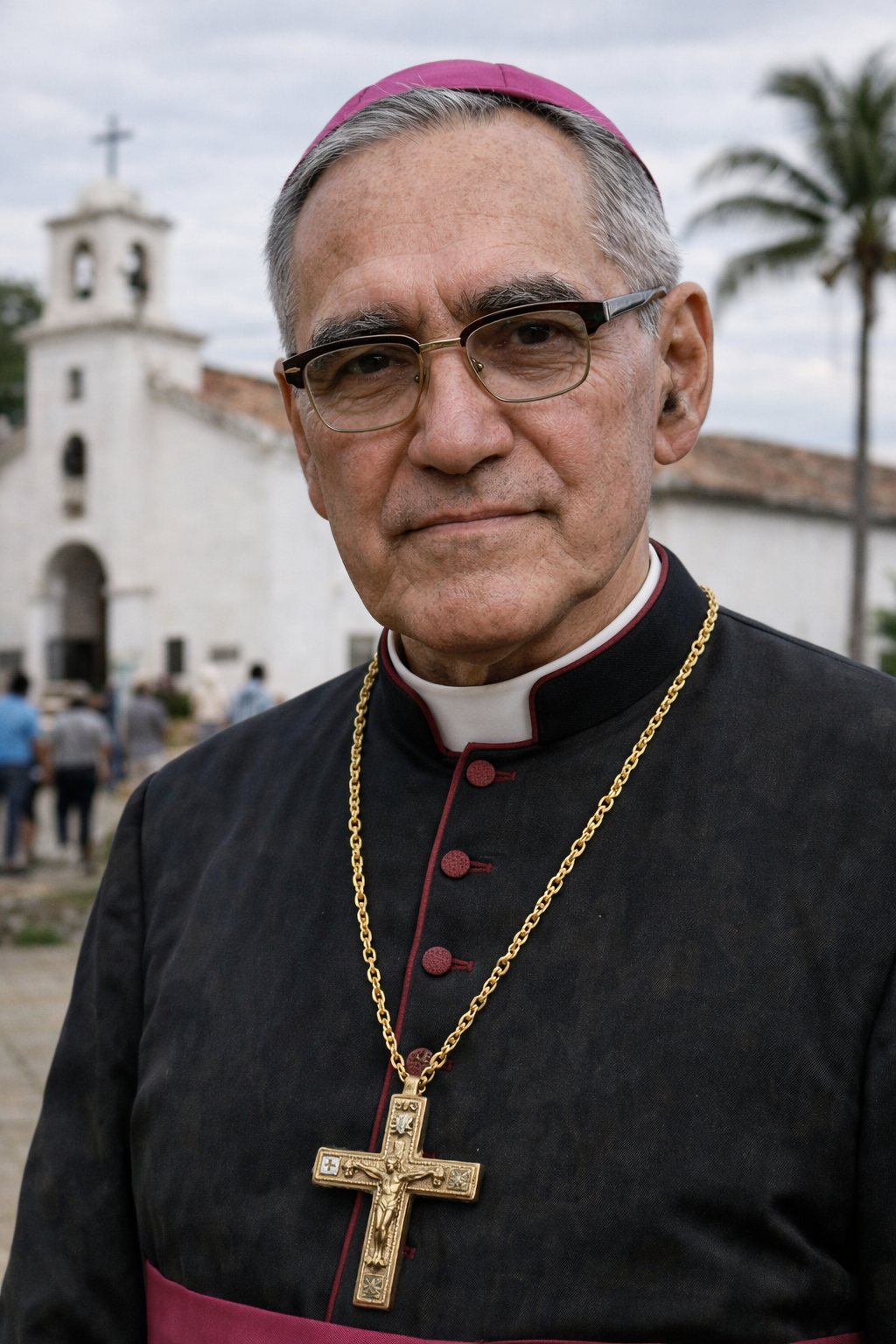
About Oscar Romero
Oscar Romero's public witness grew out of a long life in parish work and church administration. Born in Ciudad Barrios in 1917, he entered seminary as a boy and later studied in Rome. He was ordained a priest there in 1942. The account published by the Dicastery for the Causes of Saints traces his early ministry through years of pastoral service before his appointment as a bishop. The archbishop later known for confronting injustice had first learned the daily responsibilities of caring for a community.
That ministry included practical work as well as preaching. The Southwark shrine's account recalls his visits to prisoners, the provision of food for people in need and his involvement in building San Miguel's cathedral. It also records his work with the newspaper Orientación. A priest's voice could reach people in a church, in print or through the institutions that served a town. These activities help place Romero's later public ministry within an earlier pattern of pastoral work rather than beginning his story only with its violent ending.
His path was not a simple march toward confrontation. The Archbishop Romero Trust describes him as cautious about some of the changes proposed within the Church and initially suspicious of Christian base communities. His work in the rural diocese of Santiago de María brought him close to the hardship endured by peasant families. When he became archbishop of San Salvador, his responses to violence developed through encounters with people whose needs could not be left at a distance. The Trust presents this as a deepening involvement in their suffering.
The killing of the Jesuit priest Rutilio Grande became an especially painful challenge. Vatican News recounts that Grande was murdered with an elderly man and a boy shortly after Romero became archbishop. Romero's preaching increasingly named the violence around him and the people who had disappeared. He denounced violence by both government forces and guerrillas, and opposed the supply of weapons that sustained repression. His responsibility as a pastor took him into public conflict because the danger faced by his people was itself public.
Radio made his preaching accessible beyond the people gathered for Mass. CAFOD recalls working with Romero and helping to rebuild the radio station after it was bombed. Its account describes his broadcasts as a place where listeners could hear the truth about violence and murders. That work required more than delivering a forceful sermon: it depended on equipment, colleagues and support for a threatened institution. The recollection shows an international aid agency sharing in the practical task of keeping his pastoral voice on the air.
Romero also sought to bring the crisis before the wider Church. Westminster Abbey's account records his visit to Rome in May 1979, when he presented John Paul II with seven dossiers concerning injustices in El Salvador. The journey carried reports gathered from his own setting to the center of Catholic leadership. His appeal was not simply a demand that distant observers admire courage. It placed the evidence of suffering before another pastor and asked the wider Church to reckon with the conditions in which Salvadorans were living.
In February 1980 he accepted an honorary doctorate at the University of Louvain. He treated the honor as encouragement for his people and Church, not merely as personal recognition. His address explained how Christian faith took shape in the world of the poor. He described persecution affecting church workers and institutions, while insisting that poor people bore its heaviest weight. They were not simply recipients of assistance: they were people who should take part in making their own future. Food, housing and work belonged within the concrete demands of justice he set before his listeners.
His sermon on 23 March 1980 addressed members of the army and security forces directly. He appealed to their consciences and rejected the idea that an order could make an immoral act obligatory. The English excerpt preserved by the Romero Trust also challenges reforms carried forward through bloodshed. He asked for repression to stop. These were words addressed to people who could choose whether to obey a violent command, not only to officials far removed from its execution. The appeal made personal responsibility part of his public defense of life.
The next day he was killed while celebrating Mass at the Divine Providence hospital in San Salvador. The hospital, which cared for people with cancer, was also where he lived. The Southwark account records his burial in the city's metropolitan cathedral.
The Church's later recognition gave that memory a public religious form. In his letter for Romero's beatification, Pope Francis recalled a pastor attentive to the poor and committed to communion with the Church. He linked Romero's remembrance with reconciliation, peace and mercy for El Salvador. The letter presents this as a call for the living, not simply praise for someone who had died. In that Catholic reading, honoring Romero means continuing the difficult work of caring for neighbors and resisting the divisions that make their suffering easier to ignore. Pope Francis canonized Romero on 14 October 2018.
Wondering how to weigh the stories and sources? Learn how to read a saint biography.
Explore similar vocations
Prayers for Oscar Romero
Thanksgiving for Oscar Romero
Lord Jesus,
We give thanks for the life of
Saint Oscar Romero
who spread your message
and struggled against injustice in El Salvador.