Biography
Pachomius the Great
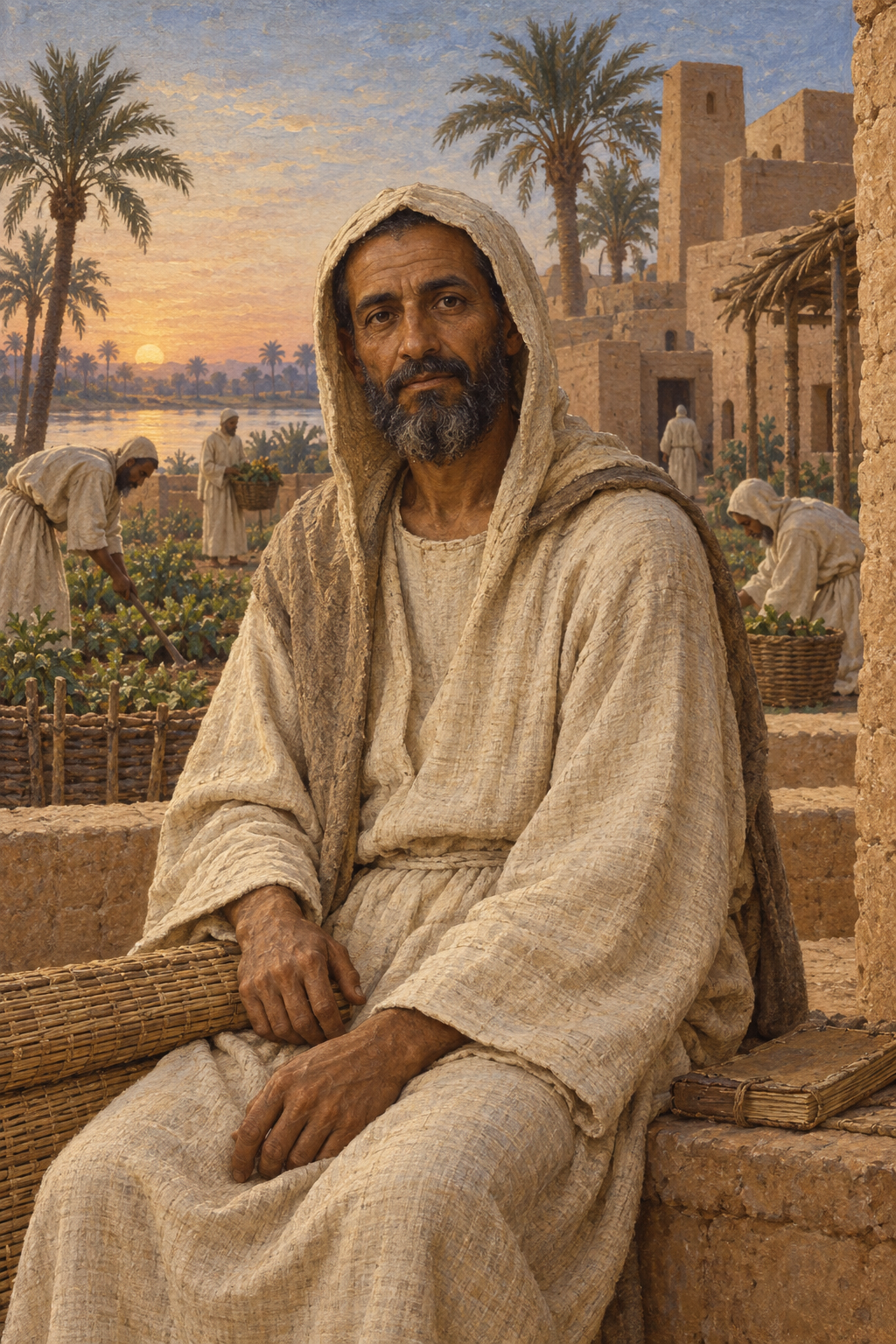
About Pachomius the Great
Pachomius lived in Roman Egypt during the fourth century, when Christians were experimenting with ways to pray and work together in the desert and along the Nile. He came from the Thebaid in Upper Egypt. The precise year of his birth is uncertain: a critical introduction to his Life offers estimates of 288, 292, and 294. One scholarly summary uses about 292. His family and early education are known mostly through later devotional writing, so a detailed childhood portrait would give those accounts more certainty than they can bear. His significance rests instead on the disciplined communities he helped establish and the model they passed to later monks.The ancient Life connects his turn toward Christianity with a brief period of military conscription. It says that Christians offered food and other help to detained recruits and that their kindness surprised the young Pachomius. After leaving military service, he received baptism and pursued an austere life near Chenoboskia. He then sought instruction from Palamon, an older ascetic. These scenes come through a narrative written to show how he learned Christian service; the exact dialogue and sequence cannot be checked against independent contemporary records. Their lasting point is that the story links his later communal work to hospitality he had first received from other Christians.Pachomius next settled at Tabennisi, where the Life tells of a call to build a place for monks. It frames that decision as a divine command and describes Palamon helping with an initial cell. A modern historical introduction places the first community around 318 or 325, a wide enough difference to discourage a precise foundation year in the catalog. The visionary call belongs to the tradition about his vocation; the growth of a community at Tabennisi is the more secure historical outline. The site became the starting point for a connected pattern of houses that offered a way to live religiously with others rather than in separate cells alone.The community needed an order that would support shared life without treating every monk as having the same strength or experience. The Life says Pachomius gave newcomers time to learn prayer and Scripture while he served meals, tended the garden, received visitors, and cared for sick members. It describes simple clothing, measured food, and suitable rest. These details belong to a devotional biography, yet they show the practical concerns by which later readers understood his leadership. Work was not incidental to prayer: food, clothing, shelter, and care had to be supplied by the brothers' common effort. The account makes the founder a participant in those tasks, not merely the author of rules.A fifth-century historian, Sozomen, also portrays the Pachomian way as a regulated communal life. His account describes labor, meals, admission of new members, and hospitality. He repeats a story that an angel supplied the rule, marking it as something people said rather than an eyewitness event. Reading that account beside the Life helps distinguish the practical organization from its sacred explanation. A community could share a schedule and resources while still giving newcomers instruction and making provision for bodily needs. The rules remembered by these writers were tools for living together, though their surviving versions do not let us reconstruct every day in every house that later belonged to the network.The network included women as well as men. Chapter 12 of the Life says Pachomius's sister came to him, adopted a similar way of life, and became the leader of women who gathered nearby. The text describes the brothers building her a dwelling and Pachomius sending rules for their community. An Orthodox account names her Maria. These reports should not reduce her role to a footnote in his story: the Life explicitly portrays her teaching and guiding the women. At the same time, the narrative is shaped by the ideals and boundaries of its monastic authors. The precise form of the women's house and its daily decisions cannot be fully recovered from this one account.Later tellings describe rapid expansion and sometimes give large numbers of monks. Those figures are difficult to treat as a census. The University of Fribourg's introduction distinguishes communities founded during Pachomius's life from later growth, and a scholarly chapter cautions against calling him the sole founder of communal monasticism. Christians had already tried forms of shared ascetic life. His contribution was to develop a particularly influential Egyptian organization of linked communities, with shared discipline and responsibilities. That is substantial without making every later monastic practice his personal invention. His name became associated with a rule and with institutions that continued to change after his death, so a biography should separate his own lifetime from their later history.Pachomius became ill near the end of his life, and the Orthodox life says that his disciple Theodore cared for him. Even his death year is not settled: the critical introduction favors 346 in much scholarship but notes 348 in other accounts, while the Orthodox account uses about 348. The early Life's reported May 14 and another May 9 tradition also show why the Orthodox May 15 feast should not be entered as a verified death anniversary. Pachomius is remembered for communities in which prayer, physical work, instruction, and care for vulnerable members belonged together. The evidence allows that historical outline while leaving the exact dates, dramatic visions, and later numerical claims appropriately uncertain.
Wondering how to weigh the stories and sources? Learn how to read a saint biography.