Biography
Pancras of Taormina
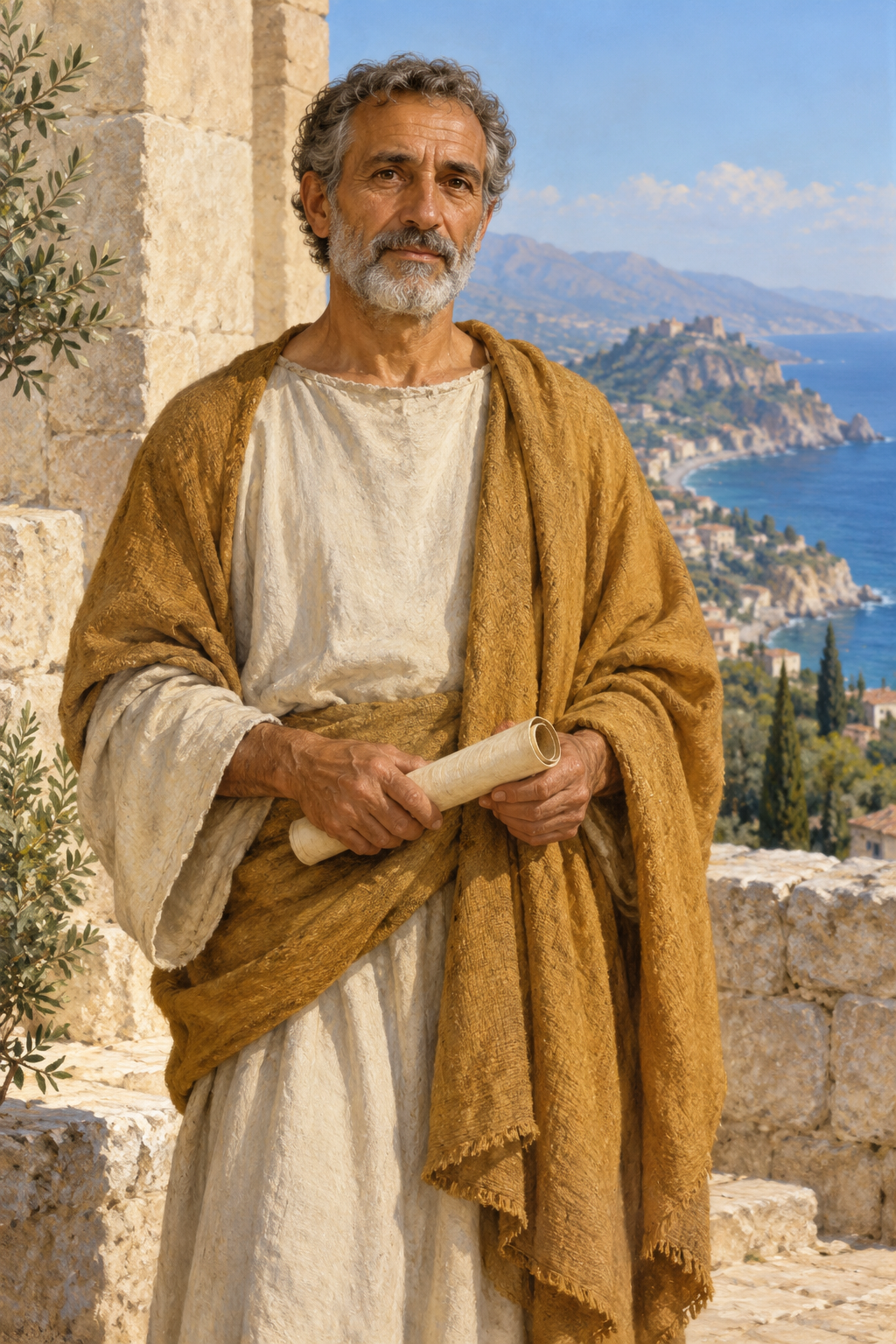
About Pancras of Taormina
Pancras of Taormina is venerated as a bishop and martyr associated with the beginnings of Christianity in the Sicilian city. He is distinct from Pancras of Rome, the young martyr commemorated in May. Fabio Arduino emphasizes the shortage of securely established information about the Taormina saint. His remembered life belongs largely to religious tradition, and precise dates for his birth and death cannot be confidently supplied.
The Orthodox Church in America preserves a devotional account in which Pancras’s family came from Antioch. As a boy, he traveled with his father to Jerusalem and encountered Jesus and his disciples. Later, Peter and Paul appointed him bishop of Taormina. The story describes the building of a church, many conversions and a violent death at the hands of opponents. These events are presented here as the church’s traditional narrative, rather than as a verified biography from the apostolic period.
The principal Greek Life claims the authority of an eyewitness named Evagrius. Modern scholarship places its composition many centuries after the period in which it sets its events. Reviewing Cynthia Stallman-Pacitti’s edition, Alexander Alexakis discusses a likely date around the late seventh or early eighth century, while acknowledging difficulties in fixing it more precisely. He describes the work’s adventurous, miraculous episodes and its purpose in promoting Taormina’s prestige. Its narrative of apostolic beginnings therefore needs to be distinguished from contemporary evidence.
This does not make the text without historical value. Alexakis explains that it can illuminate later Sicilian religious life, attitudes toward sacred images, local institutions and the ways Christians imagined the pagan past. That is a different kind of evidence from direct testimony about Pancras himself. The Life preserves a community’s account of its origins, shaped by the concerns of the time in which it was written.
In Taormina, his memory has a visible home in the church dedicated to him. The parish’s description records paintings of his arrival and martyrdom, a processional statue and the wooden platform made by Nicolò Cozzo in 1885. These objects belong to later devotion; their depiction of the saint does not establish the dates or details of his life. The local feast on July 9 brings his image into the streets, connecting the church’s worship with the wider town.
Canicattì also honors him as its patron. The municipality identifies its mother church as dedicated to Pancras of Antioch, the name under which the Taormina bishop is remembered there. Work on the present building began in the eighteenth century, and it was consecrated in 1874. The dedication shows the spread of his cult beyond Taormina without requiring acceptance of every story told about his journeys.
His patronage extends to Zagarise in Calabria. In a 1997 report published by the Eparchy of Lungro, Papàs Francesco Vecchio described celebrating the Byzantine Divine Liturgy there for the feast of Pancras, explicitly identified as bishop of Taormina and the town’s patron. The cathedral choir from Lungro took part. The account documents a local celebration shared across liturgical traditions.
The dates of remembrance vary. Arduino explains that the modern Roman Martyrology places him on July 8, while the Orthodox Church in America lists July 9. Taormina maintains its local celebration on July 9. These commemorations express continuing devotion; they should not be treated as proof of an exact anniversary of his death.
Wondering how to weigh the stories and sources? Learn how to read a saint biography.