Biography
Paul Cuffee
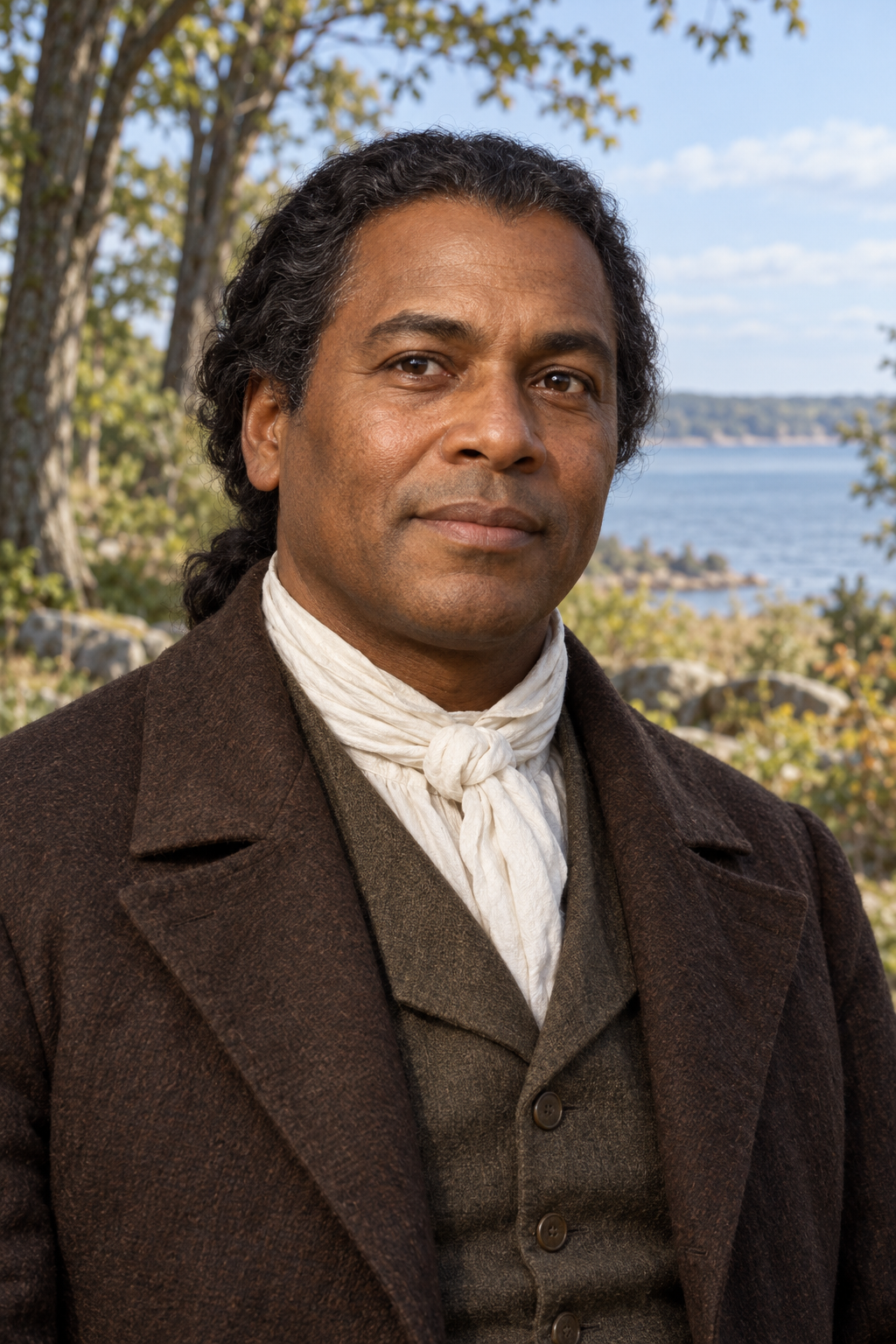
About Paul Cuffee
Paul Cuffee was a Christian minister whose work linked Indigenous communities across eastern Long Island. He was born in the town of Brookhaven on March 4, 1757. As a young person he was indentured to Frederick Hudson at Wading River, where he worked on a farm until he was twenty-one. A nineteenth-century account places his religious conversion around the end of that service.
He joined the Indigenous church at Wading River and began preaching. After living at Moriches, he moved to Poospatuck, where ministers from the Connecticut Convention ordained him in 1790. He subsequently lived at Canoe Place. In 1792 he joined the Strict Congregational Convention of Long Island, and in 1798 he received a commission from the New York Missionary Society. His principal fields of work were Montauk and Canoe Place, with visits to other communities.
His family connections reached across communities that later records did not always describe consistently. His brother Meshack identified their maternal grandmother as Montauk. A later church history and his memorial stone identified him with the Shinnecock. These records preserve different kinds of evidence about ancestry, residence and belonging; they do not make those categories interchangeable. A federal historical review noted the differences, while preserving the testimony of people who had known his family.
The Shinnecock artist Jeremy Dennis remembers Cuffee as part of a continuing Indigenous history of Long Island. His account links the minister with his grandfather Peter John, another preacher among the island’s Native communities. It describes Cuffee’s preaching at Poospatuck, Canoe Place and Montauk, and the crowds his sermons drew. This remembrance places him within communities with their own religious leadership, rather than presenting Christianity solely as something brought by outsiders.
The surviving historical accounts also need careful reading. Nathaniel Prime knew Cuffee and heard him preach. He admired his warmth and humility, but his account combines that personal testimony with language and assumptions about Indigenous people that belong to the author’s own period. Admiration does not make every detail of such an account equally secure.
Land records add another part of his story. Documents discussed in the federal review place property he owned outside the reservation, in the Canoe Place division of the Quogue Purchase. A notice published after his death referred to land he had mortgaged in 1810. Contemporary newspaper obituaries located his death at Montauk. These records distinguish the place where he died from the place where his grave was established.
Cuffee died on March 7, 1812. Dennis places his grave at the site of an earlier Indigenous church, in the area once called Good Ground and now known as Hampton Bays. Dennis’s photograph records the small fenced burial site and its damaged marker. The site preserves a physical connection with a ministry whose meeting places and congregations changed over time.
Later generations associated the church at Canoe Place with the Shinnecock congregation. The Southampton History Museum recounts that part of the chapel used by Cuffee was moved across the frozen bay in 1848. The museum also records the destruction of the later church in the hurricane of 1938 and the congregation’s rebuilding. His memory remained part of a religious community that continued long after his death.
The history of these buildings is less certain than the existence of the grave. In a town-sponsored survey, Barbara Moeller discusses maps of 1797 and 1829 showing a chapel east of the canal, while locating Cuffee’s burial west of it. She also cites an 1897 newspaper account describing a church beside the grave. Her survey calls for further research into the burial ground and evidence of an earlier meeting house. These accounts should not be combined into a single, certain story of where Cuffee preached or which building was moved.
The same survey records later efforts to preserve the burial ground. Drawing on a railroad history, Moeller reports that an injunction altered the route of the railway in 1870 so that it skirted most of the cemetery. Her 2005 report identifies the cemetery as town-owned since 2004 and recommends better pedestrian access. That recommendation records a preservation proposal, not proof that the suggested path was built.
In 2025 Third House Nature Center announced a lecture on Cuffee and Peter John by historian Evans-Sheppard, connecting their lives with Montaukett and Shinnecock history. Such remembrance belongs to living communities as well as to old church records.
Saint Luke’s Episcopal Church in Scranton lists his commemoration on March 4.
Wondering how to weigh the stories and sources? Learn how to read a saint biography.