Biography
Paul-Hélène Saint-Raymond
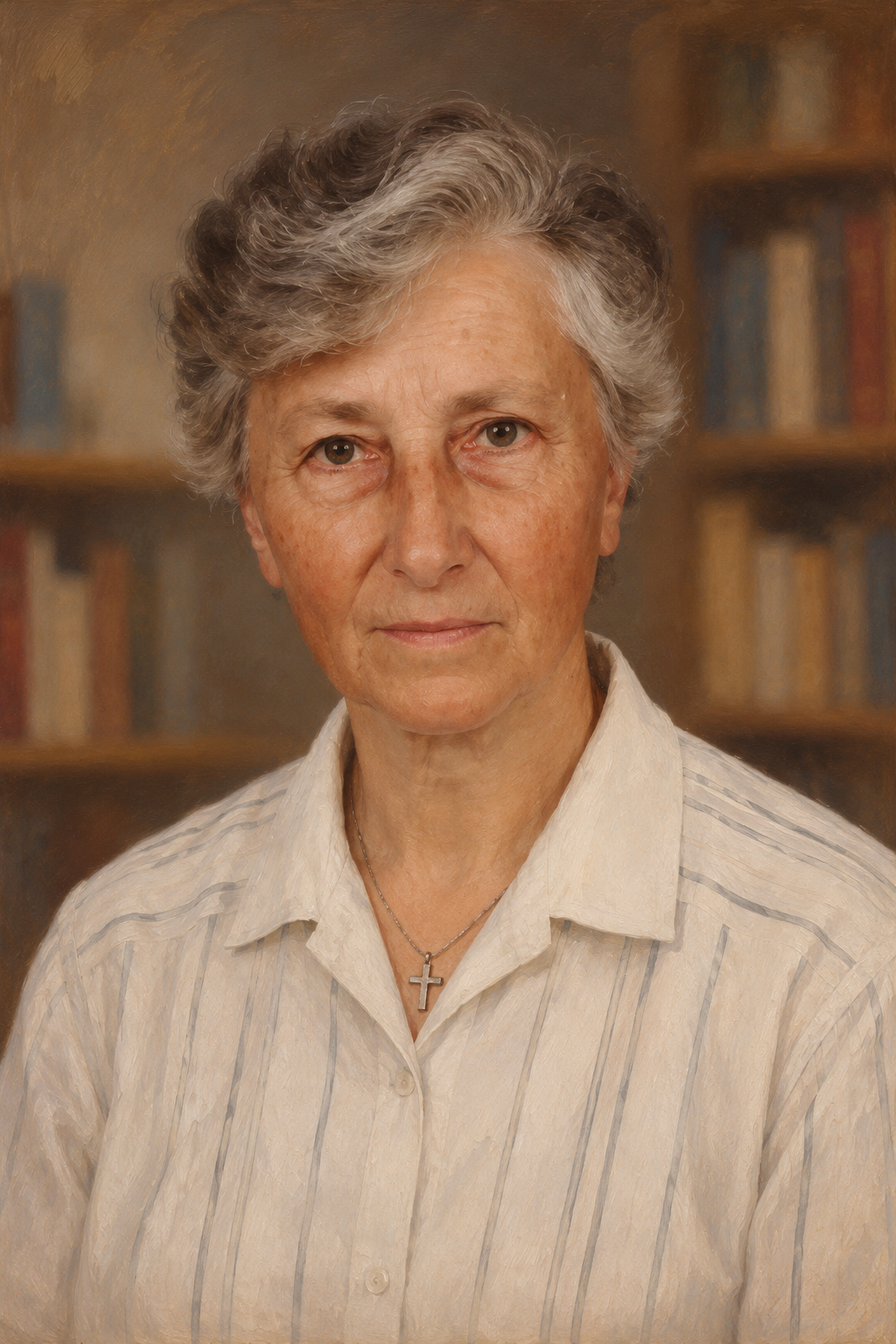
About Paul-Hélène Saint-Raymond
Paul-Hélène Saint-Raymond brought scientific training and practical nursing experience to her work with families in North Africa. Before entering the Little Sisters of the Assumption in 1952, she studied physics and chemistry at the Sorbonne and worked at the French Petroleum Institute. She also spent time in a cardboard factory to experience working conditions. Her early religious service included caring for families at Creil. One woman she had nursed remembered the friendship and renewed confidence that followed their time together.
A letter written before her perpetual profession shows her continuing attachment to the Catholic student community she had known in Paris. She invited its priest to the ceremony and asked for prayers for the twenty-two women, from eleven nationalities, who would make their profession. She remembered the help she had received at the Centre Richelieu.
She went to Algeria in 1963 and later served in Tunisia and Morocco. At Casablanca she worked with premature infants alongside Moroccan colleagues. She returned to Algeria in 1984.
An unnamed witness remembered another form of support during her Moroccan years. Living in hiding for political reasons, he recalled the fear and isolation of that situation. Paul-Hélène visited his companion in the role of a nurse and helped establish a chain of communication and solidarity. The brief testimony does not identify the political circumstances or every person involved. It preserves one person’s recollection of receiving practical help when ordinary contact had become dangerous.
Her own notes show a continuing effort to understand the society around her. Jean-François Petit’s archival study describes her sustained work on literary Arabic, including reading texts during her working day. She wanted to understand newspapers, radio and administrative documents, while recognizing that listening comprehension still required effort. She also valued professional competence. Notes from her nursing formation treated qualifications as a means of serving others well rather than as a source of prestige. These concerns place her religious commitment within the practical demands of language, learning and care. In 1986 she attended a study session on poverty at Rouen, welcoming the opportunity to examine the situations she encountered more closely.
In Algiers, she worked at the Casbah library with the Marist brother Henri Vergès. Her 1993 spiritual notes explained her choice to remain in terms of solidarity with friends facing danger. Her account of an incident in February 1994 shows what that meant in daily life: two young women rushed back into the library after hearing nearby shooting. She tried to calm them while praying for those threatened outside. The library’s work continued within a city where fear could interrupt an ordinary afternoon. Her writings do not describe a life untouched by anxiety. They record attempts to respond to immediate needs while keeping a longer commitment to the people around her.
She also followed political events closely. In correspondence examined by Petit, she questioned the competing programs, corruption and violence that were damaging public life. Her letters distinguished popular hopes from approval of violence, and she asked who benefited from continuing disorder. These were her observations and questions amid an unfolding crisis, not a complete explanation of the conflict. Alongside them she described people helping one another, finding ways to manage scarcity and continuing to think about their future.
On 8 May 1994, men claiming to be police entered the library and killed Paul-Hélène and Henri Vergès.
Four days later, Cardinal Jean-Marie Lustiger spoke about her in a radio interview. He had known her as a student at the Sorbonne. Asked why religious men and women remained in Algeria, he described their presence as service and love for their Muslim neighbors. When the interviewer raised the question of proselytism, he rejected that description of their work. His testimony connected the woman he had known in Paris with a form of Christian witness expressed through living alongside others. It was a public response to her death from someone who remembered her before her years in North Africa.
Paul-Hélène was beatified with the other eighteen martyrs of Algeria at Oran on 8 December 2018. Paris commemorates her with Christian de Chergé on 21 May as an optional memorial.
Her congregation also marks her memory on 8 May.
Writing after a visit to Midelt in 2024, Françoise Audebrand recalled the thirtieth anniversary of the deaths of Paul-Hélène and Henri. She linked their memory with the regional commitment the Little Sisters had expressed in 1992: to remain with the people among whom they lived, despite small numbers and an aging community. Audebrand emphasized that the sisters had not then known what that commitment would cost. Her recollection presents Paul-Hélène’s death within a shared history of daily presence, prayer and friendship. The memory belongs to the community’s continuing reflection on how to live among people of another faith, rather than to an isolated story of heroism.
Wondering how to weigh the stories and sources? Learn how to read a saint biography.