Biography
Paul of Tamma
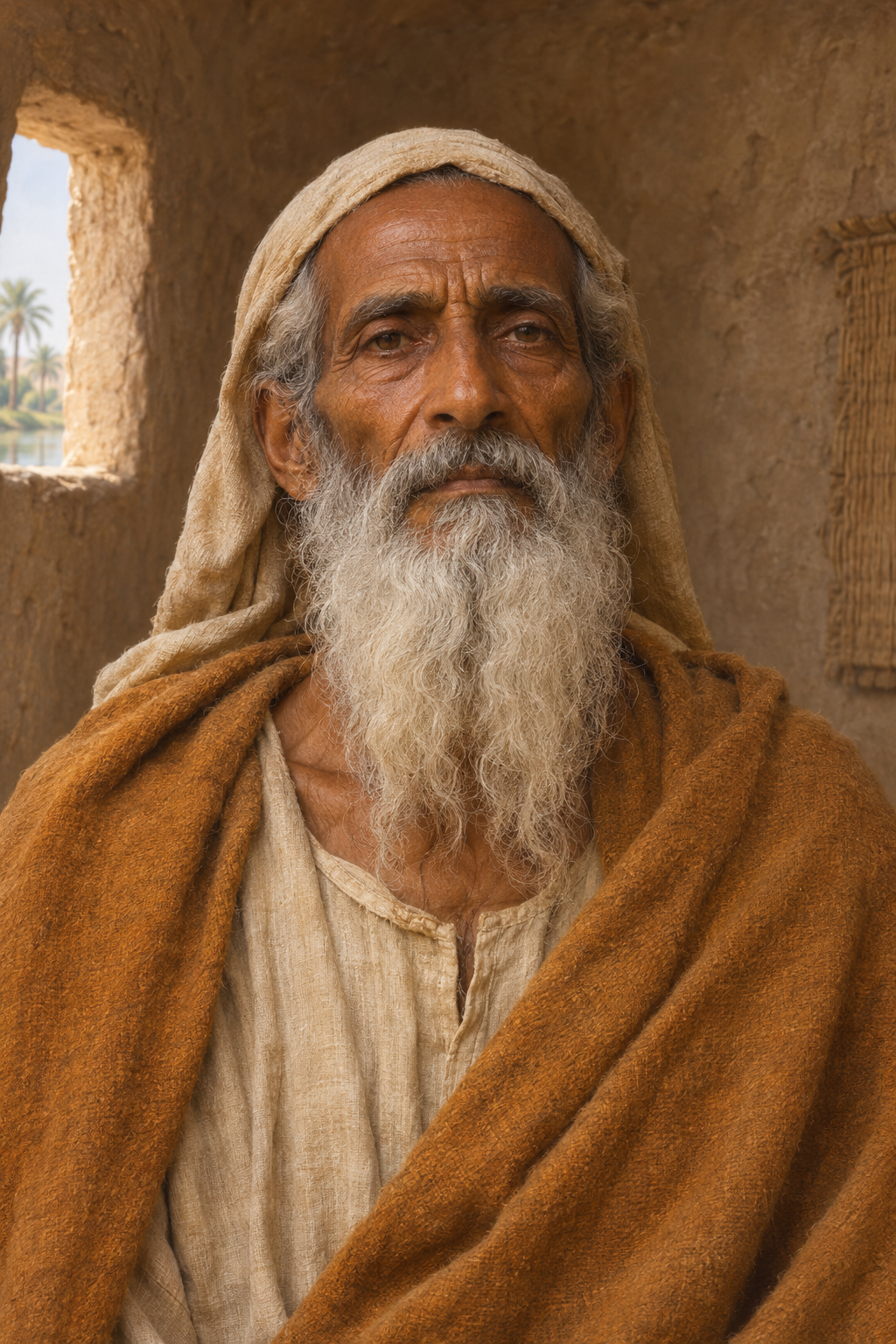
About Paul of Tamma
Paul of Tamma belonged to the monastic world of Middle Egypt near the turn of the fifth century. A later Coptic Life says he was born at Tamma on the Nile’s western side and withdrew at eighteen to the mountain of Touho, where a monk named Hyperichus taught him. Neither age nor itinerary is independently fixed. The Coptic Encyclopedia places him among monks of the late fourth and early fifth centuries, a more defensible setting than an exact birth or death year. His reputation rests partly on a Life written after the events and partly on ascetic works preserved in manuscripts, two kinds of evidence that require different readings.
The Life presents Ezekiel as his disciple and narrator. Together they travel through monastic settlements, meeting elders, sharing worship, and crossing the desert. In a surviving scene Apollo welcomes Paul and Ezekiel, invites them to eat after several days of fasting, and celebrates Communion with them. The episode conveys a tension between Paul’s severe abstinence and a fellow monk’s hospitality. Yet the same narrative repeatedly has Paul die from extreme practices and return to life, and its encounters include visibly legendary scenes. It records what later monks admired and questioned, not a dependable diary of journeys.
Other texts credited to Paul give a more direct account of his teaching. They survive in Sahidic Coptic manuscripts, including an Asceticon and the work usually called On the Cell or De Cella. Suciu argues that Paul probably composed in Coptic rather than translating a Greek original. One codex containing his sayings was copied in 979–980, centuries after Paul’s probable lifetime, and fragments are scattered among several collections. Their survival demonstrates a continuing audience, while the late copies and varied titles require care about authorship and the original shape of each work.
On the Cell asks a monk to remain in his dwelling with attention to God. The opening says that the cell should remain in the monk’s heart even when he is physically inside it. Paul warns that a body may be enclosed while thoughts range elsewhere. He urges watchfulness over pride and distraction rather than imagining that walls alone produce holiness. The cell is at once a real place of prayer and an image of an inward discipline. This gives his advice a more exact purpose than the simple instruction to withdraw from society.
His short sayings also picture the cell as an ally in a struggle against thoughts and demonic temptations. Paul compares the seated monk to an altar and the dwelling to a place where divine mysteries can be learned; elsewhere he uses images of a spring and river for the peace born of humility. He insists that vainglory can follow someone even into solitude. These images do not describe architectural features of his own room. They show how an Egyptian ascetic writer used familiar space to teach self-knowledge, perseverance, and prayer.
On Humility addresses a disciple through Scripture and practical admonition. It pairs inward restraint with gentleness toward another person and warns against rejoicing in a brother’s failure. A faithful friend, Paul says, can steady someone in fear and trouble. The passage matters because it complicates a portrait of him as only a solitary extremist: the writer who praises a cell also values trustworthy friendship, kindness, and responsibility for how a monk judges others.
On Poverty counsels a life free of anxious accumulation and connects that counsel with Jesus and the apostles traveling without wealth. In a short letter, Paul tells the recipient to be content with little bread and water and to endure hardship without surrendering to restless thoughts. These are exhortations, not evidence that Paul himself ate only those amounts or followed a fixed daily schedule. Read together, the texts ask a monk to lighten possessions and worries so attention can return to prayer.
A related text, Sitting in Your Cell, warns the monk against idleness and against letting the body remain enclosed while the heart wanders elsewhere. Its image of a person guiding farm animals presses the monk to direct his own attention rather than drift passively. Darlene Brooks Hedstrom reads this as part of Paul’s effort to turn a dwelling into a training ground for prayer and self-examination. The value of the cell lies in what the person practices there: attention, humility, and perseverance, not in walls that automatically make their resident holy.
The Life and writings preserve different portraits. The Life presents a saint of journeys, astonishing deaths and revivals, and companionship with Ezekiel; his writings make him a teacher of silence, humility, poverty, and watchfulness. The literary texts give direct access to practices associated with Paul, although transmission does not settle every attribution. His spectacular deaths and exact movements remain matters of tradition. Coptic communities kept reading advice bearing his name after the circumstances of his life had faded.
Wondering how to weigh the stories and sources? Learn how to read a saint biography.