Biography
Paula of Rome
About Paula of Rome
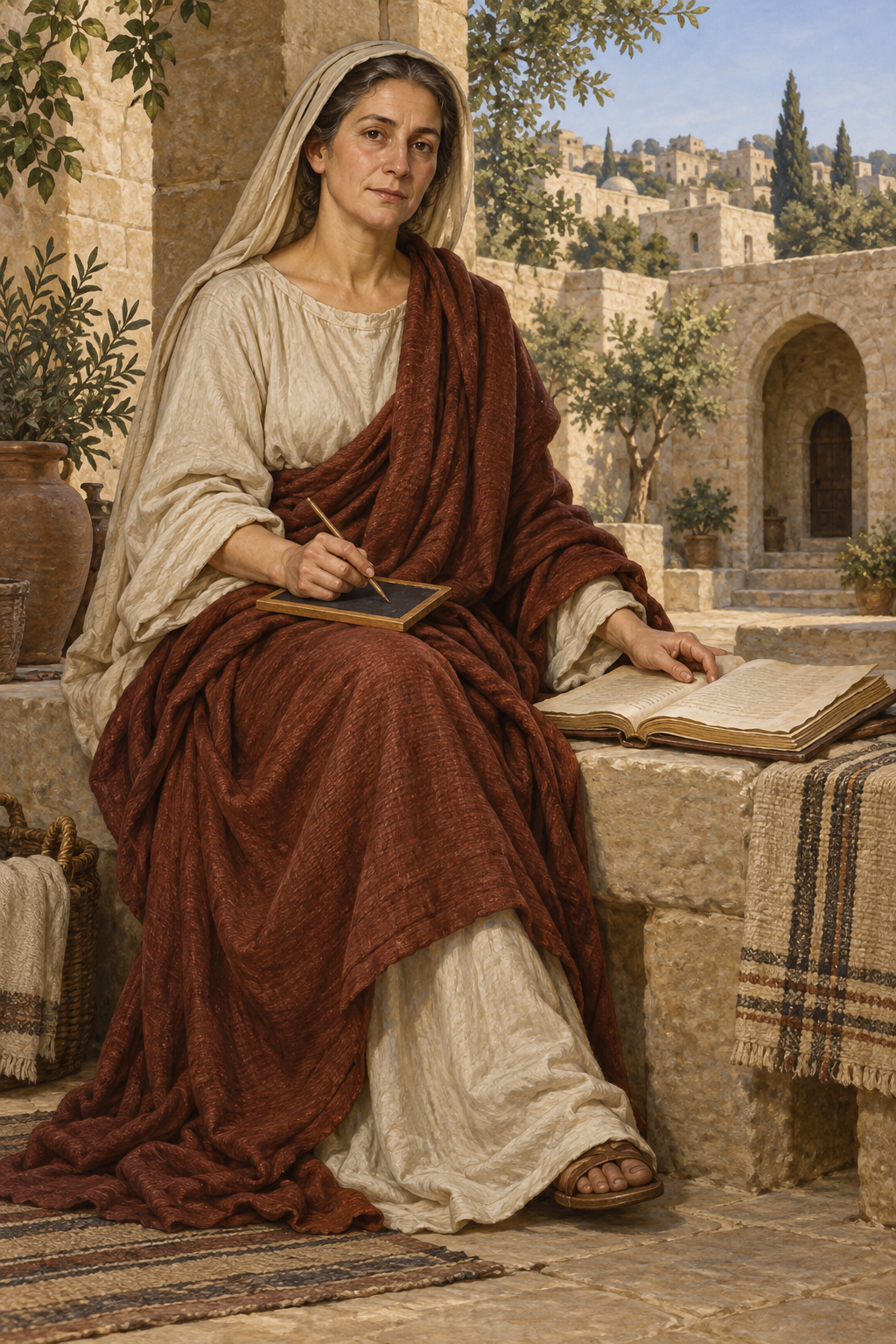
Paula belonged to a wealthy Roman family and married Toxotius, with whom she had children, including Eustochium. After her husband's death she became part of the circle of widows around Marcella in Rome. Jerome's memorial letter is a close witness, written to her daughter, but it is also a eulogy: its extravagant genealogy and idealized description of Paula should not be repeated as plain fact. In Rome, Paula devoted resources to religious study and charity. Vatican News identifies her as a Roman matron and places her in Marcella's circle; Jerome gives the same broad setting. The precise year of her birth is not necessary to tell this part of her life.Paula left Rome and traveled in the eastern Mediterranean before settling at Bethlehem. Eustochium accompanied her. There they supported a women's religious community, accommodation for pilgrims, and Jerome's work nearby. Benedict XVI attributes the foundations and pilgrim hospice to Paula's generosity, while Jerome gives a fuller account of buildings and daily life. A letter to Marcella, written by Jerome in the names of Paula and Eustochium, invites their old friend to the Holy Land. It shows a continuing relationship across the two communities; it does not prove that Paula personally penned every line. Her contribution was material, organizational, and intellectual, and should not be reduced to being Jerome's patron alone.Jerome composed a memorial letter for Eustochium after Paula died in Bethlehem. He dates her death to the seventh day before the Kalends of February and gives consular names corresponding to 404; the Catholic Encyclopedia also gives 404. Vatican News's English life instead says 406, so the discrepancy remains visible rather than silently harmonized. January 26 is the direct feast listing in Vatican News and matches Jerome's day. Jerome describes her burial near the Nativity site and the response of her community; his account is evidence for the occasion, while its crowd sizes and saintly rhetoric cannot be checked independently. Paula's portrait and badge are modern imaginative art, not ancient likenesses.
Wondering how to weigh the stories and sources? Learn how to read a saint biography.