Biography
Peter of Alexandria
About Peter of Alexandria
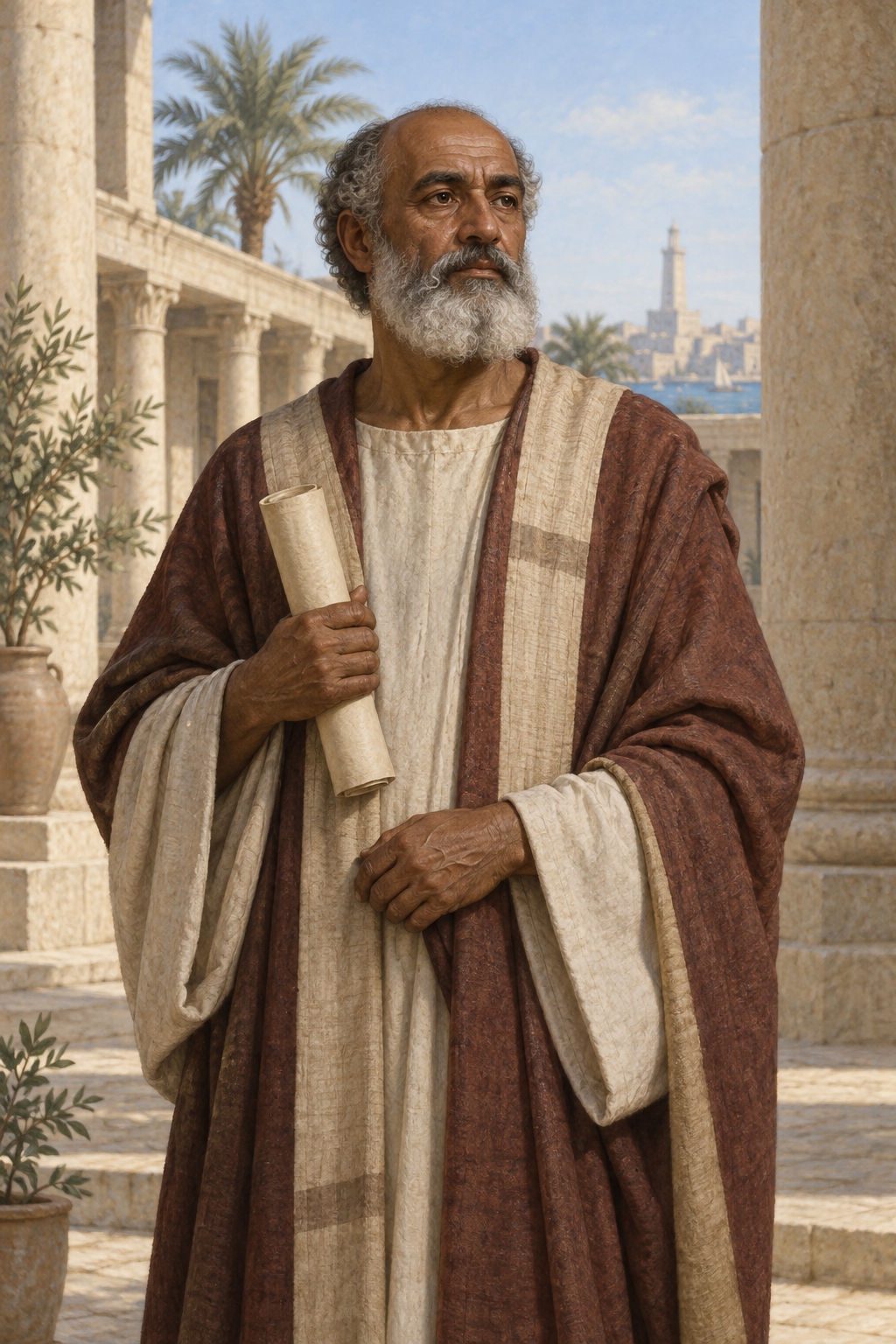
Peter led the church of Alexandria during the Roman persecution at the beginning of the fourth century. The Catholic Encyclopedia places the beginning of his episcopate around 300, while the Orthodox Church in America names him as successor to Bishop Theonas. The earliest source used here, Eusebius of Caesarea, calls him bishop of the Alexandrian communities and praises his attention to the sacred writings. That contemporary witness is more secure for Peter's office and death than later stories of his childhood. The OCA life says he was born in Alexandria, but the early account does not independently confirm that birthplace. This profile therefore records Alexandria as the city of his ministry and death, while leaving the structured birth place and date unfilled.The persecution forced church leaders to make difficult decisions about people who had yielded under pressure and later sought to return. A group of penitential canons attributed to Peter discusses how such people might be reconciled. The Catholic Encyclopedia says fourteen of these canons survive, probably taken from a festal letter, and notes their later use in Eastern church law. It also describes a dispute involving Meletius of Lycopolis while Peter was away from Alexandria. Ancient accounts of that dispute disagree about causes and conduct. Rather than repeat every accusation as fact, this profile identifies the pastoral issue and the existence of competing records. Peter's surviving canons matter because they show a bishop addressing a wounded community, not simply a name on a martyr list.Eusebius reports that Peter was seized unexpectedly, apparently on Maximinus's order, and beheaded without explanation. His account is short but decisive about martyrdom. The Catholic Encyclopedia dates that death to November 311; the OCA also gives the year 311. Those later chronologies support a year-only approximate death field, not the conversion of a commemoration date into a precise historical day. Peter's death at Alexandria is supported by Eusebius's location of his episcopate and the martyrology's city notice. The Roman account says November 26 and the OCA November 25, a difference in calendars of commemoration rather than evidence for two different bishops. His identity remains clear across them: Peter, bishop of Alexandria, remembered as a martyr.Later accounts enlarge the scene of Peter's last hours. The OCA life includes a prison wall opened to avoid a crowd, a voice heard near the execution place, and a vision of Christ with a torn robe. These are parts of religious memory, not details attested in Eusebius's near-contemporary notice. The Catholic Encyclopedia explicitly judges the late martyrdom Acts to have no historical value and treats the robe vision as part of them. A careful profile can name that tradition without treating it as documentation of an event. The imaginative portrait likewise avoids staging an execution or apparition. Peter's lasting historical significance is found in his Alexandrian leadership, his canons on reconciliation, and the early witness to his death during persecution.The imported August 21 feast for Peter arose from a mistaken reading of an OCA page for that day. In the life of a later Russian nun, Peter is mentioned only to identify the November 25 feast on which another episode was said to occur. His direct OCA page is headed November 25. The older Roman martyrology instead gives the Alexandrian bishop November 26, and that observance is kept separately as a historical Roman listing. These sources support a public record without hiding Peter merely because the inherited citation was wrong. They also set limits: the exact day of death, a secure birthday, and dramatic late episodes are not established by the reviewed early evidence. The record's calendar fields describe specific traditions rather than asserting a universal single feast.
Wondering how to weigh the stories and sources? Learn how to read a saint biography.