Biography
Peter of Saint Joseph de Betancur
About Peter of Saint Joseph de Betancur
Peter of Saint Joseph de Betancur, usually called Hermano Pedro, devoted his life in Guatemala to people who needed food, shelter, education and care during illness. He was born in Vilaflor, Tenerife, on March 21, 1626, into a family of shepherds and farmers. At twenty-three he left the island; two years later he reached Guatemala. His journey eventually led him to a form of religious service centred on the daily needs of poor people.
His own illness shaped that work. The Instituto Cervantes account places his arrival in 1651, when he received treatment at the Hospital Real. After recovering, he entered the Jesuit Colegio San Lucas to prepare for the priesthood. That course did not lead to ordination. He later worked at the Calvario church and joined the Franciscan Third Order, remaining a lay religious worker rather than becoming a priest.
David L. Jickling’s biographical entry describes his abandoned studies and a devotional story associated with the change. While in Petapa, Pedro was said to have seen the Virgin Mary. He returned to Santiago and spoke with his confessor before entering the Third Order. The vision belongs to the religious account of his vocation; it is not independently verifiable. What followed was practical work: gathering support for a school and a place where sick people could receive care.
The small beginnings mattered. In her devotional life, Soledad Hernández describes Pedro acquiring the modest house and plot left by María Esquivel to the priest of Santa Cruz. There he welcomed children whose families could not afford education, including Indigenous and Black children and children of poor Spanish families. Her account remembers teaching through games, rhymes and songs, with help from others. The school combined literacy with religious instruction.
Pedro also recognized a gap between hospital treatment and recovery. Hernández explains that poor patients could leave hospital still weak, without adequate food or a suitable place to rest at home. He opened space for convalescents at his house, offering nourishment and care while they regained strength. The need was for continuing support after the immediate illness. This became the Hospital of Our Lady of Bethlehem.
His work reached beyond that house. The Vatican biography records visits to prisons, hospitals and poor households, as well as help for migrants without work and young people without schooling or a settled home. He arranged lodging for travelling priests and students who needed inexpensive accommodation. Other Franciscan tertiaries joined him in prayer and service, and he drew up a rule for their shared life.
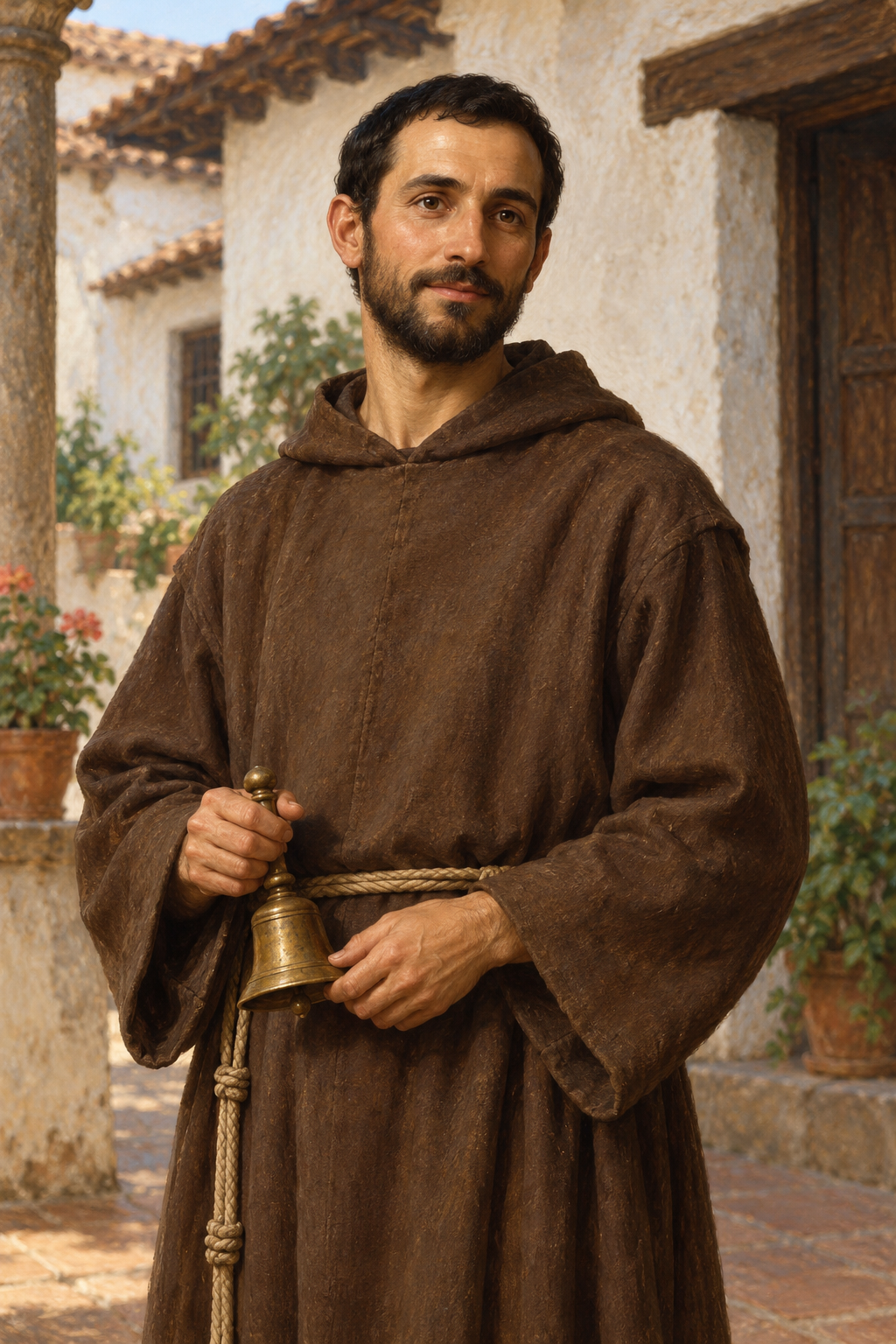
Hernández also remembers him walking through the streets at night with a small bell, calling people to reflect on their lives. The bell became part of the devotional account of his public presence. Alongside classroom teaching and hospital care, this was another way he addressed the people of the city.
Cervantes dates the foundation of Casa Belén to 1658. In 1663 Pedro sought royal authorization for the hospital from Philip IV. The authorization reached Guatemala only after his death. Such dates mark stages in the development of the work, rather than a single moment when every part of a fully formed religious order came into existence.
He died on April 25, 1667. The Ministry of Culture’s description of his surviving testament records his wish to devote land to a school for poor children, an infirmary and a hospital for convalescents. The document preserves the material arrangements behind his charity: property was to sustain the services he had begun. It provides a different kind of evidence from the later stories of visions and miracles.
He was buried in the Third Order chapel of San Francisco church in Santiago, now Antigua. Jickling describes his tomb as a much-visited shrine.
His companions continued the work. Historian Ascensión Baeza Martín explains that Rodrigo de la Cruz revised Pedro’s constitutions and that Clement X confirmed them in 1672. Further permissions followed, and in 1687 Innocent XI raised the community to a religious order under the Rule of Saint Augustine. Its obligations included hospitality to sick people. Baeza also cautions that writers give different dates for the earliest foundation. These later approvals should not be confused with Pedro’s own years of service.
John Paul II canonized him in Guatemala on July 30, 2002. In his homily, the pope connected Pedro’s care for others with his prayer and his devotion to the Nativity and the Cross. He urged listeners to carry that example into contemporary society, particularly through attention to people without homes, neglected patients and older people living alone.
Guatemala celebrates his feast on April 24. The bishops’ conference names him patron of catechists and protector of sick people.
A further local dedication was established on February 14, 2025, when the Archbishop of Santiago de Guatemala named him co-patron of El Divino Redentor parish. The decree followed a request from the parish priest, informed by the community’s growing devotion and the pastoral council.
Wondering how to weigh the stories and sources? Learn how to read a saint biography.