Biography
Pier Giorgio Frassati
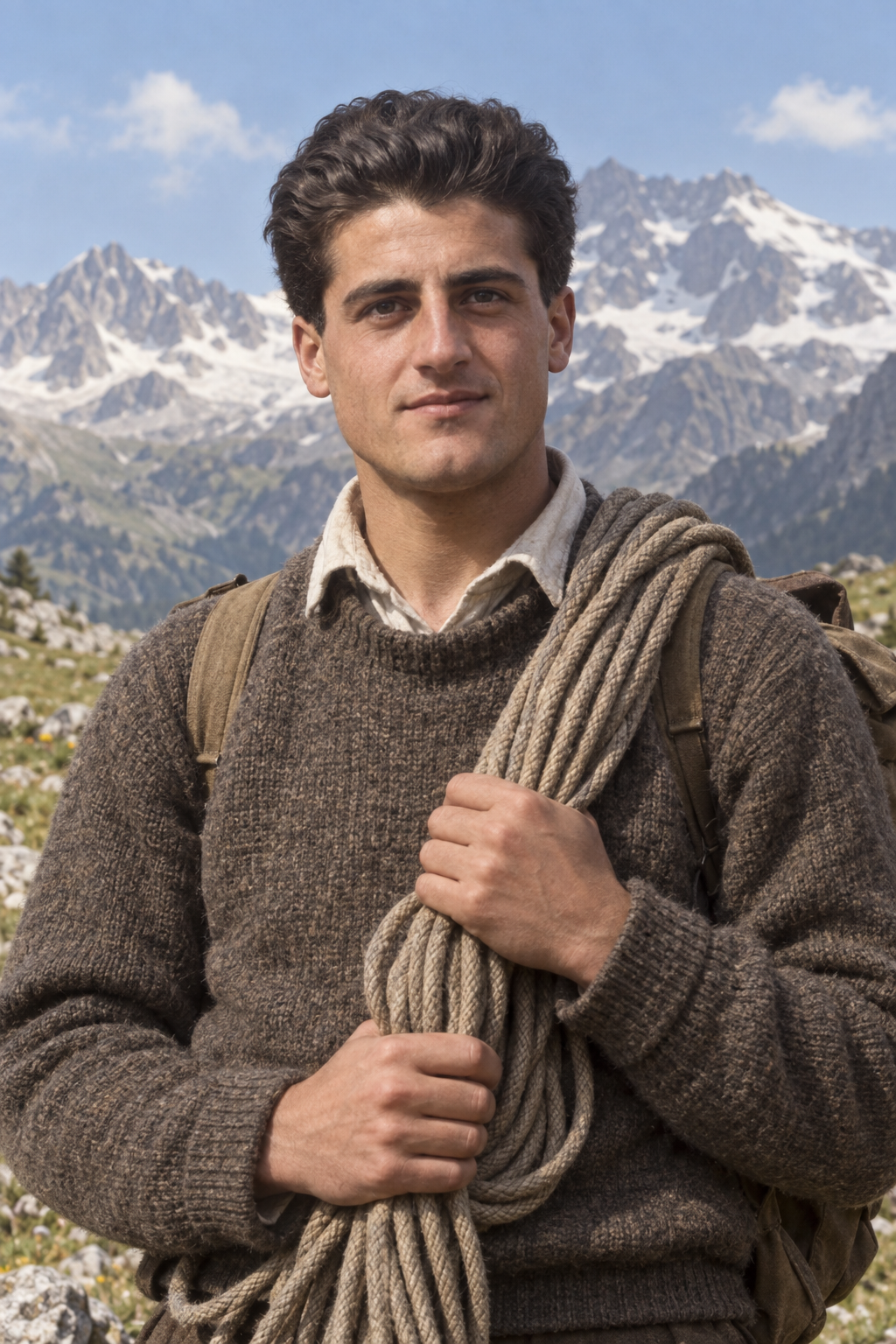
About Pier Giorgio Frassati
Pier Giorgio Frassati was born in Turin on 6 April 1901, into a household with wealth, influence and differing attitudes toward religion. His father, Alfredo, founded the newspaper La Stampa, while his mother, Adelaide Ametis, was a painter. His younger sister, Luciana, became a close companion in childhood. The family's social standing did not determine the course of his faith: the Catholic devotion that grew central to his life developed beyond the more reserved religious practice of his parents.
His schooling included both the state school Massimo D'Azeglio and the Jesuits' Istituto Sociale. He received his first Communion alongside his sister when he was ten, and later joined associations devoted to prayer and the Eucharist. These were not simply memberships on paper: daily Communion, regular confession and prayer became recurring practices in his life. In autumn 1918 he enrolled at Turin's Royal Polytechnic, studying mechanical engineering with a specialization in mining.
Mining mattered to him because of the people who worked underground. In an interview about the university's historical exhibition, its vice rector Stefano Sacchi explained that Frassati wanted to put technical knowledge at the service of workers facing difficult conditions. The choice connected study with a practical social purpose, rather than treating an engineering career only as a route to personal advancement. He did not finish his course before his death: two examinations and his thesis remained. The university awarded him a degree in his memory in 2001.
His service was also immediate and personal. He gave away money intended for transport and made his way home on foot. Visits to people who were poor or ill occupied time that he might otherwise have spent on his own comfort. Even holidays raised a practical difficulty for him, since leaving Turin meant leaving people who depended on help. He enjoyed climbing mountains with friends, but outings were not a separate life from his faith. He encouraged companions to attend Mass, read scripture and pray the rosary, bringing shared recreation and religious commitment into the same friendships.
His decision to join the Dominican laity developed gradually. After hearing the Dominican Filippo Robotti speak at a university circle, he visited the community at San Domenico and learned about its lay fraternities. He asked to read their rule and considered the decision for more than a year. He received the habit in 1922 and made his profession the following year. The name Girolamo expressed his admiration for Savonarola. A Dominican who knew him recalled his regular attendance at meetings and his practice of the rosary and the Office of Our Lady. This was a lay commitment, not ordination or withdrawal into a monastery.
Politics offered another way to address social need. He joined the Italian Popular Party in 1920, seeing it as a means of working toward a fairer society. His support was not uncritical: he opposed positions within the party that accommodated the emerging Fascist movement.
At the Polytechnic he maintained the party's noticeboard and complained when its posters were torn down. The university's later account places his activism amid the restriction of public freedoms under Fascism, rather than portraying his charity as detached from the political struggles of his time.
Polio ended his life on 4 July 1925, when he was twenty-four. That he contracted it while tending sick people is a later medical supposition, not an established chain of infection. Even near death he tried to arrange help for someone else: with a weakened hand he wrote instructions for a friend to deliver medicine. People he had assisted attended his funeral, revealing to his family how extensive this largely hidden work had been.
When John Paul II beatified him on 20 May 1990, the pope emphasized the connection between faith and action. His homily described a spirituality sustained by Eucharistic adoration, including at night, and by attention to scripture. It also acknowledged difficulties within family life. The portrait was not of someone who escaped ordinary responsibilities to become holy, but of a lay Christian whose commitments to study, associations, society and people in need belonged together. The pope presented his enjoyment of art, sport and mountains alongside those commitments, not as obstacles he had needed to abandon.
On the eve of the centenary of his birth, John Paul II again recommended him to young people in Rome. The address invited them to get to know a life in which friendship, study, sport and service could coexist with a steady relationship with God. It made his example accessible through ordinary activities rather than through an exceptional office or public career.
On 7 September 2025, Pope Leo XIV canonized Frassati together with Carlo Acutis. The canonization homily recalled his participation in Catholic Action, university Catholic groups, the Vincentian conferences and the Dominican Third Order. These communities helped shape a faith expressed in friendship and concrete assistance. His public recognition came long after his short life, but the work remembered was often local and unglamorous: meeting people, carrying supplies and responding to needs close at hand.
Wondering how to weigh the stories and sources? Learn how to read a saint biography.
Prayers for Pier Giorgio Frassati
Pier Giorgio Frassati: sourced prayer excerpt
filios dilectionis tuæ benignus intende