Biography
Polycarp of Smyrna
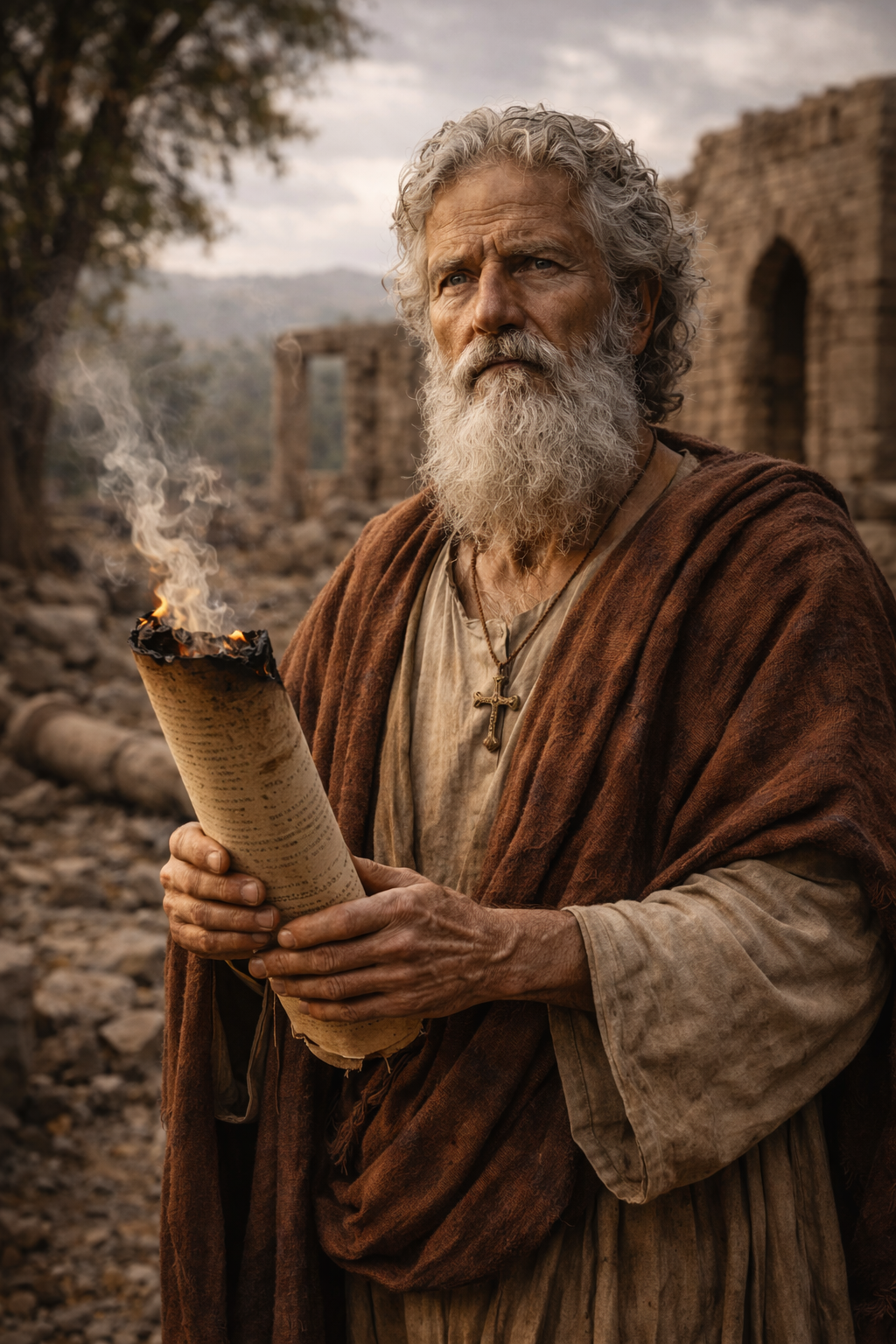
About Polycarp of Smyrna
Polycarp emerges from the early second-century churches of Roman Asia, but the surviving evidence does not disclose his parents, birthplace, education, or conversion. His name is attached securely to Smyrna, the important Aegean city where he served as bishop. Irenaeus of Lyons, writing later in the second century, remembered seeing and hearing Polycarp when Irenaeus was young. He described the older teacher's manner, speech, and recollections of people who had known Jesus. That personal memory makes Polycarp more visible than many Christians of his generation, while still leaving large parts of his youth unknown. The traditional birth year of 69 is not established and should not be treated as an exact biographical date.
Irenaeus says that Polycarp had been instructed by apostles, had spoken with people who had seen Christ, and was appointed bishop in Smyrna by apostles in Asia. This is early testimony from a man who knew him, but it was written in a theological argument about continuity of teaching. It does not name each instructor or permit a modern itinerary of Polycarp's training. Later writers often identify the apostle chiefly as John. That identification belongs to received church tradition rather than to a detailed contemporary record. The careful historical claim is that Polycarp represented, for Irenaeus and the churches of Asia, a living connection between their generation and earlier witnesses.
Polycarp's own Letter to the Philippians offers the clearest evidence of his pastoral work. The community at Philippi had asked him about righteousness and requested copies of letters associated with Ignatius of Antioch. Polycarp responded with practical instruction. He urged presbyters to visit the sick, care for widows and the poor, avoid partiality, and seek the return of anyone who had gone astray. He addressed deacons, younger people, wives, widows, and the whole community rather than presenting leadership as status alone. The letter draws heavily on Christian writings and shared teaching. It shows a bishop trying to sustain conduct, patience, and mutual responsibility across distance.
The letter also reveals that early Christian communities faced moral failure within their own leadership. Polycarp expressed grief over Valens, a former presbyter at Philippi, and Valens's wife. He warned against greed, yet told the church not to treat the couple as enemies. Instead, he asked the Philippians to call them back as weak and wandering members so that the whole body might be restored. This combination of accountability and attempted reconciliation is one of Polycarp's most concrete recorded actions. It avoids both concealment and vindictiveness. His counsel was not a general slogan: it addressed a named crisis in another church and sought repair without excusing the conduct that had caused scandal.
Irenaeus and Eusebius also preserve a report that Polycarp visited Rome while Anicetus was bishop. The two leaders disagreed about the date for keeping Easter. Neither persuaded the other, but they maintained communion, and Anicetus allowed Polycarp to celebrate the Eucharist. The report matters because it portrays disagreement without a rupture between Smyrna and Rome. It is early but survives through later quotation, so the details are best called probable. Other stories place Polycarp in controversy with the teacher Marcion. Those anecdotes express the memory of his opposition to teachings Irenaeus rejected, but their polished dialogue should not be treated like a transcript.
The Martyrdom of Polycarp, a letter sent in the name of the church at Smyrna, narrates his arrest and death. It says that Polycarp withdrew to a farm, prayed for churches and acquaintances, and then declined another escape when officials arrived. The account presents him feeding his captors before they took him into Smyrna. In the stadium, the proconsul pressed him to swear by Caesar's fortune and revile Christ. Polycarp refused and openly identified himself as a Christian. These scenes come from an early community testimony shaped to interpret his death through the Gospel story. They are valuable evidence, but the narrative's theological artistry must remain visible.
The same letter says that authorities threatened Polycarp first with beasts and then with fire. It records a prayer before his execution and describes flames arching around him without consuming his body until an executioner stabbed him. Christians sought his remains, which the community later gathered and honored. The confession and death in Smyrna are historically strong; miraculous details, dreams, and exact speeches are reported within a martyr narrative and should be attributed to that text. The closing chronological notice has generated competing calculations. Many calendars and histories place the martyrdom about 155 or 156, while other scholarship argues for a later date. February 23 is a commemoration, not proof of the civil death date.
Polycarp's significance rests on more than the dramatic manner of his death. His surviving letter documents a network linking Smyrna, Philippi, and the memory of Ignatius. Irenaeus's recollection shows how Polycarp's teaching became evidence in later arguments about continuity with earlier Christian witnesses. The martyrdom letter shows a local church preserving the story of its bishop and interpreting courage without praising reckless self-surrender. Across these sources, Polycarp appears as a pastor who joined moral seriousness with care for sick, poor, and estranged people; a leader who could disagree without breaking communion; and an elderly witness whose execution became one of Christianity's earliest sustained martyr accounts.
Wondering how to weigh the stories and sources? Learn how to read a saint biography.