Biography
Praejectus
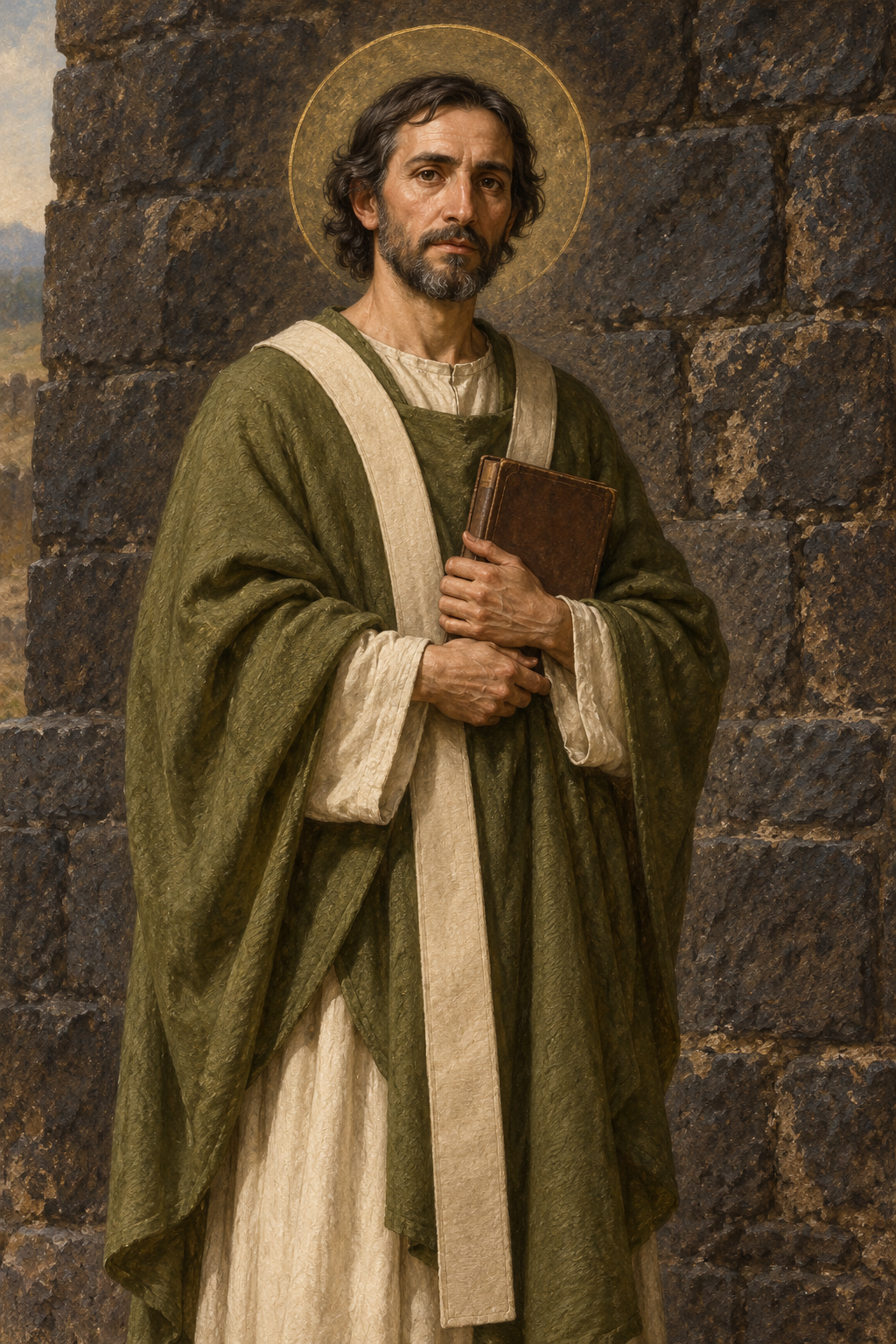
About Praejectus
Praejectus became bishop of Clermont during the seventh century, in a church where local families, clergy and rulers all influenced the choice of a new leader. An early account of his life and death presents him as the son of Gundolen and Eligia, a Catholic family of Roman ancestry from Auvergne. Historian Martin Šenk cautions that this does not establish membership in the highest aristocracy. Praejectus received his education under Bishop Genesius.
His succession to the bishopric was not straightforward. Another candidate, Garivald, briefly held the office. A count also named Genesius then declined it because he considered himself ineligible under church law. The account presents Praejectus’s eventual election as enjoying popular support and the approval of King Childeric II. It went on to celebrate his religious foundations and miracles, before describing the conflict that ended his life. These elements belong to a narrative written to explain and honor a contested episcopate.
The setting matters as much as the succession of names. Yaniv Fox’s study of late Merovingian clergy compares Praejectus with Eligius. As the published abstract explains, Eligius reached episcopal office through the royal court, while Praejectus advanced within a local church after more than one attempt. The comparison draws attention to the networks through which priests could gain influence and rise to become bishops.
Bruno Dumézil and Sylvie Joye examine the difficult choices made by Praejectus’s biographer. The writer sought reconciliation among people who had supported opposing sides, including those implicated in the bishop’s death. Praejectus’s successor, Avitus, belonged to the other faction. A biography intended for this divided community could not simply praise one side and condemn everyone on the other. Its handling of disputed events needs to be read with that purpose in mind.
A struggle over property helped turn these divisions into violence. According to the narrative, a consecrated widow, Claudia, entrusted her wealth to Praejectus. Hector married her daughter and claimed the estate. Praejectus accused him of abduction, and Hector was also accused of usurpation. Dumézil and Joye note that Hector may have had a legitimate inheritance claim. Praejectus obtained his condemnation, but the resulting conflict eventually claimed the bishop’s own life. The scholars resist a simple story of an innocent churchman opposed by a villain: the sources reveal competing interests and a sequence of reprisals.
The French bishops’ Nominis entry remembers his death at Volvic and preserves the companion tradition of Amarin. In that account, the attackers killed Amarin first, mistaking him for the bishop; Praejectus then identified himself. This is a received martyrdom narrative, not an independently verified reconstruction of the attack. Even the year varies in the church references assembled by Nominis, which give 674, 675 and 676. His commemoration there is January 25.
Volvic’s church preserves a long local memory of him under the name Saint Priest. The municipal guide describes an oratory built by Avitus II and the later development of the church and monastery. It distinguishes the surviving Romanesque choir, ambulatory and three radiating chapels from the nineteenth-century nave and facade. The building therefore bears traces of successive generations, rather than standing as an unchanged monument from Praejectus’s lifetime. The guide dates Mallay’s rebuilding campaign to 1869–1874. The use of Volvic stone in this later work connects the expanded church with the distinctive local material.
A white reclining image by Gournier, dated 1887, gives that remembrance a visible focus inside the church. The guide also identifies a shrine containing relics. These are witnesses to the history of devotion at Volvic; the guide’s description does not establish the identity of the remains through modern investigation.
The cathedral at Clermont draws attention to another form of remembrance in Volvic: carved scenes associated with Praejectus’s judgment and arrest. The bishop is represented with a beard, while armed figures appear in the narrative. Such carvings show how later worshippers pictured his martyrdom. They should not be treated as portraits made from life or as evidence for the precise appearance of the people involved.
His name also belongs to Saint-Prix in Ardèche. The municipality explicitly identifies the seventh-century bishop of Auvergne as patron of both its village and church. The present church was completed in 1860, a date recorded on the building. A statue above the entrance and a starry ceiling belong to its visible devotional setting. This dedication offers a specific local connection to Praejectus, without assuming that every French place bearing a similar name honors the same saint.
Flavigny Abbey provides an older connection farther afield. Henri Leclercq’s account identifies Prix, bishop and martyr of Clermont, as an early patron and describes the transfer of relics from Volvic under Abbot Manasses. The abbey also honored Peter, whose patronage later became predominant. Praejectus’s association with Flavigny is therefore a historical dedication, alongside the more visible local remembrance that continues in churches bearing his name.
Wondering how to weigh the stories and sources? Learn how to read a saint biography.